
Namaqua National Park
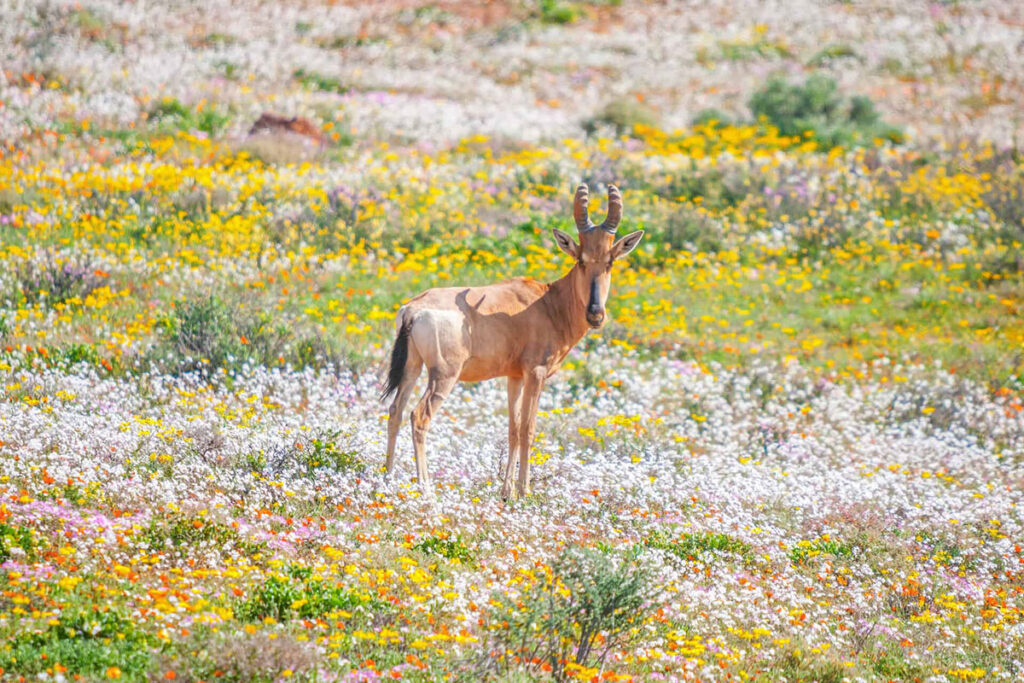
Namaqua National Park, South Africa – Wildflower Superbloom, Succulent Karoo Biodiversity, Fog Deserts, Endemic Succulents and the World’s Greatest Arid Floral Wonderland
Namaqua National Park in South Africa’s Northern Cape is one of Earth’s most remarkable natural sanctuaries—an arid-landscape paradise globally celebrated for its dazzling spring wildflower bloom, extraordinary succulent diversity, ancient geology and fog-nourished coastal ecosystems. Situated within the Succulent Karoo, one of only two arid biodiversity hotspots on the planet, the park protects more than 3,500 plant species, over 1,000 of which are endemic. This extraordinary concentration of biodiversity—combined with dramatic granite inselbergs, quiver tree valleys, sandy coastal plains, “living stone” succulents, endangered pollinators and breathtaking seasonal transformations—makes Namaqua National Park one of South Africa’s most iconic and scientifically valuable conservation areas. Far beyond its famous bloom, Namaqua is a land of deep ecological complexity, geological antiquity and cultural heritage stretching back thousands of years.
Overview
Established in 1999 and continuously expanding through conservation partnerships, Namaqua National Park spans more than 700 km² of semi-desert plains, rugged mountain slopes, fog-drenched coastal dunes and biodiversity-rich valleys. It forms the heart of the Succulent Karoo biome, recognized worldwide for having the highest succulent plant diversity of any desert ecosystem. The park’s most celebrated spectacle is the Namaqualand spring flower bloom, where winter rains trigger an explosion of daisies, bulbs and succulents into vast, multicolored carpets visible from space. Yet Namaqua’s importance goes far beyond seasonal aesthetics—its unique flora, ancient geology, desert-adapted wildlife, delicate pollinator networks and coastal fog ecosystems represent one of the world’s most fragile and irreplaceable natural treasures.
Location, Size and Key Facts
The park lies in the Northern Cape Province near Kamieskroon, Springbok and Garies, stretching inland from the Kamiesberg foothills to the Atlantic shoreline.
- Country: South Africa
- Province: Northern Cape
- Nearest Towns: Kamieskroon, Springbok, Garies
- Coordinates: ~30° S, 18° E
- Protected Area: ~700 km² (expanding)
- Established: 1999
- Biome: Succulent Karoo – global biodiversity hotspot
- Key Regions: Skilpad, Kamiesberg foothills, Namaqua Coastal Section, Soebatsfontein, Groenrivier
Geology – Ancient Foundations of the Namaqua Metamorphic Belt
The park sits atop the Namaqua Metamorphic Belt, a geological formation more than 1 billion years old—older than most mountain ranges on Earth. These ancient rocks include gneiss, schist, granite and quartzite that were once buried deep in the crust and later uplifted through tectonic forces. The region’s iconic granite inselbergs (rocky “islands” rising from flat plains) are the eroded remnants of ancient mountain peaks, sculpted over millennia by wind, heat and frost. These inselbergs create microhabitats for specialized succulents like Lithops and Conophytum, which cling to cracks, crevices and shaded ledges where moisture persists slightly longer after fog or dew.
The soils of Namaqua vary from mineral-rich sandy loams to rocky gravel, with patches of clay and red desert earth. Their diversity supports a mosaic of plant communities that respond differently to rainfall, fog, geographic orientation and heat exposure. The geological age and mineral composition of these formations are fundamental to the region’s floral diversity.
Geography and Landscape Diversity
Namaqua National Park is defined by dramatic contrasts—coastal fog plains, semi-desert valleys, granite hills, sandy flats and rugged mountains. Together they form a landscape of exceptional visual and ecological variety.
- Granite Inselbergs: Towering domes such as Koeroegab and Skilpad support micro-endemics and lithophytic succulents.
- Kamiesberg Foothills: Rolling hills with quartz fields and shrublands.
- Sandy Coastal Dunes: Wind-shaped dune systems extending along the park’s western boundary.
- Namaqualand Strandveld: Salt-tolerant vegetation influenced by marine fog.
- Dry Riverbeds & Seasonal Drainages: Important wildlife movement corridors.
Climate – Winter Rainfall Desert with Coastal Fog
Namaqua has a Mediterranean-style winter rainfall regime, unusual for African deserts. The climate is dominated by cold Benguela currents offshore, which moderate temperatures and create fog events essential for coastal vegetation.
- Winter (June–August): Main rainy season, cool, with ideal moisture for bulb growth.
- Spring (August–September): Peak bloom season with mild, sunny days.
- Summer (December–February): Very hot, often above 40°C; survival depends on fog, dew or deep roots.
- Autumn (March–May): Transitional, with occasional fog and cooling temperatures.
Rainfall averages 100–200 mm annually, making the Namaqua bloom one of the world’s most dramatic examples of desert ecological resilience.
Hydrology and Moisture Systems
Although largely waterless, Namaqua’s hydrological system is more complex than it seems. Rainfall, fog, dew, groundwater seeps and seasonal streams each play an important role.
- Fog Moisture: Coastal vegetation relies heavily on fog, especially along the Groenrivier section.
- Dewfall: Critical for succulents and geophytes in inland plains.
- Groundwater Springs: Support isolated pockets of insect and bird life.
- Seasonal Streams: Flow briefly after winter rains, stimulating seed germination.
This delicate hydrological balance underpins the survival strategies of the park’s flora and fauna.
Ecosystems and Habitat Diversity
Namaqua National Park protects the most botanically unique desert biome on Earth. Its ecosystems include:
- Succulent Karoo Plains: The richest succulent ecosystem on the planet.
- Quartz Fields: White quartz fragments creating bright, reflective microhabitats ideal for lithops.
- Granite Outcrop Ecosystems: Host micro-endemic plants adapted to crevice environments.
- Strandveld Shrublands: Coastal vegetation shaped by fog and salt spray.
- Renosterveld Patches: Shrubs adapted to nutrient-poor soils.
- Coastal Dune Fields: Specialized grasses and fog-fed succulents.
Vegetation – The World’s Greatest Arid Floral Kingdom
Namaqua’s vegetation is globally unrivaled. More than 3,500 species occur here, and over 1,000 are endemic. The park also hosts the world’s highest diversity of succulents and geophytes (bulb plants). Survival strategies include deep roots, CAM photosynthesis (allowing stomata to open at night), fog-harvesting leaf hairs, waxy coatings, underground storage organs and mimicry camouflage.
Key Plant Groups
- Daisies (Asteraceae): Dominant during bloom, including Dimorphotheca and Ursinia.
- Succulents: Aloe, Crassula, Euphorbia, Gasteria, Conophytum, Fenestraria and many more.
- Geophytes (Bulbs): Gladiolus, Romulea, Lachenalia, Babiana, Ferraria and Watsonia.
- Living Stones: Lithops, Argyroderma, Oophytum and Dinteranthus—stone-mimicking succulents.
- Quiver Trees: Giant aloes of desert valleys.
Endemic and Micro-Endemic Species
Namaqua is famous for succulents found nowhere else, such as:
- Lithops karasmontana
- Conophytum calculus
- Argyroderma delaetii
- Oophytum nanum
- Dinteranthus vanzylii
- Fenestraria rhopalophylla
These plants depend on precise microclimates and are sensitive to even slight environmental changes.
Desert Plant Adaptations – Marvels of Evolution
Namaqua’s flora exhibits some of the most sophisticated drought-adaptation strategies in the world:
- CAM Photosynthesis: Allows plants to open stomata at night, conserving moisture.
- Fog Harvesting: Succulents use tiny leaf hairs to capture moisture from fog.
- Mimicry: Lithops and Argyroderma blend into quartz fields to avoid predation.
- Geophytes: Underground bulbs store nutrients for seasonal blooming.
- Leaf Windows: Transparent leaf tips in “window plants” allow photosynthesis underground.
Wildflower Superbloom – One of Earth’s Great Natural Shows
In good rainfall years, Namaqua transforms from a semi-desert into a vibrant floral wonderland. Billions of daisies, bulbs and succulents burst into bloom between late August and early September, creating sweeping carpets of orange, yellow, purple, white and pink. These blooms draw photographers, botanists and tourists from around the world.
- Skilpad: The most famous bloom viewpoint.
- Soebatsfontein: Exceptional diversity of bulbs and succulents.
- Coastal Section: Colorful blooms set against dramatic dunes.
- Kamiesberg: Mountain slopes sprinkled with rare species.
Pollination Networks – Insects that Power the Bloom
Namaqua’s bloom depends on a diverse web of insect pollinators. Many plants have evolved deep mutualistic relationships with specialist insects.
- Oil-collecting Bees: Key pollinators of Diascia and other orchids.
- Butterflies: Monitored as climate indicators.
- Beetles: Some daisies open only when beetles are active.
- Hoverflies & Moths: Important for night-blooming species.
These insect networks are vital for the region’s long-term ecological resilience.
Wildlife
Mammals
Large mammals are fewer due to aridity, but several species thrive here:
- Springbok
- Klipspringer
- Caracal
- African wildcat
- Bat-eared fox
- Cape fox
- Small mammals such as hyraxes, gerbils and ground squirrels
Birdlife
- Namaqua sandgrouse
- Karoo lark
- Black-headed canary
- Verreaux’s eagle
- Ostrich
- Flamingos (coastal wetlands)
Reptiles & Amphibians
- Geckos
- Skinks
- Namaqua chameleon
- Puff adder
- Rain frogs after winter showers
Coastal Ecology and the Benguela Upwelling System
The Namaqua Coast is shaped by one of the world’s most productive oceanic systems—the Benguela Upwelling. Cold, nutrient-rich waters rise from the depths, creating cool temperatures, dense fog and abundant marine life. Fog provides critical moisture for coastal succulents and strandveld vegetation, acting as a “horizontal rain” that sustains life where rainfall is nearly absent.
The coastline hosts:
- Endemic dune succulents
- Shorebirds and migrating waders
- Breeding sites for marine species
- Salt marshes and ephemeral wetlands
Cultural and Historical Heritage
Namaqualand has been inhabited for thousands of years by San hunter-gatherers and Nama pastoralists. The region contains ancient rock engravings, stone tools, sacred sites and traditional settlements that reflect a deep connection between people and landscape. Seasonal flower-gathering traditions, Nama storytelling and pastoral culture continue to shape the region’s identity.
Conservation Importance
The Succulent Karoo is one of the world’s most threatened desert biomes. Namaqua National Park plays a key conservation role by protecting:
- Endemic succulents targeted by illegal plant trade
- Globally rare geophytes
- Fragile quartz and granite microhabitats
- Coastal fog ecosystems
- Critical insect pollinator networks
Threats and Challenges
- Climate Change: Reduced winter rainfall threatens bulbs and succulents.
- Illegal Plant Collection: Rare succulents targeted by global collectors.
- Mining Pressure: Historically a major threat to Namaqualand landscapes.
- Habitat Disturbance: Off-road driving damages cryptic plant habitats.
Climate Change Vulnerability
Namaqua’s flora is extremely sensitive to climatic shifts. Models predict:
- Reduced winter rainfall decreasing bloom intensity
- Hotter summers stressing succulents
- Fog decline threatening coastal vegetation
- Range contraction for narrow-range endemic species
Adaptation strategies include seed banking, research partnerships and habitat expansion.
Research and Monitoring Programs
- Pollinator monitoring and insect ecology
- Endemic succulent population surveys
- Climate change resilience studies
- Fog-dependent vegetation mapping
- Geophyte conservation programs
Tourism Activities
- Wildflower Viewing: Peak bloom in August–September
- 4×4 Adventures: Remote coastal routes
- Hiking: Trails through mountains and quiver tree valleys
- Photography: World-class landscapes year-round
- Birdwatching: Excellent for arid-adapted species
Access and How to Get There
- By Road: Accessible via N7; 4×4 required for coastal sections
- By Air: Closest airports: Springbok and Upington
- Nearest Gate: Kamieskroon (Skilpad Section)
Permits and Regulations
- Daily conservation fees apply
- No off-road driving
- Collection of plants or rocks prohibited
- Respect seasonal closures and bloom protection areas
Accommodation
- Skilpad Rest Camp: Chalets and camping near flower hotspots
- Luiperdskloof: Remote mountain cottages
- Coastal Campsites: Boulder Bay, Kwass se Baai, Koringkorrelbaai
Best Time to Visit
- August–September: Peak wildflower bloom
- Winter & Spring: Cooler weather and active wildlife
- Year-round: Succulent diversity, dunes and landscapes
Why Namaqua National Park Is Unique
Namaqua National Park is unlike anywhere else on Earth. It is the world’s largest concentration of succulents, the home of the legendary Namaqualand wildflower bloom and one of the most ecologically specialized desert ecosystems ever discovered. Its fog-fed coastal landscapes, ancient geology, tiny stone-mimicking plants, intricate pollinator webs and breathtaking seasonal transformations form an experience of pure natural wonder. Whether shimmering under blankets of wildflowers or glowing in the quiet desert light, Namaqua remains one of South Africa’s most unforgettable and scientifically significant destinations.