
Namib-Naukluft National Park
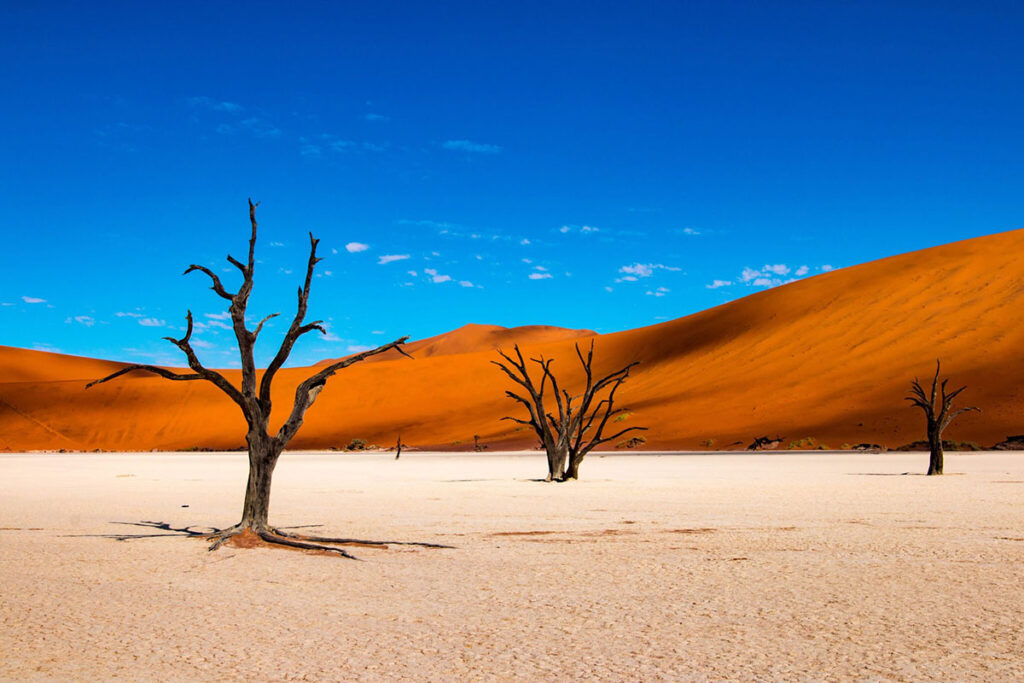
Namib-Naukluft National Park, Namibia – Sossusvlei, Namib Sand Sea, Naukluft Mountains and the Ancient Desert Wilderness
Namib-Naukluft National Park is one of the world’s great wilderness destinations — a place where monumental dunes, fossilized river valleys, rugged desert mountains, ocean fog plains and ancient geological formations come together to create a surreal environment found nowhere else on Earth. At nearly 49,700 km², it is Africa’s largest national park and one of the world’s biggest protected areas, stretching across the legendary Namib Desert, widely considered the oldest desert on the planet. Its immense landscapes include iconic landmarks such as Sossusvlei, Deadvlei, Dune 45, Big Daddy Dune, Sesriem Canyon, the Naukluft Mountains, Kuiseb Canyon and the UNESCO-listed Namib Sand Sea.
This vast desert park is both a dramatic scenic wonder and an extraordinary living laboratory where plants, animals and insects survive through remarkable adaptations to heat, dryness and fog-dependent ecosystems. For travelers, Namib-Naukluft National Park offers world-class photography, dune climbing, hiking, geological exploration, stargazing, scenic flights and some of the most breathtaking desert scenery found anywhere in Africa. Despite its extreme environment, the park is a haven for desert wildlife, archaeological history and natural beauty shaped over millions of years.
Overview of Namib-Naukluft National Park
Proclaimed in 1907 and expanded significantly over the decades, Namib-Naukluft National Park combines multiple conservation zones into a single protected landscape. These include the Sossusvlei–Deadvlei dune basin, Naukluft mountain escarpment, Sandwich Harbour wetlands, Sesriem Canyon, Kuiseb Canyon and large stretches of the central Namib Desert. It also includes the Namib Sand Sea, a UNESCO World Heritage Site recognized for its superlative beauty, ancient sandscapes and fog-fed ecosystems found only in this region.
The park’s significance extends beyond scenery: it conserves globally important desert-adapted species, fragile lichen fields, ancient flora such as Welwitschia mirabilis and vast dune systems shaped by powerful winds and ocean currents. The geological and ecological diversity found here makes Namib-Naukluft one of the most scientifically valuable desert ecosystems in the world.
Location, Size and Key Facts
Namib-Naukluft National Park spans western and central Namibia, bordering the Atlantic Ocean to the west and stretching inland toward the country’s central highlands. Its size and ecological range make it a key anchor of Namibia’s protected area network, with many of the country’s most famous natural attractions located within its borders.
- Country: Namibia
- Region: Central and Western Namibia
- Established: Initial protection 1907; expanded and unified in 1979
- Size: Approximately 49,700 km²
- UNESCO Status: Namib Sand Sea (designated 2013)
- Main Attractions: Sossusvlei, Deadvlei, Big Daddy Dune, Dune 45, Sesriem Canyon, Naukluft Mountains, Sandwich Harbour, Kuiseb Canyon
- Altitude Range: 200 m to 2,050 m above sea level
- Oldest Desert: Estimated 55–80 million years old
Geography and Landscape
The geography of Namib-Naukluft National Park is defined by deeply contrasting environments. To the west lies the Namib Sand Sea, a monumental expanse of both shifting and stable dunes formed from sand carried inland by the Benguela Current and sculpted by powerful desert winds. These dunes glow in shades of red, orange and peach due to iron oxide content and have been shaped into fluid ridge forms, star dunes and crescent dunes over millions of years.
Stretching inland toward the east, the park transitions into vast gravel plains where stone, sand, lichens and hardy fog-dependent vegetation dominate. Farther east, the Naukluft Mountains rise dramatically from the desert, forming a rugged escarpment of dolomite, quartzite and limestone shaped by ancient geological processes dating back more than 500 million years. Deep canyons cut through these mountains, while perennial springs feed clear pools and oasis-like vegetation in an otherwise arid environment.
Climate and Weather Patterns
Namib-Naukluft National Park is characterized by extreme aridity, with some regions receiving as little as 2–5 mm of rainfall annually. Despite this, the park contains distinct climatic zones influenced by altitude, distance from the ocean and local topography. Inland desert areas experience intense heat in summer, with temperatures exceeding 45°C, while winter nights can drop close to freezing.
The coast is significantly cooler due to the icy Benguela Current, and fog is a critical component of the desert’s climate. This dense coastal fog moves inland during early mornings and evenings, providing essential moisture for plants, insects and reptiles. Many species — including beetles, geckos and lichens — rely exclusively on fog for survival, making the Namib one of the world’s most remarkable examples of fog-dependent ecosystems.
Hydrology and Water Systems
Although the Namib is a hyper-arid desert, ephemeral rivers play an important role in shaping the landscape. The Tsauchab and Tsondab Rivers occasionally flow through deep valleys into the dune sea, feeding vleis such as Sossusvlei and Deadvlei during rare high-rainfall years. These clay pans, normally dry, become spectacular mirror-like lakes that attract wildlife and migratory birds when temporarily filled.
The Kuiseb River-lower canyon forms a natural barrier preventing the northward spread of dunes, while the Naukluft Mountains contain perennial springs fed by underground aquifers. These springs support lush riparian vegetation, provide drinking water for wildlife and create microhabitats rich in plant and animal species. In addition, the entire western portion of the park is sustained by coastal fog, which provides moisture in the absence of rainfall.
Ecosystems and Vegetation
Namib-Naukluft National Park contains dune ecosystems, gravel plains, fog-dependent coastal systems, ephemeral river corridors and highland ecosystems in the Naukluft Mountains. Each of these zones supports vegetation adapted to extreme dryness, wind and temperature fluctuations.
Dune Ecosystems
The dune fields of Sossusvlei are dominated by sparse but specialized vegetation such as camelthorn trees, ephemeral desert grasses and the nutrient-rich !Nara melon plant, which is vital to wildlife and local communities. Plants often send roots deep into underground moisture pockets or condense fog from the air to survive.
Gravel Plains and Fog Oases
The gravel plains of the central and northern park support lichens, succulents, dollar bushes and small shrubs adapted to moisture from fog. Lichen fields are extremely fragile and take decades to recover if disturbed, making them one of the most sensitive ecological features of the Namib.
Naukluft Mountain Flora
The Naukluft Mountains contain a surprisingly rich variety of flora, including acacias, aloes, euphorbias, wild olives, reeds and fig trees growing along springs and canyon pools. These vegetation pockets provide rare shade and food sources for mountain wildlife.
Iconic Desert Flora
- Welwitschia mirabilis: A living fossil that can survive for more than 1,500 years in fog-fed zones.
- Lithops (stone plants): Succulents that mimic surrounding rocks for camouflage.
- !Nara Melon: A keystone desert species consumed by animals and historically by indigenous groups.
Wildlife of Namib-Naukluft National Park
Mammals
Despite the harsh environment, the park supports a diverse array of desert-adapted mammals. These include:
- Oryx (gemsbok)
- Springbok
- Hartmann’s mountain zebra
- Steenbok
- Black-backed jackal
- Bat-eared fox
- Brown and spotted hyenas
- Leopards (primarily in Naukluft)
- Cape fox
- Chacma baboon (Naukluft)
These animals survive through remarkable physiological and behavioral adaptations, including nocturnal activity, efficient water retention, fog harvesting and heat-tolerance strategies.
Birdlife
More than 200 bird species occur in the park, from desert specialists to coastal and mountain birds. Key species include:
- Ostriches
- Rüppell’s korhaan
- Pale chanting goshawk
- Lappet-faced vulture
- Damara red-billed hornbill
- Sandgrouse species
- Aquatic birds at Sandwich Harbour
Reptiles, Amphibians and Insects
The park is rich in reptile species, including Namaqua chameleons, geckos, skinks, sand lizards and various snakes. Amphibians appear after rare seasonal rains, using temporary pools to breed. Insects are especially well-adapted, including fog-basking beetles, dune ants, dancing white lady spiders and butterflies uniquely linked to fog oases.
Unique Features of Namib-Naukluft National Park
The Namib Sand Sea (UNESCO World Heritage Site)
The Namib Sand Sea is the only desert on Earth where fog, not rain, sustains its ecosystems. Its shifting and stationary dunes form an iconic landscape that is globally recognized for exceptional beauty and outstanding geological processes. UNESCO highlights its wind-shaped dunes, ancient sand deposits and highly specialized organisms.
Sossusvlei and Deadvlei
These iconic salt and clay pans are ringed by towering dunes that rise more than 300 meters above the desert floor. Deadvlei’s ancient fossilized camelthorn trees create haunting, dream-like scenery that attracts photographers from all over the world.
Sesriem Canyon
Carved by the Tsauchab River, Sesriem Canyon is a narrow 30-meter-deep gorge with smooth rock walls and shaded pools that have served as vital water sources for animals and early human travelers.
Sandwich Harbour
Located along the Atlantic coastline, Sandwich Harbour is a spectacular lagoon where massive dunes plunge directly into the ocean. This Ramsar-designated wetland is internationally important for birds and is accessible only with a specialized guide.
Cultural and Archaeological Heritage
The Namib Desert has been inhabited for tens of thousands of years by San hunter-gatherers and later Nama and Damara pastoralists. Archaeological sites within the park include stone tools, ancient hearths, rock engravings and remnants of traditional desert survival techniques. These sites add cultural depth to the region’s natural heritage, offering insight into the resilience of early inhabitants.
Conservation Importance
The park protects one of Earth’s oldest and most fragile ecosystems. Its conservation value includes:
- Preservation of global desert biodiversity
- Protection of fog-dependent species
- Safeguarding of lichen fields and dunes
- Conservation of the Namib Sand Sea UNESCO site
- Protection of desert-adapted herbivores and predators
Threats and Challenges
- Climate change reducing fog frequency
- Illegal off-road driving damaging lichen ecosystems
- Mining pressure near park boundaries
- Tourism pressure on scenic zones
- Groundwater overuse near lodges
Research and Monitoring Programs
Scientific research in the park includes fog-harvesting studies, lichen recovery projects, dune movement mapping, predator and zebra collaring programs, groundwater monitoring and biodiversity surveys focused on insects and reptiles adapted to hyper-arid conditions.
Tourism Activities
Dune Climbing
Dune 45, Big Daddy and Big Mama are among the world’s most famous dunes, offering breathtaking sunrise viewing and vast views of the Namib Sand Sea.
Sossusvlei and Deadvlei Walks
Walking through Sossusvlei’s clay pans offers unmatched photographic opportunities and close-up views of desert geology and fossilized trees.
Hiking in the Naukluft Mountains
The Naukluft region offers multi-hour and multi-day hikes through canyons, springs, pools and high plateaus rich in wildlife and botanical diversity.
Sandwich Harbour 4×4 Excursions
This remote wetland is accessible only via guided tours, offering dramatic coastal dune driving and exceptional birdwatching.
Scenic Flights
Aerial flights reveal the true scale of the dune sea, coastline, mountains and desert rivers — an unforgettable perspective.
Stargazing and Astrophotography
Namib-Naukluft is one of the world’s premier dark-sky destinations, offering crystal-clear views of the Milky Way and unmatched astrophotography conditions.
Access and How to Get There
- Main Gate: Sesriem Gate (gateway to Sossusvlei)
- Other Access Points: Naukluft Camp, Namib Section gates, Swakopmund/Walvis Bay coastal entry
- Roads: Reliable gravel and tar roads from major towns
- 4×4 Required: Beyond Sossusvlei 2×2 limit and for Sandwich Harbour
Permits and Regulations
Park entrance permits are required and are available at Sesriem Gate, Naukluft Camp and MET offices. Off-road driving is strictly prohibited. Drone usage requires special authorization due to sensitive ecosystems.
Accommodation Options
Accommodation includes luxury lodges, mid-range desert lodges, government campsites and tented camps. Popular choices include Sossus Dune Lodge, Desert Camp, Dead Valley Lodge, Sesriem Campsite and Naukluft Camp.
Best Time to Visit
The ideal time to visit is May–October when temperatures are cooler, skies are clear and dune climbing is more comfortable. The summer months offer dramatic light and fewer crowds but can be extremely hot.
Why Namib-Naukluft National Park Is Unique
Namib-Naukluft National Park is unique for its untouched dune landscapes, ancient desert ecosystems, unique fog-fed biodiversity, archaeological heritage, dramatic canyons and globally iconic destinations such as Sossusvlei and the Namib Sand Sea. Its combination of natural beauty, scientific importance and tourism appeal make it one of the world’s most extraordinary national parks — a place where time, geology and life converge in a landscape of profound and unforgettable beauty.