
Nyungwe Forest National Park
Nyungwe Forest National Park, Rwanda – UNESCO World Heritage Rainforest, Chimpanzee Trekking, Canopy Walkway Adventures and Albertine Rift Biodiversity Hotspot
Nyungwe Forest National Park is one of Africa’s most remarkable natural treasures—an ancient montane rainforest that has survived for thousands of years and today stands as one of the richest biodiversity hotspots on the continent. Located in the highlands of southwestern Rwanda and covering an expansive 1,019 km², Nyungwe protects a stunning landscape of rugged mountains, deep valleys, high-altitude swamps, waterfalls and evergreen rainforest. In 2023, the park was officially declared a UNESCO World Heritage Site, recognizing its exceptional ecological value and its vital role in conserving rare species, safeguarding water sources and sustaining the unique ecosystems of the Albertine Rift. For travelers searching for chimpanzee trekking in Rwanda, primate safaris, canopy walkway tours, or immersive rainforest hiking experiences, Nyungwe Forest National Park delivers one of Africa’s finest nature adventures.
Stepping into Nyungwe feels like entering a living, breathing world untouched by time. Mist floats through the treetops, birds call from deep within the canopy, and monkeys leap gracefully between branches while waterfalls tumble through hidden gorges. Every corner of the forest is alive with color, sound, and movement. This extraordinary atmosphere—combined with its scientific importance, high species diversity, and exceptional conservation success—makes Nyungwe a destination where travelers experience nature in its most pristine and powerful form.
Overview of Nyungwe Forest National Park
Nyungwe Forest is widely recognized as one of Africa’s most important montane forests. Its ancient geological history, varied terrain, and consistently moist climate have produced an environment where rare species thrive. More than 1,100 plant species, 85 mammal species, 13 primate species, over 300 bird species, and at least 120 butterfly species have been recorded, making the park a biodiversity powerhouse. It is also one of the last remaining large blocks of montane rainforest in East and Central Africa, offering refuge for species that have disappeared elsewhere.
Classified as a national park in 2005 and later listed as a UNESCO World Heritage Site, Nyungwe is managed by the Rwanda Development Board in partnership with African Parks. This collaboration ensures world-class conservation standards, strong community involvement, and carefully managed eco-tourism that protects wildlife while benefiting local people. With its remarkable biodiversity, accessible trails, and acclaimed canopy walkway, Nyungwe stands as one of Rwanda’s premier tourism assets and a model for sustainable rainforest protection.
Location, Size and Key Facts
Nyungwe Forest National Park lies in the southwestern region of Rwanda, straddling the Western and Southern provinces. The park forms part of the greater Albertine Rift, an area renowned for its exceptionally high levels of endemism. To the south, Nyungwe connects with Kibira National Park in Burundi, forming one of the largest continuous montane rainforests in Africa. This uninterrupted forest corridor is vital for wildlife movement, genetic diversity, and climate resilience.
- Area: approx. 1,019 km²
- Coordinates: 2.48°S, 29.18°E
- Elevation: 1,600–2,950 m above sea level
- Highest Point: Mount Bigugu (2,950 m)
- Designation: National Park (2005), UNESCO World Heritage Site (2023)
- Regional Context: Part of the Albertine Rift biodiversity hotspot
- Nearest Towns: Rusizi, Kamembe, Huye
Geography, Terrain and Landscape
Nyungwe’s landscape is defined by dramatic mountain ridges and deep valleys formed by tectonic movements in the Albertine Rift. These rugged features create a mosaic of microclimates and habitats, supporting species that are adapted to very specific environmental niches. Steep slopes covered in dense rainforest rise sharply above narrow river gorges, while high ridgelines offer panoramic views across the endless green canopy and the shimmering waters of Lake Kivu to the west.
The terrain varies from rainforest-covered slopes to mossy high-altitude cloud forests and open swamps. Waterfalls plunge down rock faces, streams wind through fern-filled ravines, and forest clearings burst with wildflowers after rain. This diversity of landscapes makes Nyungwe one of Africa’s most scenic national parks and a paradise for hikers, photographers, and nature lovers.
Climate and Weather Patterns
Nyungwe experiences a cool, humid montane climate that is unusual for East Africa. Because of its elevation, temperatures remain pleasant year-round—typically between 20–25°C during the day and 10–15°C at night. Fog is common, especially at higher elevations, adding to the forest’s mystical atmosphere and sustaining moisture-loving plants such as mosses, ferns, and orchids.
Rainfall is abundant, averaging over 2,000 mm annually. The wet seasons (March–May and September–December) bring heavy afternoon showers, lush foliage, and roaring waterfalls. The dry months (June–September) offer the best hiking conditions, with clearer skies and easier movement along forest trails. Each season offers a unique experience: wet months highlight the rainforest’s raw beauty, while the dry season provides ideal wildlife-viewing opportunities.
Hydrology and Water Systems
Nyungwe Forest is one of the most important water catchments in East Africa. It sits on the watershed between the Congo and Nile river basins, meaning that rainfall in the forest flows toward two of Africa’s greatest rivers. The park supplies water to millions of people in Rwanda and neighboring countries, making it essential to regional water security.
The forest is threaded with streams, rivers, marshes, and wetlands. Notably, the Kamiranzovu Swamp acts as a giant natural reservoir, absorbing rainfall during the wet season and slowly releasing it during dry periods. This natural regulation ensures stable water flow, prevents floods, and nourishes agricultural lands beyond the park. Nyungwe’s hydrology is one of the key reasons it was recognized as a UNESCO World Heritage Site.
Ecosystems and Vegetation Zones
Nyungwe supports an extraordinary range of plant species across its varied elevation zones. With more than 1,100 recorded species—including over 200 tree species, numerous epiphytic orchids, and rare ferns—the forest is a living botanical archive. Vegetation shifts noticeably with changes in altitude, creating distinct ecological zones.
Lower Montane Rainforest
Between 1,600 and 2,200 meters, lower montane rainforest dominates. This lush zone is characterized by tall hardwoods such as Newtonia buchananii, Carapa grandiflora, and Podocarpus latifolius. The canopy is dense and multilayered, providing ideal habitat for primates, birds, and climbing plants. Light filtering through the leaves creates a magical green glow that defines Nyungwe’s rainforest aesthetic.
Bamboo and Transition Zones
Higher elevations host extensive bamboo thickets, which create unique feeding and nesting habitats for various bird species and primates. Bamboo grows quickly and regenerates easily, making it an important part of the forest’s resilience and ecological stability.
Cloud Forest and High-Altitude Vegetation
Cloud forest occupies the highest ridges, where trees are shorter and heavily coated in moss and lichens. Constant mist, cooler temperatures, and high humidity define this zone. Many rare plants, amphibians, and insects are found exclusively in these high-altitude habitats.
Bogs, Swamps and Wetlands
Nyungwe’s wetlands, particularly the Kamiranzovu Swamp, are biodiversity hotspots that support specialized flora and fauna. These waterlogged habitats retain carbon, regulate water flow, and provide essential breeding sites for amphibians and aquatic insects.
Wildlife of Nyungwe Forest National Park
Primate Diversity – 13 Species
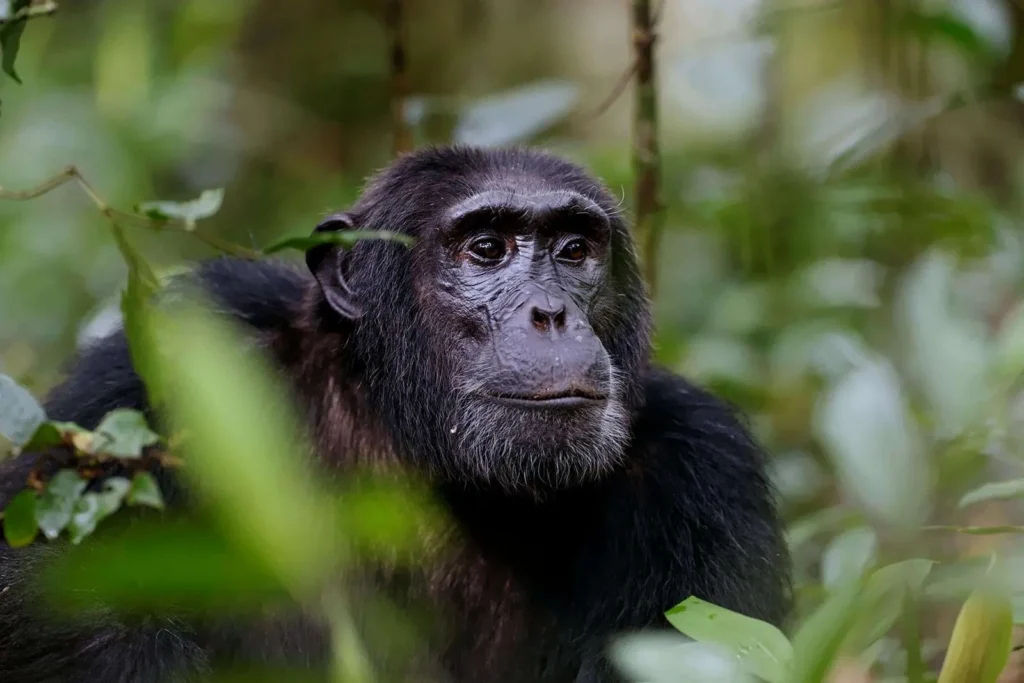
Nyungwe is one of Africa’s premier primate destinations, home to 13 primate species. Eastern chimpanzees are the biggest draw, and guided treks give visitors the chance to observe these intelligent animals in their natural habitat. Treks occur at dawn, when chimps are most active, and encounters offer a powerful glimpse into their complex social behavior.
The park is also famous for its large groups of Ruwenzori colobus monkeys—sometimes numbering over 60 individuals. Their acrobatic movements and striking black-and-white coats make them a visitor favorite. Other primate species include L’Hoest’s monkeys, grey-cheeked mangabeys, blue monkeys, red-tailed monkeys, owl-faced monkeys, vervet monkeys, and several bushbaby species.
Mammals Beyond Primates
Beyond primates, Nyungwe shelters more than 85 mammal species, many of which are elusive forest dwellers. These include serval, African golden cat, African civet, clawless otter, giant forest hog, and several duiker species. Although sightings are less frequent compared to open savannah parks, Nyungwe’s mammals play a critical role in maintaining forest ecology.
Birdlife – Over 300 Species
Nyungwe Forest National Park is a dream destination for bird watchers, with over 300 species recorded, including more than 30 Albertine Rift endemics. The park’s thick vegetation and varied altitude zones create habitat for species that are rarely seen elsewhere. Iconic birds include the regal sunbird, Ruwenzori turaco, handsome francolin, Grauer’s swamp warbler, and red-collared mountain babbler. Birdwatching trails traverse bamboo forests, ridge tops, wetlands, and cliff edges, offering diverse birding experiences.
Reptiles, Amphibians and Invertebrates
Nyungwe’s humid environment makes it ideal for amphibians and reptiles. The park contains over 30 amphibian species and around 38 reptile species, many of them rare or endemic to the Albertine Rift. Tree frogs, chameleons, skinks, geckos, and various snake species all inhabit the forest. In addition, more than 120 butterfly species create bursts of color along sunlit forest clearings and trails.
Local Communities and Cultural Significance
Communities around Nyungwe have a deep cultural connection with the forest. Traditionally, they have relied on the forest for medicinal plants, water, honey, and cultural rituals. Today, community-based tourism initiatives allow visitors to experience traditional dances, drumming, storytelling, handicrafts, and agricultural life. These tourism programs diversify household incomes and promote sustainable relationships between people and the park.
Conservation Management and Protection
Nyungwe Forest National Park is co-managed by African Parks and the Rwanda Development Board. This partnership focuses on high-level ranger training, well-equipped patrol units, science-based management plans, and community collaboration. Rangers remove snares, prevent illegal logging, conduct wildlife monitoring, and respond to threats. Thanks to strong conservation action, Nyungwe has remained one of the most intact rainforests in Africa.
Threats and Conservation Challenges
Although well protected, Nyungwe faces several ongoing threats including illegal hunting, fire outbreaks during severe dry seasons, agricultural encroachment, bamboo harvesting, and climate change impacts that may shift rainfall patterns. Maintaining the park’s ecological health requires strategic investment, local participation, and continuous monitoring. Fortunately, Rwanda’s strong environmental policies provide a solid foundation for long-term protection.
Scientific Research and Monitoring
Nyungwe is a hub for scientific research, with studies focusing on primate behavior, forest ecology, hydrology, amphibian diversity, climate response, and endemic species survival. Research institutions collaborate with park management to conduct surveys, map habitats, monitor species populations, and assess conservation outcomes. These findings support evidence-based decision-making and help refine long-term protection strategies.
Tourism Activities in Nyungwe Forest National Park
Chimpanzee Trekking
Chimpanzee trekking is one of Nyungwe’s signature activities. Treks begin early in the morning and involve following experienced guides through the forest to locate habituated chimpanzee groups. Once found, visitors observe the chimps feeding, grooming, vocalizing, and moving through the canopy. This intimate wildlife experience ranks among the most thrilling primate encounters in Africa.
Colobus Monkey Tracking
Nyungwe’s Ruwenzori colobus monkeys form some of the largest troops in East Africa. Tracking these visually striking primates offers excellent photographic opportunities and deeper insight into primate social behavior. The Gisakura area is particularly known for reliable sightings.
Canopy Walkway Experience
Nyungwe’s canopy walkway is Africa’s most iconic rainforest suspension bridge. Stretching 160 meters across a forested valley and suspended about 50 meters above the ground, it offers breathtaking views of the treetops, monkeys, birds, and the forest canopy from an elevated perspective. It is a must-do activity for any visitor to Nyungwe.
Hiking and Forest Trails
With over 130 kilometers of established trails, Nyungwe offers exceptional hiking opportunities. Trails vary in length and difficulty, passing through waterfalls, swamps, ridge tops, bamboo forests, and panoramic viewpoints. Popular trails include the Bigugu Trail, Kamiranzovu Swamp Trail, Isumo Waterfall Trail, and Igishigishigi Trail, which connects to the canopy walkway.
Birdwatching and Nature Photography
Nyungwe is one of the best birding destinations in Africa. Birdwatchers can explore different habitat zones to spot endemic and rare species. Nature photographers enjoy the interplay of mist, light, vegetation, wildlife, and dramatic forest landscapes that make Nyungwe ideal for artistic and documentary photography.
Permits, Regulations and Responsible Tourism
Permits are required for chimpanzee trekking, canopy walks, guided hikes, and colobus tracking. Visitors must stay on designated trails, maintain appropriate distances from wildlife, avoid flash photography, and follow the guidance of park rangers at all times. These rules support sustainable tourism and reduce environmental impact.
Accommodation Options
Nyungwe offers a variety of accommodation options ranging from luxury lodges to midrange hotels and community-run guesthouses. Many properties are located around Gisakura, offering easy access to the park’s main entrances, the canopy walkway, and key nature trails. Lodges often provide stunning forest views, warm hospitality, and excellent access to chimpanzee trekking areas.
Best Time to Visit Nyungwe Forest National Park
The best time for trekking and hiking is during the dry season from June to September, when trails are drier and wildlife viewing is easier. However, the rainy seasons bring lush vegetation, dramatic waterfalls, vibrant plant growth, and excellent frog and birdwatching opportunities. Nyungwe is an all-year destination, with each month offering something unique.
Why Nyungwe Forest National Park Is Unique
Nyungwe Forest National Park stands out as one of Africa’s most impressive natural landscapes. Its ancient rainforest, exceptional primate diversity, rich endemic birdlife, towering mountains, and world-famous canopy walkway make it a rare ecological wonder. Its UNESCO World Heritage status reflects its global significance, while Rwanda’s strong conservation efforts ensure the forest remains a thriving sanctuary for generations to come.
For travelers seeking pure rainforest immersion, intimate wildlife encounters, cultural connections, and unforgettable scenery, Nyungwe offers one of the most complete and enriching rainforest experiences in Africa. It is not just a national park—it is a living, breathing masterpiece of biodiversity.