
Pilanesberg Game Reserve
Pilanesberg Game Reserve, South Africa – Malaria-Free Big Five Safaris, Ancient Volcanic Crater Wilderness, Mankwe Dam Wildlife Viewing and World-Class Self-Drive Safari Adventures
Pilanesberg Game Reserve is one of South Africa’s most captivating wildlife destinations—a malaria-free Big Five sanctuary sculpted into the breathtaking remains of a massive extinct volcano. Located in the North West Province, just a 2–3 hour drive from Johannesburg and Pretoria, it offers a rare blend of accessibility, dramatic scenery, rich biodiversity and exceptional safari experiences. With its volcanic ringed mountains, sweeping grasslands, thriving wildlife populations and outstanding tourism infrastructure, Pilanesberg Game Reserve remains one of the country’s top choices for both first-time safari-goers and seasoned African travelers.
Covering approximately 572 km², Pilanesberg sits within a unique ecological transition zone where the arid Kalahari meets the wetter Lowveld bushveld. This overlapping zone supports an extraordinary diversity of wildlife and plant life. Visitors frequently encounter elephants at waterholes, lions resting on grassy plains, leopards moving along rocky ridges and rhinos grazing in the open. Over 300 bird species, abundant photographic viewpoints, and a network of well-designed self-drive routes ensure that game drives are rewarding throughout the year. For travelers searching for a malaria-free Big Five safari near Johannesburg, Pilanesberg consistently stands out as one of the best destinations in Southern Africa.
Overview
The Pilanesberg landscape has undergone a remarkable transformation. Before its establishment as a reserve, the region consisted of degraded farmlands and overgrazed grasslands. In the late 1970s, one of the most ambitious wildlife reintroduction programs ever attempted in Africa—Operation Genesis—was launched. Thousands of animals, including elephants, lions, buffalo, rhinos, giraffes, zebras, antelope and smaller predators, were relocated from reserves across southern Africa. This effort restored a functioning savanna ecosystem inside the boundaries of the ancient volcanic crater.
Today, Pilanesberg is a thriving conservation area with balanced predator–prey dynamics, well-managed habitats and an extraordinary diversity of wildlife. The reserve offers a wide range of activities including guided game drives, walking safaris, hot-air balloon flights, birdwatching, photography and self-drive exploration. The nearby Sun City Resort enhances the area’s appeal by providing luxury accommodation, golf courses, family attractions and entertainment, making Pilanesberg one of the most versatile safari destinations in South Africa.
Location, Size and Key Facts
Pilanesberg Game Reserve lies between the towns of Rustenburg and Sun City in South Africa’s North West Province. Surrounded by rural communities and rugged hills, the reserve forms a natural protected basin encircled by the uplifted volcanic ring.
- Country: South Africa
- Province: North West
- Nearest Cities: Johannesburg, Pretoria, Rustenburg
- Coordinates: ~25.3° S, 27.1° E
- Area: ±572 km²
- Elevation: 1,100–1,680 meters
- Established: 1979
- Biome: Transitional zone between Kalahari and Lowveld
- Main Gates: Bakubung, Manyane, Bosele, Kwa Maritane
Geology – The Ancient Pilanesberg Alkaline Ring Complex
The geology of Pilanesberg is one of its defining features and a major reason the reserve supports such diverse wildlife. The entire protected area is set within the enormous Pilanesberg Alkaline Ring Complex, the remnants of a gigantic volcano that last erupted more than 1.2 billion years ago. Over millions of years, erosion exposed concentric rings of volcanic rock, forming three discernible ridges around the crater basin.
These rings are composed of rare igneous rocks such as syenite, foyaite and nepheline syenite—minerals seldom found elsewhere in Africa. Their weathering created a mosaic of soils with different fertility levels, drainage patterns and mineral compositions. This soil variety supports a wide range of vegetation, from nutrient-rich grasslands in the valleys to hardy shrubs and trees on thin, rocky slopes. It is this geological complexity that underpins Pilanesberg’s exceptional ecological diversity, creating habitats for everything from browsers and grazers to elusive predators and specialist bird species.
Landscape and Topographic Diversity
The Pilanesberg landscape is visually unique: broad, open plains stretch across the central basin, surrounded by rolling foothills and steep volcanic ridges. These ridges offer dramatic vistas across the reserve, allowing visitors to appreciate the sheer scale of the ancient crater. From many viewpoints, the circular shape of the reserve is clearly visible, making Pilanesberg one of the most scenic game reserves in Southern Africa.
- Central Plains: Sweeping grasslands that support zebra, wildebeest, buffalo, rhinos and grazing antelope.
- Mankwe Dam Basin: A scenic and wildlife-rich wetland area attracting elephants, hippos, crocodiles and waterbirds.
- Rocky Outcrops: Ideal habitat for leopards, klipspringers and rock hyraxes.
- Wooded Valleys: Dense bushveld where elephants, kudu, giraffes and browsers feed.
- Volcanic Ridges: Elevated viewing points offering outstanding photography opportunities.
The diversity of habitats ensures year-round wildlife sightings. Predators use the rocky ridges for concealment while hunting, herbivores gather on the central plains, and birds of prey soar on thermal currents over the crater. This topographic variation contributes significantly to Pilanesberg’s immersive safari experience.
Climate and Weather
Pilanesberg enjoys a semi-arid to subtropical climate with warm summers, mild winters and an annual rainfall of around 600–700 mm. Conditions remain favorable for safaris throughout the year, and the reserve’s malaria-free status makes it ideal for families and travelers who prefer lower health risks.
- Summer (Nov–Mar): Hot days with afternoon thunderstorms; lush vegetation and excellent birdwatching.
- Winter (May–Aug): Cool mornings, warm afternoons and prime wildlife-viewing conditions.
- Dry Season: Animals concentrate at waterholes, making sightings predictable.
- Green Season: Scenic landscapes, blooming wildflowers and newborn animals.
The reserve’s altitude moderates temperatures, ensuring that even hot summer days are followed by pleasantly cool evenings. Visitors can comfortably explore Pilanesberg year-round.
Hydrology and Water Systems
Pilanesberg’s hydrology is shaped by its volcanic crater structure, allowing rainwater to collect in dams, pans and marshes rather than draining away quickly. These permanent water sources sustain the reserve’s wildlife populations through dry periods and act as focal points for game viewing.
- Mankwe Dam: The reserve’s largest dam and premier wildlife hotspot, ideal for photography.
- Rathlogo, Ruighoek and Malatse Hides: Designed for close-up viewing of birds, antelope, elephants and predators.
- Seasonal Drainage Lines: Lush vegetation funnels wildlife movement across the reserve.
- Wetlands: Crucial habitats for amphibians, dragonflies and migratory birds.
During the dry season, elephants, buffalo and plains game gather around these waterpoints, while predators use them as hunting territories. For visitors, simply waiting at a dam often provides hours of unforgettable safari action.
Ecosystems and Habitat Types
Pilanesberg’s transitional ecological position gives rise to an unusual blend of habitats. Many species typical of the Kalahari—such as brown hyena and tsessebe—occur alongside Lowveld species like hippos, elephants and bushbuck.
- Grassland Savanna: Supports large grazing herds and attracts predators.
- Mixed Woodland: Provides browse for giraffes, kudu and elephants.
- Rocky Hills: Ideal terrain for leopards and small antelope.
- Shrubveld: Dense cover favored by smaller carnivores and shy antelope.
- Riparian Zones: Green corridors rich in plant and bird diversity.
This combination of ecosystems ensures a balanced and resilient wildlife community. Seasonal variation further enriches the landscape, with spring flowers, summer greenery, autumn color changes and winter golden grasslands.
Vegetation and Botany
More than 130 tree species and hundreds of grasses and shrubs are found in Pilanesberg. The volcanic soils and varied moisture levels support a rich botanical assemblage, contributing to the reserve’s scenic beauty and ecological complexity.
- Trees: Marula, acacia, leadwood, tamboti and bushwillow species.
- Shrubs: Buffalo thorn, raisin bush, sickle bush.
- Grasses: Red grass, buffalo grass, thatching grass.
- Wetland Plants: Reeds, sedges and marsh vegetation.
Seasonal wildflowers brighten the landscape after summer rains, while fire—naturally occurring or managed—plays a role in rejuvenating grasslands and maintaining habitat diversity.
Wildlife of Pilanesberg Game Reserve
The Big Five
Pilanesberg is a genuine Big Five reserve, offering high chances of spotting lions, leopards, elephants, buffalo and rhinos on both guided and self-drive safaris. These iconic species flourish in the reserve’s diverse habitats and stable water availability.
- Elephant: Large herds frequently gather at Mankwe Dam and valley waterholes.
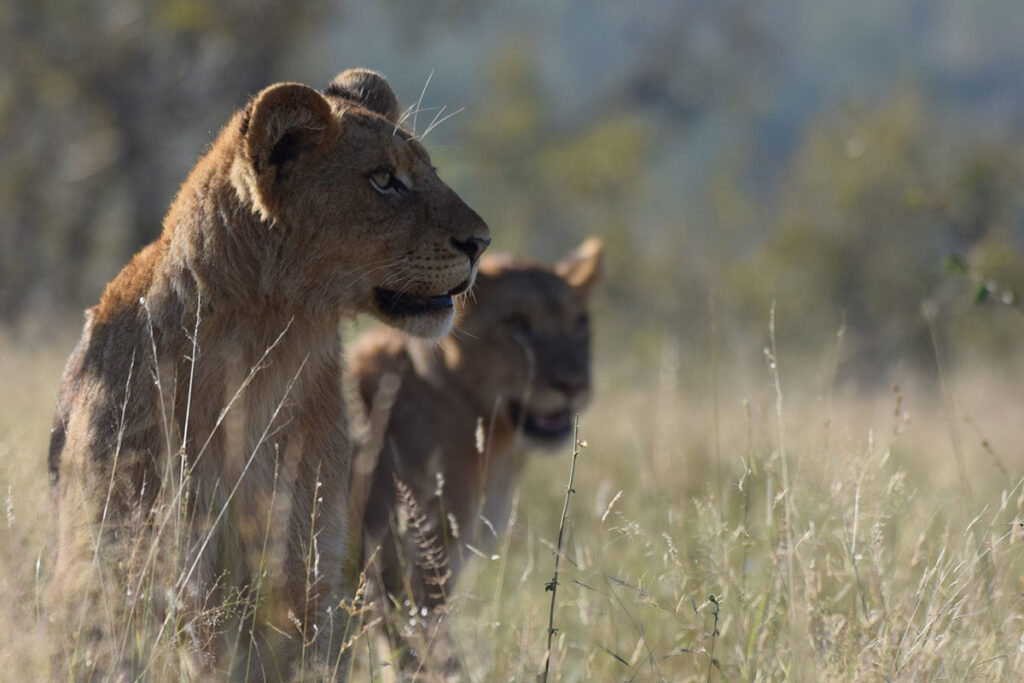
- Lion: Several prides inhabit the grasslands, and sightings are common.
- Leopard: Found in rocky and wooded areas; often seen at dawn or dusk.
- Buffalo: Large herds migrate between grazing areas and wetlands.
- Rhino: Both white and black rhinos are protected within the reserve.
Other Mammals
- Cheetah
- Brown hyena
- Hippo
- Giraffe
- Zebra and wildebeest
- Kudu, impala, waterbuck and hartebeest
- Warthog, baboon and vervet monkey
- Rare sightings of African wild dog
Birdlife
Pilanesberg is a premier birdwatching destination, with habitats ranging from open water to rocky ridges and woodland groves. More than 300 species occur here, providing year-round interest for both casual birders and specialists.
- Waterbirds: African fish eagle, herons, jacanas, ducks and waders.
- Raptors: Martial eagle, brown snake eagle, vultures, hawks and kestrels.
- Grassland Birds: Secretarybird, kori bustard and lapwings.
- Woodland Birds: Bee-eaters, rollers, hornbills and barbets.
Reptiles, Amphibians and Invertebrates
- Nile crocodile, monitor lizards, agamas, skinks and geckos
- Rock python and other non-venomous snakes
- Frogs active around wetlands during summer rains
- Butterflies, dragonflies, beetles and pollinating insects
Cultural and Historical Heritage
The Pilanesberg region has been inhabited by Tswana communities for centuries. Archaeological evidence of Iron Age settlements, stone tools, pottery fragments and traditional cattle enclosures can still be found throughout the landscape. This cultural heritage is an integral part of the reserve, and local communities continue to play an important role in tourism, conservation and cultural interpretation.
Conservation Management and Research
Pilanesberg’s conservation success is deeply rooted in proactive management. Operation Genesis established the foundation, but ongoing efforts continue to maintain ecological balance, protect endangered species and support community partnerships.
- Anti-poaching: Dedicated patrols and monitoring to protect rhinos and other threatened species.
- Wildlife Studies: Long-term research on predator–prey dynamics, elephant impacts and vegetation trends.
- Bird Monitoring: Surveys to track raptor populations and migratory movements.
- Community Conservation: Partnerships supporting local livelihoods and education.
Threats and Environmental Pressures
- Poaching, especially targeting rhinos
- Human–wildlife conflict on reserve edges
- Habitat pressure from agriculture and development
- Climate variability affecting water supplies
Tourism Activities and Safari Experiences
- Guided Game Drives: Morning and afternoon safaris in open vehicles.
- Self-Drive Safaris: Excellent road network for independent exploration.
- Bird Hides: Mankwe, Rathlogo and Ruighoek provide top viewing.
- Bush Walks: Guided walks focusing on ecology and tracking.
- Hot-Air Balloon Safaris: A signature sunrise experience.
- Photography: Ideal conditions for both wildlife and landscapes.
Access and Getting There
- By Road: 2–3 hours from Johannesburg or Pretoria via major highways.
- By Air: Pilanesberg Airport offers charter and limited scheduled flights.
Permits and Park Regulations
- Conservation fees apply to all visitors.
- No off-road driving is allowed.
- Observe posted speed limits to protect wildlife.
- Feeding animals is strictly prohibited.
- Remain inside vehicles except in designated areas.
Accommodation Options
- Luxury Lodges: Fully guided safaris, fine dining and premium comfort.
- Bush Lodges: Midrange lodges with excellent guiding and views.
- Self-Catering Units: Chalets and cottages inside or near the reserve.
- Camping: Well-equipped campsites for budget travelers.
- Sun City: Hotels, resorts, golf and entertainment only minutes away.
Best Time to Visit Pilanesberg
- May–September (Dry Season): Best for wildlife sightings and photography.
- October–April (Green Season): Beautiful scenery, baby animals and excellent birding.
- Year-Round: A reliable safari destination in all seasons.
Why Pilanesberg Game Reserve Is Unique
Pilanesberg Game Reserve is truly unique in Africa: an ancient volcanic crater overflowing with wildlife, a malaria-free Big Five destination accessible from major cities, and a rare blend of geological wonder, biodiversity and superb tourism infrastructure. The combination of dramatic landscapes, thriving wildlife populations, diverse ecosystems and year-round safari opportunities makes Pilanesberg one of South Africa’s most complete and rewarding destinations.
Whether you are watching elephants splash in Mankwe Dam, observing lions on the hunt, taking in panoramic crater views from the ridges or enjoying a serene sunrise from a hot-air balloon, Pilanesberg delivers unforgettable safari moments. It remains one of the country’s best examples of successful conservation, ecological restoration and sustainable tourism—an inspiring testament to what protected areas can achieve.