
Pongara National Park
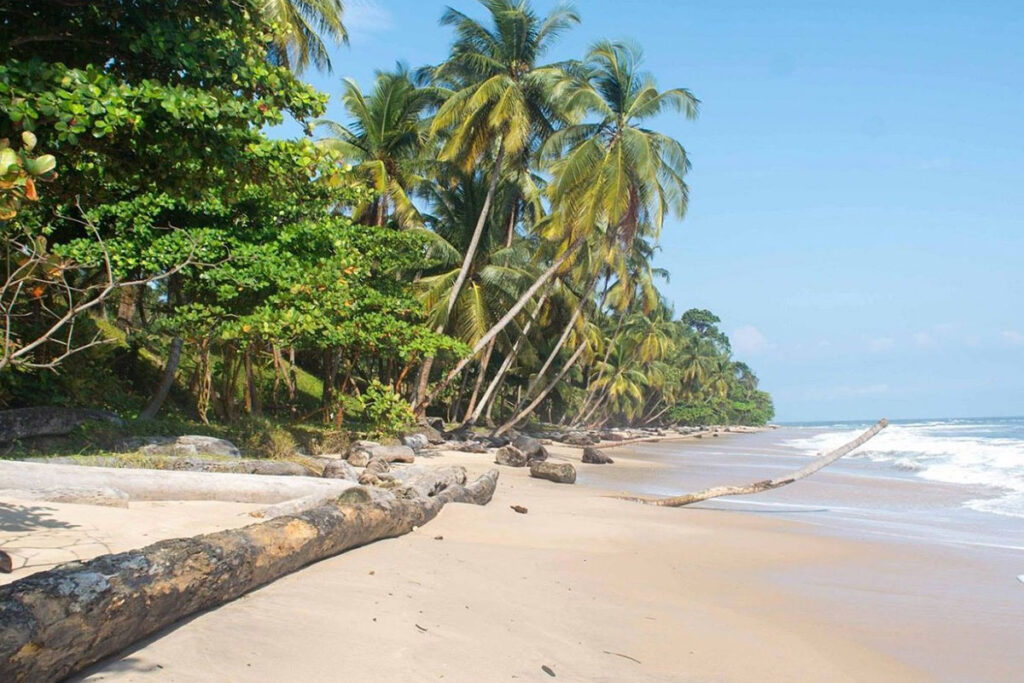
Pongara National Park, Gabon – Atlantic Ocean Leatherback Turtle Haven, Pristine Mangrove Wetlands, Coastal Forests, Estuary Wildlife and Biodiverse Savanna Landscapes
Pongara National Park is one of Gabon’s most enchanting coastal sanctuaries—a landscape where the sound of Atlantic waves merges with the rustling of coastal forests, the hum of mangrove wetlands and the distant calls of savanna wildlife. Situated directly across the Gabon Estuary from Libreville, the park covers 870 km² of beaches, estuary channels, mangroves, tidal flats, palm savannas and lush coastal forests. Despite its wild and untouched feel, Pongara is one of the most accessible national parks in Central Africa, making it a perfect destination for nature lovers seeking turtle nesting safaris in Gabon, mangrove boat tours, forest-and-savanna wildlife viewing, and peaceful Atlantic beach retreats.
Pongara’s fame is anchored in its role as a globally significant nesting ground for leatherback sea turtles, some of the largest reptiles on Earth. Each nesting season, massive leatherbacks—sometimes weighing more than 500 kg—emerge from the surf and make their slow, ancient journey up the beach to lay their eggs under the night sky. Alongside these turtles, the park protects endangered West African manatees, dolphins, migratory birds, forest elephants, primates, crocodiles, amphibians and complex mangrove ecosystems. Pongara is not just a wildlife reserve—it is a living interface between land and sea, a place where ecological processes unfold in real time across multiple interconnected habitats.
Overview of Pongara National Park
Pongara National Park was created in 2002 as part of Gabon’s bold initiative to protect its extraordinary biodiversity through a network of 13 national parks. Its designation reflects the country’s commitment to conserving coastal ecosystems that are increasingly rare across West and Central Africa. From the sandy shores of Pointe Pongara to the winding estuary channels shaded by mangrove roots, the park encompasses nearly every type of marine–terrestrial transition habitat found along the Central African coast.
The park’s ecological significance extends far beyond its boundaries. Its beaches host thousands of turtle nesting attempts each year, contributing to the stability of leatherback populations across the eastern Atlantic. Its mangrove forests act as powerful carbon sinks, protect coastlines from erosion and function as nurseries for countless fish and crustacean species. Meanwhile, its coastal forests and savannas support elephants, buffalo, monkeys, duikers and a vibrant bird population. Given its incredible accessibility from Libreville, Pongara is also central to eco-education, sustainable tourism and community-based conservation programs.
Location, Size and Key Facts
Pongara National Park is located along the southern and southwestern edge of the Gabon Estuary, directly across from the capital city, Libreville. Despite the short distance, once across the water visitors feel transported into a world defined by quiet beaches and untouched wilderness.
- Area: approx. 870 km²
- Established: 2002
- Coordinates: approx. 0.1°–0.6° N, 9.2°–9.7° E
- Nearest City: Libreville (20–40 minutes by boat)
- Main Habitats: beaches, mangroves, wetlands, savannas, coastal forests
- Notable Species: leatherback turtles, West African manatees, forest elephants
Geography, Terrain and Landscape
Pongara’s landscapes reflect the continuous interplay between the Atlantic Ocean, tidal forces, freshwater flows and coastal vegetation. The terrain transitions seamlessly from dunes and sandy beaches to rolling savannas with palm clumps, from muddy estuary banks to lush coastal forests rich in wildlife. This mosaic of landscapes creates dramatic visual contrasts and supports one of the highest levels of habitat diversity of any coastal park in Gabon.
On the coast, long beaches stretch for kilometers, bordered by dunes and forest. These are the primary nesting grounds for turtles. Inland, savannas open into wide, grassy plains where elephants and antelope graze. The forest edges contain dense understory plants, fruiting trees and lianas that attract primates. Along the estuary, mangroves form surreal labyrinths of intertwined aerial roots that shelter fish, crustaceans and juveniles of many marine species. These mangroves filter water, trap sediment, store carbon and provide habitat for countless organisms, making them one of the park’s ecological foundations.
Climate and Weather Patterns
Pongara’s coastal equatorial climate is defined by warm temperatures, high humidity and distinct wet and dry seasons shaped by the movement of the Intertropical Convergence Zone and Atlantic trade winds.
- June–September (Long Dry Season): Cool breezes, lower humidity, excellent beach and hiking conditions. Birding activity peaks as wetlands open.
- October–December (Short Rains): Marks the beginning of leatherback nesting season; vegetation becomes vibrant; estuary water levels rise.
- February–May (Long Rains): Lush, green forest scenery, high amphibian activity, abundant flowering plants and dynamic river flows.
Average annual temperatures range between 23°C and 31°C. While rainfall can be heavy during the long wet season, it gives life to Pongara’s forests and wetlands, sustaining amphibians, reptiles and flowering plants that depend on moisture-rich environments.
Hydrology, Estuary Dynamics and Mangrove Wetlands
The hydrology of Pongara National Park is one of its most defining and ecologically valuable features. Situated at the mouth of the Gabon Estuary, the park receives both freshwater from inland rivers and saltwater from the Atlantic Ocean. These two water sources meet, mix and continually exchange nutrients, creating a highly productive estuarine ecosystem.
The Gabon Estuary System
The estuary’s tidal rhythms shape the park’s wetlands, influencing salinity, sediment transport and the distribution of flora and fauna. Twice daily, ocean tides push saltwater into the mangrove channels, bringing nutrients that sustain vast schools of fish and crustaceans. As the tide retreats, mudflats become exposed, providing essential feeding grounds for waders and migratory shorebirds.
Mangrove Ecosystems
Pongara’s mangrove forests—composed primarily of Rhizophora racemosa, Avicennia germinans, and Laguncularia racemosa—are among the healthiest and most intact in Gabon. These ecosystems:
- store significant amounts of carbon, acting as climate stabilizers
- serve as nurseries for fish, shrimp and mollusks
- protect coastlines from storm surges and erosion
- provide breeding habitats for crabs and oysters
- support mangrove kingfishers, herons, egrets and mudskippers
Their dense root networks also act as natural water purifiers, filtering sediments and pollutants while maintaining water quality for manatees, juvenile fish and aquatic plants.
Freshwater Streams and Swamp Forests
Freshwater streams run through Pongara’s interior forests and savannas, creating small swamps that support amphibians, reptiles, sitatunga and forest elephants. During the dry months, these water sources become essential refuges for wildlife, especially large mammals and waterbirds.
Ecosystems and Habitat Types
Pongara’s compact size belies its impressive ecosystem diversity. The park encompasses:
- Marine beaches used heavily by nesting sea turtles
- Mangrove forests providing fish nurseries and carbon storage
- Coastal forests rich in mammals, birds and unique plant species
- Coastal savannas dotted with palms and shrubs
- Tidal flats and mudflats used by migratory birds
- Wetlands and swamp clearings supporting amphibians and sitatunga
This blend of aquatic and terrestrial habitats makes the park extraordinarily dynamic, with wildlife movements often tied to tides, seasons and habitat cycles.
Vegetation and Botanical Diversity
Pongara’s plant life reflects the transitional nature of its ecosystems. The coastal forests contain species adapted to both marine humidity and inland moisture, including:
- Canarium schweinfurthii – a towering tree producing edible fruit
- Petersianthus macrocarpus – with distinctive buttressed trunks
- Terminalia species – providing shade and habitat
- Raffia palms in wetlands – supporting aquatic fauna and nest-building birds
- Wild oil palms scattered across savannas
- Coastal shrubs, beach vines and dune-stabilizing grasses
These plants stabilize soil, regulate local microclimates and sustain the food webs that feed elephants, monkeys, birds and countless invertebrates.
Wildlife of Pongara National Park
Sea Turtles
Pongara is one of the premier leatherback turtle nesting sites in Africa. The nesting season runs from October to April, with the peak between December and February. Female leatherbacks—some exceeding 500 kg—crawl ashore under the cover of darkness, dig deep nests with their flippers and lay around 80–100 eggs. These nesting events are awe-inspiring encounters with ancient natural cycles.
Other turtle species found in Pongara include:
- Olive ridley turtles – common nesters
- Green turtles – feed in seagrass and estuary areas
- Hawksbill turtles – rare but occasionally recorded
The hatchling season (December to March) offers some of the most emotional wildlife experiences in Gabon, as baby turtles emerge from the sand and instinctively race toward the ocean.
Marine and Estuary Mammals
- West African manatee (Endangered)
- Atlantic humpback dolphins
- Bottlenose dolphins
- Common dolphins
Manatees are often found feeding quietly on aquatic vegetation in sheltered mangrove coves, while dolphins frequently appear during boat tours, riding bow waves or hunting schooling fish.
Terrestrial Mammals
- Forest elephants
- Forest buffalo
- Sitatunga
- Red river hog
- Brush-tailed porcupine
- Blue and red duikers
- Small-spotted genet
- Side-striped jackal
- African clawless otter
Elephants frequently move between forest and savanna zones, creating natural pathways through tall grasses and reshaping the vegetation as they travel.
Primates
- White-collared mangabey
- Putty-nosed monkey
- Vervet monkey
- Galagos
Birdlife
With more than 200 bird species recorded, Pongara is one of Gabon’s most diverse birding locations. Species include:
- Palm-nut vulture
- Goliath heron
- Western reef heron
- Royal tern
- Bee-eaters and kingfishers
- African fish eagle
- African jacana
- Sandpipers and plovers
- Osprey
The park’s mudflats and mangroves provide some of the most important stopover sites for migratory birds crossing Africa’s Atlantic flyway.
Reptiles, Amphibians and Invertebrates
- Slender-snouted crocodile
- Nile crocodile
- Monitor lizards
- Tree frogs
- Numerous wetland amphibians
- Mud and fiddler crabs
- Butterflies, dragonflies and beach beetles
Cultural and Local Communities
Communities near Pongara—including the area around Pointe Denis and several traditional fishing villages—have deep cultural ties to the coastline. Residents rely on artisanal fishing, shellfish harvesting, palm wine production, and small-scale farming. Increasingly, they participate in eco-tourism, turtle monitoring and mangrove conservation programs, strengthening community involvement in wildlife protection.
Visitors can experience local traditions through seafood meals, village tours, fishing outings with local boatmen and demonstrations of traditional cooking or palm wine tapping.
Conservation Importance
Pongara plays a vital conservation role within Gabon’s national parks network by protecting:
- one of Africa’s largest leatherback turtle nesting beaches
- healthy mangrove forests that store significant carbon
- endangered West African manatees and estuary dolphins
- important migratory bird habitats
- seasonal elephant and buffalo movement corridors
The park is also central to environmental education due to its proximity to Libreville, enabling school groups, researchers and visitors to learn about coastal ecosystems firsthand.
Threats and Conservation Challenges
- Poaching and harvesting of turtle eggs
- Bycatch of turtles and dolphins in artisanal fishing nets
- Light pollution from Libreville disorienting hatchlings
- Mangrove cutting for fuelwood and construction
- Coastal erosion and rising sea levels
- Pollution risks from shipping and oil activity
Conservation organizations and the National Agency for National Parks (ANPN) work with local communities to reduce these threats through awareness campaigns, turtle patrols, regulated tourism and improved fishing practices.
Scientific Research and Monitoring
Research in Pongara involves long-term monitoring programs carried out by ANPN, local NGOs and international scientists. Studies focus on:
- turtle nesting density and hatchling survival
- manatee ecology and estuary habitat use
- dolphin population trends
- mangrove restoration success
- camera-trap surveys for mammals
- bird migration routes
- coastal erosion and climate impacts
These efforts help guide adaptive management policies designed to protect critical habitats while supporting sustainable ecotourism.
Tourism Activities in Pongara National Park
- Turtle nesting tours during the night
- Hatchling-viewing experiences at dawn or dusk
- Mangrove boat safaris along quiet estuary channels
- Dolphin-watching excursions
- Forest and savanna walks for wildlife viewing
- Birdwatching tours in wetlands and mudflats
- Sunset cruises across the Gabon Estuary
- Beach relaxation on quiet stretches of sand
- Photography tours focusing on wildlife, landscapes and turtles
The peacefulness of Pongara’s beaches, combined with its biodiversity and accessibility, makes the park ideal for couples, families, photographers, researchers and wildlife enthusiasts.
Access and How to Get There
- By Boat: The most common access is via a 20–40-minute boat transfer from Libreville’s marina.
- By 4×4: Certain inland areas can be explored by guided vehicle tours.
- Guided Tours: Required for turtle activities and recommended for mangrove safaris.
Most tour operators departing from Libreville offer organized half-day, full-day or overnight trips to the park.
Permits and Park Regulations
- Park entry fees apply.
- Guides are mandatory for turtle nesting tours.
- No touching or disturbing nesting turtles.
- No flash photography at night.
- No collecting of shells, eggs, plants or sand.
- Boating restricted in sensitive mangrove zones.
Accommodation Options
Pongara offers a small but growing number of eco-lodges, beachfront bungalows and community-run guesthouses near Pointe Denis and along the coastline. Many properties emphasize sustainability and natural immersion, with features such as:
- beachfront bungalows
- ocean-view terraces
- nature trails and beach access
- guided activities
- fresh seafood dining
Best Time to Visit Pongara National Park
- October–April: peak turtle nesting and hatching, prime wildlife experiences
- June–September: best weather for hiking, beaches and birdwatching
- February–May: lush landscapes, flourishing plant life, amphibian activity
For most travelers, the ideal time is between October and March for turtle tours, or June to September for a peaceful coastal retreat and excellent birding.
Why Pongara National Park Is Unique
Pongara National Park is a rare coastal sanctuary where forest, savanna, mangrove and ocean ecosystems coexist in a single landscape. Its unparalleled leatherback turtle nesting beaches, lush mangrove systems, pristine estuary channels, rich birdlife and evergreen coastal forests make it an ecological treasure of Central Africa. Few places near a national capital offer such untouched wilderness and such extraordinary wildlife experiences.
For travelers seeking a peaceful yet wildlife-rich coastal escape—defined by ancient turtles, glowing sunsets, mangrove reflections and the quiet rhythm of the Atlantic—Pongara National Park stands as one of Gabon’s most captivating natural wonders.