
Ruvubu National Park
Ruvubu National Park, Burundi – East African Savannah Wilderness, Hippo Habitats, Miombo Woodlands and Iconic Ruvubu River Biodiversity Sanctuary
Ruvubu National Park is one of East Africa’s most authentically wild and least disturbed natural landscapes—an expansive mosaic of rolling savannahs, riverine forests, miombo woodlands, papyrus wetlands, and wildlife-rich floodplains that follow the sweeping curves of the Ruvubu River. Covering about 508 km² in northeastern Burundi, it stands as the country’s largest protected area and the last major sanctuary for big mammals, diverse birdlife, and intact savannah ecosystems. Named after the long, winding Ruvubu River, which shapes every aspect of the park’s ecology, Ruvubu is a destination where East African wilderness thrives with minimal human interference. For travelers seeking raw African nature, off-the-beaten-path safaris, birdwatching adventures, and immersive ecological experiences, Ruvubu National Park is one of the region’s most remarkable hidden gems.
Stepping into Ruvubu is like traveling back in time to a world untouched by modern development. Tall golden grasses ripple across sunlit plains, the calls of hornbills echo from acacia trees, hippos grunt from the river’s edge, and troops of baboons bark as they patrol the savannah. The atmosphere is serene yet full of life—every bend of the river reveals crocodiles resting on sandbars, antelope grazing silently, and monkeys leaping energetically between fig trees. This powerful sense of natural continuity, combined with the park’s ecological significance, scenic beauty, and rare wildlife, makes Ruvubu one of Burundi’s most extraordinary conservation areas and an unforgettable destination for nature lovers.
Overview of Ruvubu National Park
Ruvubu National Park was established in 1980 to protect Burundi’s last stronghold of large mammals and to conserve the unique savannah–woodland ecosystems found only in this corner of the country. As one of the most biodiverse landscapes in Burundi, the park shelters hippos, buffalo, crocodiles, reedbuck, colobus monkeys, hundreds of bird species, and a variety of reptiles and insects. The ecological meeting point between East African savannah and Central African woodland creates a distinctive blend of flora and fauna that makes Ruvubu particularly special for botanists, ornithologists, and wildlife researchers.
Despite its ecological richness, Ruvubu remains minimally developed for tourism—a factor that enhances its wilderness appeal. Visitors encounter a landscape largely unchanged for generations, where wildlife roams freely and natural processes unfold without interference. The park’s protected status also plays a vital role in Burundi’s environmental resilience, helping to preserve water sources, regulate climate patterns, and maintain crucial wildlife corridors that ensure genetic diversity for regional species.
Location, Size and Key Facts
Ruvubu National Park stretches across four provinces in northeastern Burundi—Muyinga, Cankuzo, Ruyigi, and Karuzi—and forms a central part of the Ruvubu River Basin, one of the country’s most ecologically valuable zones. Its strategic location near the borders with Tanzania and Rwanda also positions it within the broader Great Lakes conservation network, providing essential habitat continuity across East Africa.
- Area: approx. 508 km²
- Coordinates: 3.28°S, 30.30°E
- Elevation: 1,350–1,800 m
- Established: 1980
- Main River: Ruvubu River, flowing through the entire park
- Ecosystems: Savannah, riparian forest, miombo woodland, wetlands
- Access Gates: Gihofi (south), Nyabikere (west), Mwaro (northeast)
- Nearest towns: Muyinga, Cankuzo, Ruyigi
Geography, Terrain and Landscape
The geography of Ruvubu National Park is dominated by the graceful yet powerful Ruvubu River, whose winding path has carved deep valleys, fertile floodplains, oxbow lakes, and sandy banks that sustain an abundance of wildlife. The river acts as both a physical and ecological backbone, shaping the park’s vegetation, hydrology, wildlife distribution, and overall landscape diversity.
Beyond the water’s edge, the terrain transitions into rolling savannah grasslands dotted with acacia and combretum trees, leading up to elevated plateaus covered in miombo woodland. Rocky outcrops offer expansive views across the river basin, making them ideal for landscape photography and wildlife scanning. This mix of open plains, woodlands, wetlands, and riverine corridors creates one of the most varied ecological landscapes in Burundi and a haven for numerous species.
Climate and Weather Patterns
Ruvubu National Park experiences a warm tropical climate moderated by the region’s elevation. The annual temperature ranges between 20°C and 30°C, making the park pleasant to visit throughout the year. Rainfall varies between 1,000 and 1,200 mm annually, sustaining both wetland and woodland habitats.
- Long rainy season: February–May (lush vegetation and breeding activity)
- Short rainy season: September–November (ideal for birdwatching)
- Dry seasons: June–August and December–January (best for wildlife viewing)
During the rains, the landscape transforms into vibrant green expanses and flowers burst across the savannah. In the dry months, wildlife congregates around the river, making sightings easier and more predictable. These seasonal variations create a dynamic environment that supports a wide range of species year-round.
Hydrology and Water Systems
The Ruvubu River is the ecological lifeline of the park. Flowing steadily throughout the year, it ensures reliable water availability for wildlife during the long dry season and plays a critical role in shaping the floodplains, riparian forests, and wetland ecosystems found within the park. The river’s seasonal floods help deposit nutrient-rich sediments that support grasses and aquatic vegetation crucial for herbivores and fish.
More than 30 fish species inhabit the river, including tilapia, catfish, lungfish, and barbus species, making Ruvubu an important breeding ground for aquatic life. Seasonal pools, marshlands, and oxbow lakes provide habitats for frogs, insects, and waterbirds, turning the riverine zone into one of the most ecologically active areas in the park.
Ecosystems and Vegetation Zones
Ruvubu National Park contains a rich mosaic of ecosystems shaped by differences in rainfall, elevation, and river dynamics. Each ecosystem supports unique plant communities and wildlife species that contribute to the park’s outstanding biodiversity.
Riverine and Riparian Forests
Lining the edges of the Ruvubu River are dense riparian forests dominated by fig trees, acacias, sycamores, and lianas. These forests provide shade, food, nesting sites, and vital refuge for primates, birds, insects, and herbivores. The canopy is alive with bird calls, monkey activity, and the buzzing of insects that thrive in the humid microclimate.
Savannah Grasslands
The heart of the park consists of sweeping savannah plains covered in tall grasses and scattered acacias. These grasslands are essential grazing grounds for antelope species and prime hunting grounds for predators such as civets, servals, and jackals. The open nature of the savannah also provides excellent visibility for wildlife viewing.
Miombo Woodland
Higher elevations are dominated by miombo woodland—an ecosystem typical of southern and eastern Africa. Key species include Brachystegia boehmii, Julbernardia globiflora, Combretum molle, and Terminalia sericea. These woodlands host unique bird species, small mammals, and insects adapted to shaded, dry environments.
Wetlands and Papyrus Swamps
Permanent wetlands are found around oxbow lakes and marshy river inlets. These habitats support frogs, waders, herons, African jacanas, and countless insects that form crucial components of the food chain.
Wildlife of Ruvubu National Park
Mammals
Ruvubu National Park is one of the last safe havens for large mammals in Burundi. Visitors can encounter a variety of species such as:
- Hippos (large pods commonly found in the river)
- Nile crocodiles (basking along sandbanks)
- Defassa waterbuck
- Bohor reedbuck
- Bushbuck
- Oribi
- Warthogs
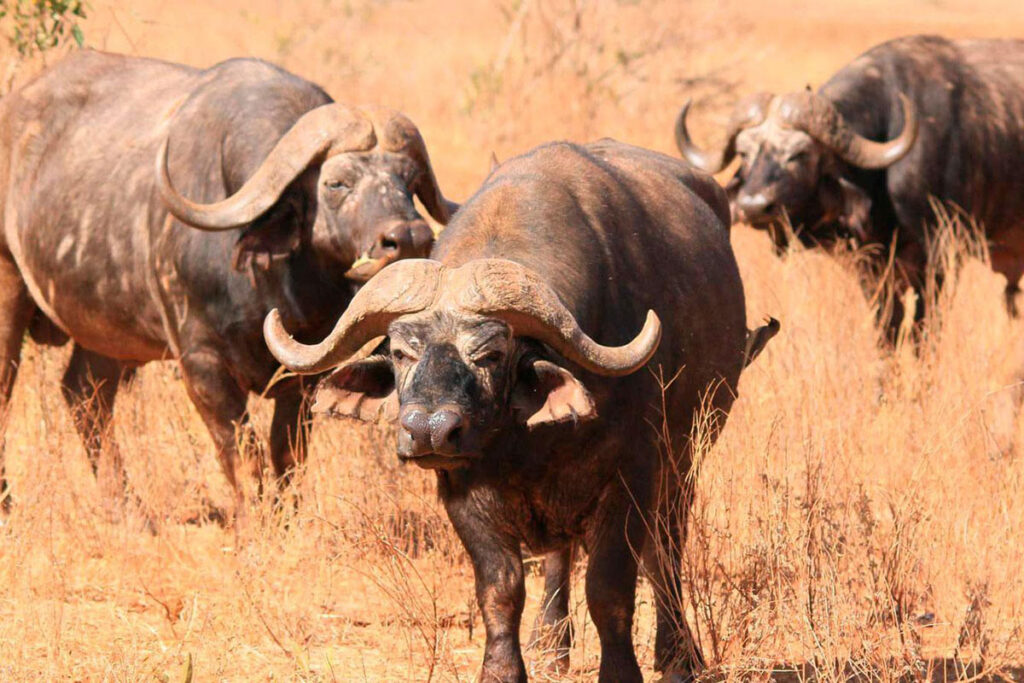
- Buffalo
- Harvey’s duiker
- Common duiker
- Side-striped jackal
- Serval (rare but present)
- Civets and genets
- Spot-necked otter (found along the river)
Ruvubu is also rich in primates, including:
- Olive baboons
- Vervet monkeys
- Red colobus monkeys
- Blue monkeys
- Bushbabies
Birdlife
With more than 400 recorded species, Ruvubu ranks among East Africa’s best birding hotspots. Its savannah, woodland, and wetland zones host:
- Saddle-billed stork
- Great blue turaco
- Ross’s turaco
- Papyrus gonolek
- African fish eagle
- White-backed vulture
- Hornbills
- Bee-eaters
- Kingfishers
- African harrier-hawk
- Black-headed gonolek
- Yellow-billed storks
- Jacanas and herons
Reptiles, Amphibians and Fish
Crocodiles, monitor lizards, terrapins, skinks, and several harmless snake species inhabit the park. Wetlands support frogs and toads, especially abundant during rainy seasons. Ruvubu River contains diverse fish including tilapia, catfish, lungfish, and small cichlids that sustain aquatic food webs.
Insects and Invertebrates
Butterflies, dragonflies, beetles, and giant emperor moths fill the landscape with color and movement. Termite mounds are common and play a crucial ecological role, enriching soils and shaping vegetation structure.
Local Communities and Cultural Significance
Communities surrounding Ruvubu have deep cultural ties to the river and woodlands. For generations, the landscape has supported rituals, traditional medicine, honey harvesting, and local folklore. The Ruvubu River is often featured in regional cultural narratives, symbolizing life, fertility, and ancestral continuity. Today, community partnerships support conservation and create opportunities for eco-tourism, education, and sustainable livelihoods.
Conservation Management and Protection
The park is managed by the Burundi Office for Environmental Protection (OBPE), which oversees ranger patrols, anti-poaching operations, fire management, ecological monitoring, and community engagement. Ruvubu is central to regional conservation strategies aimed at restoring wildlife populations, maintaining genetic corridors, and preserving essential habitats in East Africa.
Threats and Conservation Challenges
Despite protection, Ruvubu faces several threats:
- Poaching and bushmeat hunting
- Snares targeting antelope and primates
- Illegal grazing inside park boundaries
- Charcoal production in surrounding areas
- Agricultural encroachment in buffer zones
- Human–wildlife conflict (crop-raiding)
- Climate change affecting river patterns
Human–Wildlife Conflict
Crop-raiding by baboons, vervets, and antelope is a challenge for nearby farmers. Community-based mitigation efforts—including buffer zones, improved fencing, and awareness programs—help reduce conflict and promote peaceful coexistence between wildlife and people.
Scientific Research and Monitoring
Ruvubu is a hub for biodiversity research. Scientists study primate behavior, vegetation change, avian diversity, hydrology, soil composition, and wildlife population trends. Long-term monitoring programs help measure ecological resilience and guide conservation decisions.
Tourism Activities in Ruvubu National Park
Safari Game Drives
Guided game drives showcase buffalo, warthogs, antelope, monkeys, giraffe-sized fig trees, and vibrant savannah landscapes. The riverbanks are the best places to see hippos and crocodiles.
Birdwatching
Ruvubu’s mixed habitats make it a birdwatcher’s paradise. Wetlands, woodland edges, and riverbank forests offer exceptional sightings, especially during mornings and after rainfall.
Nature Walks and Hiking
Walking safaris allow visitors to explore miombo woodlands, riverine forests, and open savannahs. These walks provide opportunities for tracking monkeys, butterflies, insects, and smaller mammals.
Photography
Sunrise over the river, savannah vistas, fig tree canopies, and wildlife gatherings offer outstanding photographic opportunities year-round.
Primate Tracking
Red colobus, blue monkeys, baboons, and vervets are easily observed along forested trails, making primate tracking a rewarding activity.
Permits, Regulations and Responsible Tourism
Visitors must obtain park entry permits from OBPE offices or park gates. Rules include staying on designated paths, avoiding loud noise, respecting wildlife space, and never approaching hippos or crocodiles. Swimming is strictly prohibited in the river due to dangerous wildlife.
Accommodation Options
Accommodation options include modest lodges and guesthouses in Muyinga, Cankuzo, and Ruyigi. Although there are no high-end lodges inside the park, future development plans aim to establish eco-lodges, tented camps, and wilderness chalets for safari travelers.
Best Time to Visit Ruvubu National Park
The dry season (June–August and December–January) offers the best wildlife viewing, photography opportunities, and road conditions. The rainy season (February–May and September–November) brings lush landscapes, breeding activity, and exceptional bird migration patterns.
Why Ruvubu National Park Is Unique
Ruvubu National Park is a rare sanctuary where East African savannah landscapes, pristine woodland ecosystems, and rich riverine habitats converge. It is Burundi’s most important wildlife refuge, home to hippos, buffalo, rare birds, antelope, primates, and a remarkable variety of lesser-seen species. Its remote feel, ecological purity, striking scenery, and deep cultural connections make it one of the Great Lakes Region’s most captivating and underexplored natural destinations.
For wildlife enthusiasts, adventurers, and eco-travelers seeking an off-the-beaten-path African safari experience, Ruvubu National Park offers unforgettable encounters with raw nature, quiet wilderness, and a conservation story still unfolding. It remains a living symbol of Burundi’s ecological heritage and a vital sanctuary for future generations of wildlife.