
Salonga National Park
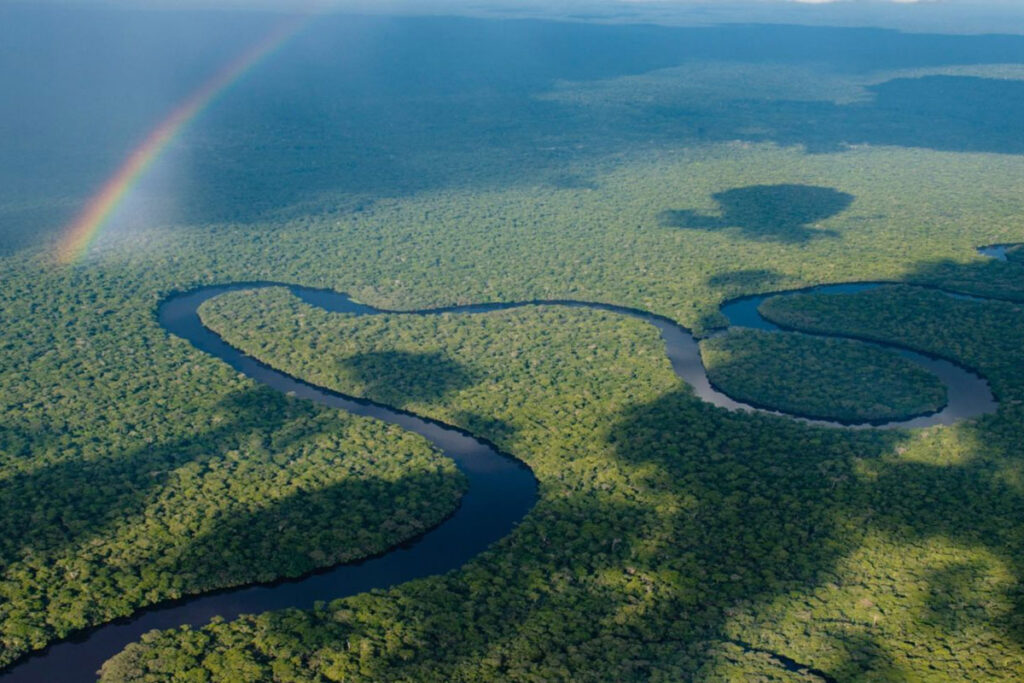
Salonga National Park, DR Congo – Africa’s Largest Tropical Rainforest Reserve and Global Bonobo Stronghold
Salonga National Park in the Democratic Republic of the Congo is the largest protected tropical rainforest reserve in Africa and one of the most important rainforest conservation areas on Earth. Covering about 3.3 million hectares (approximately 33,346 km²) in the central Congo Basin, this UNESCO World Heritage Site protects an immense expanse of lowland evergreen forest, swamps, peatlands, and sinuous rivers that remain largely untouched by modern development.
Created as a national park in 1970 and inscribed on the UNESCO World Heritage List in 1984, Salonga is globally renowned as the most important stronghold for bonobos, the peaceful great apes found only in the Congo Basin. It is believed to shelter one of the largest remaining bonobo populations in the world, alongside forest elephants, Congo peafowl, giant pangolins, African golden cats, and an extraordinary diversity of other species that depend on intact rainforest.
For travelers, conservation supporters, and researchers, Salonga National Park is not a conventional safari destination but a true rainforest frontier. With almost no roads and limited infrastructure, visiting Salonga feels like joining an expedition deep into the heart of the Congo Basin, traveling by river and exploring habitats still poorly known to science.
Salonga National Park Key Facts at a Glance
- Country: Democratic Republic of the Congo
- Region: Central Congo Basin, between Kinshasa and Kisangani
- Area: About 3,334,600 hectares (≈33,346 km²)
- Established as a national park: 1970
- UNESCO World Heritage Site: Inscribed in 1984
- World Heritage in Danger: Listed in 1999 and removed from the Danger List in 2021
- IUCN Category: II (National Park)
- Primary habitats: Lowland evergreen rainforest, swamp forest, peatlands, bais (natural forest clearings), rivers and streams
- Flagship species: Bonobo, forest elephant, Congo peafowl, giant pangolin, African golden cat
- Park authority: ICCN (Institut Congolais pour la Conservation de la Nature), co-managed with WWF
Location and Geography
Position in the Central Congo Basin
Salonga National Park lies in the central depression of the Congo Basin, roughly halfway between the cities of Kinshasa and Kisangani. It stretches across several provinces, including Mai-Ndombe, Tshuapa, Kasaï and surrounding administrative regions. Situated around 2° south latitude and 21° east longitude, the park occupies the very heart of the central Congo rainforest, far from major roads and urban centers.
Two Sectors and the Corridor
The park is divided into two large blocks, a northern and a southern sector, separated by an inhabited corridor roughly 40 km wide that lies outside the park boundary. Together, these two sectors form an enormous forested landscape, but the corridor presents both a challenge and an opportunity: managing land use there is crucial to maintaining ecological connectivity between the two sectors and ensuring that wildlife can move freely across the broader Salonga landscape.
Landforms and Landscapes
Salonga’s landscapes are dominated by low-lying plains, gently undulating plateaus, and broad river valleys. Forested plateaus are covered with tall, evergreen rainforest, while low-lying areas are occupied by swamp forests, floodplains, and peat-filled depressions. Some river valleys are wide and marshy with slow-moving water; others are narrow, cutting through forested banks and low escarpments up to 80 meters high.
This subtle variation in elevation, soils, and hydrology creates a mosaic of microhabitats across the park. From permanently waterlogged swamps to well-drained terra-firme ridges, Salonga’s geography underpins its rich ecological diversity and its capacity to support a full community of central African rainforest species.
Climate
Salonga National Park has a classic equatorial rainforest climate. Conditions are hot, humid, and wet throughout the year, with mean annual temperatures around 25–26°C. High humidity and frequent cloud cover are typical, and visitors can expect rain at almost any time.
Annual rainfall averages about 1,700–2,000 mm, with no true dry season. There is, however, a slightly drier period from June to August, and a shorter, less pronounced lull around January–February. Even during these months, heavy showers remain common, and many areas stay saturated or flooded, especially in swamp forests and peatlands.
Hydrology
Hydrologically, Salonga is an integral part of the vast Congo River system. The park is crossed by numerous rivers and streams, including the Luilaka, Salonga, Lomela, Loile, and other tributaries that eventually drain into the Busira–Ruki–Congo network. These rivers are the lifeblood of the park’s ecosystems and, in practice, also serve as its “roads.”
Much of Salonga is underlain by peat and waterlogged soils, forming extensive swamps and peat bogs that act as giant freshwater sponges and carbon stores. These peatlands have formed over thousands of years as plant material accumulated in permanently wet conditions. Intact peatland systems regulate river flows, reduce flooding extremes downstream, and lock away enormous quantities of carbon, making Salonga crucial to both regional hydrology and global climate regulation.
Ecosystems and Vegetation
Lowland Evergreen Rainforest
The dominant ecosystem in Salonga is lowland evergreen rainforest with a multi-layered canopy structure. Emergent trees often exceed 40 meters in height, rising above a dense mid-story of smaller trees and lianas, and a dark, humid understory rich in shrubs, herbs, and saplings. This forest type is typical of the central Congo Basin, but Salonga is its single largest intact protected block in Africa.
Swamp Forests and Flooded Forests
In low-lying zones, swamp forests and seasonally flooded forests dominate. Trees here are adapted to waterlogged soils and prolonged inundation. These forests support fish, amphibians, aquatic invertebrates, sitatunga antelope, forest elephants, and otters, as well as a specialized flora that tolerates high water levels and low oxygen in the soil.
Peatlands
Beneath many swamp forests lie deep peat layers—dense, partially decomposed organic matter that may be several meters thick. These peatlands are globally significant carbon stores. As long as they remain flooded and undisturbed, they effectively lock away carbon; if drained, burned, or degraded by infrastructure, they can release vast quantities of greenhouse gases. Protecting Salonga’s peatlands is therefore a high priority for global climate mitigation.
Bais and Natural Clearings
Scattered throughout the forest are bais—natural clearings with grasses, herbs, mineral-rich soils, and shallow water. These areas are magnets for wildlife, particularly forest elephants and antelope, which come to feed on mineral-rich vegetation and sediments. In an environment where dense vegetation normally limits visibility, bais are among the best places to observe wildlife.
Wildlife of Salonga National Park
Mammals
Salonga is best known for its bonobo population. The park is believed to hold one of the world’s largest remaining populations of this great ape, with estimates in the tens of thousands of individuals across the wider landscape. Bonobos, sometimes called “pygmy chimpanzees,” are renowned for their complex social behavior and relatively peaceful societies.
Beyond bonobos, Salonga supports an impressive array of mammals, including:
- Forest elephants
- African golden cats and leopards
- Forest buffalo
- Bongo and sitatunga antelope
- Blue duiker, yellow-backed duiker, and other forest duikers
- Red river hogs and other wild pigs
- Giant, long-tailed, and tree pangolins
- Otters such as Congo clawless and spotted-necked otters
- Small carnivores including Angola kusimanses and civets
Primates are particularly diverse. In addition to bonobos, visitors and researchers may encounter red colobus monkeys, mangabeys, red-tailed monkeys, Allen’s swamp monkeys, pottos, and dwarf bushbabies. These primates play important ecological roles, especially in seed dispersal and forest regeneration.
Birds
Salonga is a frontier for birdwatching in the Congo Basin. The park hosts hundreds of bird species, including a mix of forest specialists, waterbirds, and migratory species. Highlights include:
- Congo peafowl – a threatened, endemic bird and the national bird of the DRC
- African grey parrots
- Cattle egrets, black storks, and yellow-billed storks
- Various kingfishers, hornbills, barbets, and bee-eaters
- Forest-dwelling greenbuls, sunbirds, and flycatchers
Because many areas of Salonga remain difficult to reach, the park’s true bird diversity is likely higher than current records suggest. Future surveys will almost certainly add more species to the list.
Reptiles, Amphibians and Fish
The rivers and wetlands of Salonga are home to African slender-snouted crocodiles and various other reptiles, including pythons, smaller snakes, and forest chameleons. Frog diversity is high in swampy and riparian habitats, where moist conditions and abundant vegetation support breeding and tadpole development.
Fish diversity in the park’s rivers and streams is also significant, with dozens of species recorded and many more expected. These fish are a key food source for local communities around the park and part of complex aquatic food webs that link rivers, floodplains, and forests.
Insects and Other Invertebrates
As a vast tropical rainforest, Salonga likely harbors thousands of insect and other invertebrate species. Butterflies, beetles, dragonflies, ants, termites, and spiders are all abundant. Many species remain undescribed, and invertebrate surveys consistently reveal new and unexpected records, underscoring how little is still known about the park’s smallest inhabitants.
Unique Features of Salonga National Park
- Largest protected tropical lowland rainforest reserve in Africa
- Single most important stronghold for bonobos worldwide
- Extensive peatlands that store enormous amounts of carbon
- Habitat for rare species such as Congo peafowl, forest elephants, and giant pangolins
- Minimal road access, preserving a sense of true wilderness and remoteness
- Huge knowledge gaps, meaning the park is still a frontier for scientific discovery
Cultural and Indigenous Communities
The Salonga landscape is not an empty wilderness; it is also a cultural landscape shaped by Indigenous and local communities over generations. The Iyaelima people, part of the broader Mongo group, live mainly in the southern part of the park. They maintain several settlements and have a deep spiritual and practical relationship with the forest.
Traditional beliefs and taboos among the Iyaelima, including a strong taboo against hunting or harming bonobos, have contributed to unusually high bonobo densities in areas near their villages. This is a powerful example of how Indigenous knowledge and cultural norms can support wildlife conservation.
Other communities live in the corridor between the park’s two sectors and in surrounding buffer zones, relying on fishing, small-scale agriculture, and forest resources. Current conservation thinking in Salonga increasingly recognizes that long-term protection of the park must involve these communities as partners, with attention to rights, livelihoods, and fair benefit-sharing.
Conservation Importance and Management
World Heritage and Global Significance
Salonga was inscribed on the UNESCO World Heritage List in 1984 due to its exceptional size, intact ecosystems, and critical role as habitat for rare species like bonobos and forest elephants. The park’s vast, relatively undisturbed rainforest represents one of the last large-scale examples of central African lowland rainforest dynamics and ecological processes.
Because of serious threats, Salonga was placed on the UNESCO List of World Heritage in Danger in 1999. Following significant improvements in management, anti-poaching efforts, and community engagement, it was removed from the Danger List in 2021. This marked a major step forward but does not mean the threats have disappeared; rather, it signals that the trajectory of the site is improving and that continued support is essential.
Management and Governance
Salonga National Park is managed by the Institut Congolais pour la Conservation de la Nature (ICCN), the national authority responsible for protected areas in the DRC. Since 2015, ICCN has co-managed the park with the World Wide Fund for Nature (WWF), bringing together national leadership and international conservation expertise.
Management priorities include:
- Strengthening anti-poaching patrols and law enforcement
- Maintaining and expanding biodiversity monitoring programs
- Working with local and Indigenous communities on sustainable livelihoods and rights-based conservation
- Protecting peatlands and sensitive habitats from extractive activities
- Developing carefully controlled, low-impact tourism where feasible
Threats to Salonga National Park
- Poaching and bushmeat hunting:
Historical and ongoing hunting has reduced populations of elephants and other large mammals. Controlling commercial bushmeat trade is a long-term challenge. - Habitat degradation and encroachment:
Agricultural expansion, especially in the corridor between the park sectors, can fragment habitats and reduce connectivity. - Illegal and unsustainable fishing:
Overfishing and destructive methods can damage river ecosystems and reduce fish stocks vital for local communities. - Oil and resource exploration pressures:
Past proposals for oil exploration overlapping or near the park highlight the risk of industrial development in sensitive rainforest and peatland areas. - Climate change:
Altered rainfall patterns and prolonged droughts could affect peat stability, river flows, and forest health, with knock-on effects on wildlife.
Research and Monitoring
Salonga is a major focus for research on bonobos and other rainforest species. Long-term bonobo studies have provided insights into their social behavior, ranging patterns, and habitat needs. Camera-trap networks, covering large portions of the park, monitor medium and large mammals and allow scientists to track trends in species presence and relative abundance.
Despite this progress, large areas of Salonga remain poorly studied. Plant inventories, insect surveys, herpetological work, and aquatic biodiversity studies are still limited, meaning that the park likely harbors many species not yet documented. For scientists, Salonga is both a living laboratory and a reminder of how much remains to be learned about Congo Basin ecosystems.
Tourism Activities in Salonga National Park
A Frontier Destination, Not a Mainstream Safari Park
Salonga National Park is not currently a mainstream tourism destination. Infrastructure is extremely limited, and the park receives very few visitors each year. Those who do visit are typically researchers, conservation staff, documentary teams, or highly adventurous eco-travelers on custom expeditions.
This reality is important for anyone researching “Salonga National Park tours” or “Congo Basin rainforest safaris.” A trip to Salonga is not comparable to visiting a well-developed savanna park in East Africa; it is a remote expedition that demands flexibility, physical fitness, and a high tolerance for basic conditions.
Potential and Existing Activities
- Multi-day river journeys by boat or motorized pirogue along major rivers
- Guided forest walks near ranger posts and research camps
- Specialist birdwatching and wildlife tracking trips
- Ethical, pre-arranged cultural visits with local communities
- Participation in or observation of research and monitoring activities, where permitted
Any tourism to Salonga must be carefully planned, low-impact, and aligned with conservation and community priorities. Visiting the park is less about wildlife “checklists” and more about experiencing one of Earth’s last great tropical rainforest wildernesses.
Access to Salonga National Park
Access to Salonga is challenging and requires significant logistical planning. Most visitors begin in Kinshasa and fly to regional towns such as Mbandaka, Boende, or other smaller airstrips near the park. From there, they travel by river—typically in motorized boats or large dugout canoes—to reach ranger posts and selected sites within the park.
There are virtually no internal roads, so rivers are the primary transport routes. Travel times can be long and highly dependent on water levels, weather conditions, and security considerations. In some cases, small charter aircraft or helicopters may be used by research teams or specialized expeditions to reach airstrips near key stations.
Because regional security and infrastructure can change, up-to-date information from ICCN, the park co-management team, and trusted on-the-ground partners is essential when planning any visit.
Permits and Regulations
As a national park and World Heritage Site, Salonga is strictly protected. All visits require:
- Official park entry permits issued through ICCN or authorized partners
- Research permits for scientific work, including clear protocols for data collection
- Mandatory accompaniment by certified guides and, where appropriate, eco-guards
- Full adherence to park rules regarding no hunting, no specimen collecting, no off-limit area entry, and strict respect for wildlife and local communities
Permit conditions, fees, and application procedures can change over time. Anyone planning a visit should obtain the latest information directly from ICCN, the park’s official website or communication channels, or reputable tour operators familiar with Salonga.
Accommodation Options
Unlike more established safari destinations, Salonga does not have conventional tourist lodges or hotels inside the park. Accommodation is basic and expedition-oriented, typically including:
- Simple guesthouses or mission-style lodgings in gateway towns before entering the park
- Basic rooms at ranger stations or research camps, by prior arrangement
- Tented camps set up by operators or research teams on suitable forest clearings or riverbanks
Anyone planning to visit Salonga should be prepared for simple facilities, bucket showers, generator or solar-based electricity (if available), and limited communications. Satellite phones or other emergency communication devices are recommended for deep-field expeditions.
Best Time to Visit Salonga National Park
Given its equatorial climate, Salonga can technically be visited throughout the year. However, for practical planning—especially for boats and camping—the slightly drier months are generally more favorable. These are:
- June to August: Often the least rainy period, with somewhat more manageable river levels and drier camping conditions.
- January to February: A shorter, relatively drier window that may also be suitable for river-based expeditions.
Even in these periods, travelers should expect heavy showers, high humidity, and muddy conditions. Climate change is also altering rainfall patterns across the Congo Basin, so historic seasonality may not always match current conditions. Before planning a Salonga National Park expedition, it is crucial to combine seasonal guidance with recent, local reports about water levels, access routes, and security.
Why Salonga National Park Is Truly Unique
Salonga National Park is one of Earth’s last great tropical rainforest wildernesses: vast, remote, and still largely unknown to science. It protects the largest single block of lowland rainforest in Africa, a globally important stronghold for bonobos, and massive peatland carbon stores that help stabilize the planet’s climate.
At the same time, Salonga is a living test case for modern conservation—where the protection of biodiversity must be reconciled with Indigenous rights, community livelihoods, and pressures from global markets and climate change. Its story is still being written, and the park’s future will depend on continued international support, strong national leadership, and meaningful partnerships with the communities who call the forest home.
For scientists, conservationists, and highly adventurous travelers, Salonga National Park offers something few places on Earth still can: the chance to engage with a truly wild rainforest landscape at a continental scale, where every journey feels like exploration and every discovery adds to the world’s understanding of the Congo Basin.