
Semuliki National Park
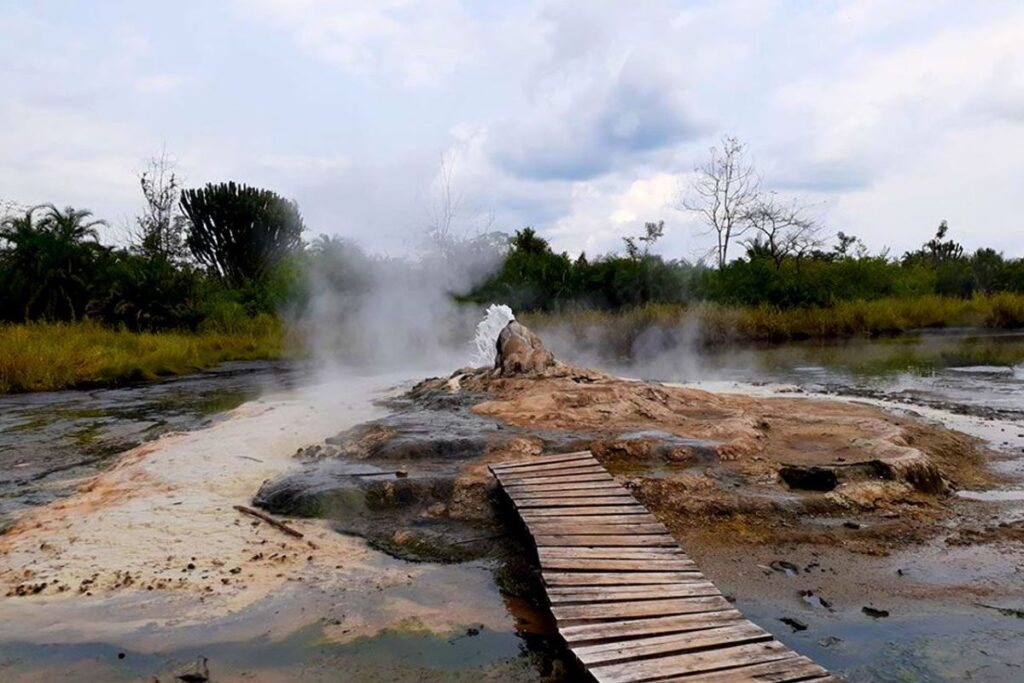
Semuliki National Park, Uganda – East Africa’s Only Congo Basin Rainforest, Geothermal Wonders, Cultural Heritage and Rift Valley Biodiversity Corridor
Overview
Semuliki National Park is one of Uganda’s most ecologically valuable protected areas, preserving a rare fragment of the vast Congo Basin rainforest within East Africa. Formally established in 1993, the park represents an ecological crossroads where Central African rainforest species meet East African savanna species, creating a uniquely rich biodiversity mix. The lowland rainforest is strikingly different from the montane forests and grasslands commonly found in other Ugandan parks, offering travelers a chance to experience lush, humid, evergreen landscapes similar to those found deep in the Democratic Republic of Congo.
The park’s appeal extends well beyond its vegetation. Semuliki is a stronghold for rare mammals, iconic forest birds, primates, amphibians, butterflies and reptiles that depend on humid, evergreen conditions. This includes Congo Basin specials such as forest buffalo, De Brazza’s monkeys, hornbills and red river hogs—species that are otherwise absent or extremely rare in East Africa. Adding to its uniqueness are the famous Sempaya Hot Springs, dramatic geothermal features that eject steam and boiling water into the air, creating a spectacular natural display and forming one of Uganda’s most intriguing cultural and geological attractions.
Key Facts
- Country: Uganda
- District: Bundibugyo
- Coordinates: 0.78° N, 30.02° E
- Area: 220 km²
- Established: 1993
- Altitude: 670–760 meters above sea level
- Drainage Basin: Congo River Basin
- Major Ecosystems: Lowland tropical rainforest, swamp forest, palm wetlands, riverine forest, geothermal zones
- Wildlife Diversity: 441 bird species, 53 mammals, 400+ butterfly species
- Signature Attractions: Sempaya Hot Springs, Semuliki River, Congo Basin endemics, Batwa culture
- Managing Authority: Uganda Wildlife Authority (UWA)
- Nearest Major City: Fort Portal
Location and Geography
Semuliki National Park lies in the Semuliki Valley on the western edge of Uganda, along the border with the Democratic Republic of Congo. Situated on the floor of the Albertine Rift Valley, this region is a massive geological trench formed by tectonic movements that shaped the African continent over millions of years. The park’s location places it between two dramatic landscapes: the snow-capped Rwenzori Mountains to the east and the sprawling Congo Basin to the west. This positioning makes Semuliki a vital ecological transition zone where climatic patterns, river systems and biological corridors converge.
The valley’s relatively low altitude and enclosed position create a warm, moist environment ideal for Congo Basin vegetation. The flat terrain is dominated by alluvial soils deposited over millennia by rivers flowing from the Rwenzori Mountains. These soils support extensive swamp forests, raphia palm wetlands and evergreen lowland forest—an uncommon habitat type within East Africa, which is more commonly characterized by savanna and highland ecosystems.
Geology and Landscape Formation
Semuliki’s landscape was shaped by the evolution of the western branch of the East African Rift System. As tectonic forces pulled the land apart, the valley floor gradually subsided, creating a basin that collected sediments carried down from the Rwenzori Mountains. Over time, this basin became a vast floodplain dotted with swamp forests, palm wetlands and slowly shifting river systems. The high water table and poor drainage preserve the moist, evergreen conditions that are essential for supporting a Congo-like forest environment.
Another extraordinary geological component of Semuliki is the Sempaya Hot Springs. These geothermal formations result from superheated groundwater rising through fractures in the Rift Valley floor. The springs include the “male” and “female” hot springs, which shoot boiling water high into the air, produce thick plumes of steam and deposit mineral salts that create vibrant geological patterns. Their dramatic behavior, high temperatures and cultural significance make them one of Uganda’s most iconic natural features.
Climate
Semuliki National Park experiences one of Uganda’s warmest and most humid climates, strongly influenced by air masses from the Congo Basin. Temperatures generally range between 18°C and 30°C, and humidity levels remain high throughout the year, often exceeding 80%. The park receives between 1,250–1,700 mm of rainfall annually, with precipitation distributed across both the traditional wet and “dry” seasons. Even in months considered dry elsewhere in Uganda, Semuliki continues to experience regular showers due to moisture-laden winds blowing from the west.
This persistent rainfall sustains a flourishing rainforest ecosystem. It encourages rapid plant growth, supports amphibian and insect life, and maintains the waterlogged soils essential for swamp forests and palm wetlands. The climate also contributes to the unique composition of wildlife species that depend on continuously moist habitats—especially birds, primates and forest mammals typically associated with Central Africa.
Hydrology
Semuliki National Park’s hydrological system is dominated by the meandering Semuliki River, which forms part of the international boundary between Uganda and the Democratic Republic of Congo. Unlike most Ugandan rivers that drain toward the Nile, the Semuliki flows westward, feeding the Congo River drainage basin. This unique watershed structure plays a crucial role in sustaining swamp forests, wetland ecosystems and the lowland rainforest vegetation within the park.
Alongside the Semuliki River, the valley contains numerous streams, oxbow lakes, seasonally flooded wetlands and raphia palm swamps. These water systems function as breeding grounds for fish, amphibians, aquatic invertebrates and waterbirds. Flood pulses during peak rainy months replenish nutrients, enrich vegetation and provide abundant resources for wildlife dependent on wetland ecosystems. The presence of geothermal springs further enriches Semuliki’s hydrology by introducing mineral-rich water into the landscape.
Ecosystems and Habitats
Semuliki National Park is composed of several interconnected ecosystems that together support some of the highest levels of biodiversity in Uganda. These ecosystems include:
Lowland Tropical Rainforest
The core habitat of the park is the Congo Basin-style lowland rainforest, characterized by tall canopy trees reaching up to 50 meters, massive buttress roots, thick lianas, ferns and a shadowy understory. This rainforest provides shelter and food for primates, forest elephants, hornbills and countless insect species. Its structure is markedly different from the montane forests found in other parts of Uganda, with denser humidity, evergreen foliage and a stronger Central African influence.
Swamp Forests and Palm Wetlands
Large portions of Semuliki remain waterlogged throughout the year, forming swamp forests dominated by raphia palms and other moisture-loving tree species. These wetlands support amphibians, water-associated mammals, semi-aquatic reptiles and a variety of birds such as kingfishers, herons and palm-nut vultures. The swamp forests are also critical for maintaining the park’s hydrological stability.
Riverine Forest
Along the Semuliki River and other streams, dense riverine forests host fruiting trees, figs, lianas and diverse undergrowth. These forests serve as feeding corridors for primates and forest birds, and they provide essential shade, cooler microclimates and water access for a wide range of wildlife species.
Geothermal Micro-Habitats
The Sempaya Hot Springs support specialized vegetation adapted to high temperatures and mineral-rich soils. Although small in area, these geothermal zones add habitat complexity and create opportunities for unique microbial and botanical research.
Vegetation
Semuliki contains more than 300 tree species, many of them endemic or characteristic of the Congo Basin’s lowland forests. Dominant vegetation includes Cynometra alexandri (ironwood), mahoganies, terminalias, huge buttress-rooted trees and an array of climbers and woody vines. Swampy areas are dominated by raphia palms, which produce large nuts that feed several wildlife species. The forest floor is rich with medicinal plants traditionally used by the Batwa, as well as fungi, ferns and saplings that thrive in moist, shaded environments.
Biodiversity at a Glance
- Mammals: 53 species, including several Congo Basin endemics
- Birds: 441 species, making Semuliki a globally important birding destination
- Trees: Over 300 species
- Butterflies: More than 400 species
- Amphibians: Rich diversity due to the humid climate
- Reptiles: Crocodiles, cobras, pythons and forest reptiles
Wildlife of Semuliki National Park
Mammals
Semuliki hosts a variety of mammals—many of which are typical of Central African forests rather than East African savannas. Notable species include the elusive forest elephant, which differs from its savanna counterpart by being smaller, hairier and more adapted to dense vegetation. The forest buffalo, a smaller and darker form of African buffalo, thrives in the swampy patches and evergreen forests.
Predators such as leopards roam quietly through the thick undergrowth, hunting antelope, monkeys and smaller mammals. Other unique species include the brilliantly colored red river hog, the shy pygmy antelope, and a rich diversity of nocturnal carnivores such as civets, genets and mongooses.
Primates
Primates are among Semuliki’s greatest treasures. The park is home to De Brazza’s monkeys, an iconic Central African species rarely seen elsewhere in East Africa. Other primates include grey-cheeked mangabeys, blue monkeys, red-tailed monkeys, vervet monkeys and olive baboons. Chimpanzees occasionally move through the greater Semuliki ecosystem, especially in the adjacent Toro–Semliki Wildlife Reserve.
Birdlife
With 441 recorded species, Semuliki ranks among Africa’s premier birding destinations. The park contains 46 Congo Basin specialties found nowhere else in East Africa, making it a must-visit site for bird enthusiasts. Key species include the Nkulengu Rail, Red-billed and White-crested Hornbills, Piping Hornbill, Yellow-throated Nicator, Long-tailed Hawk, Forest Francolin and Lyre-tailed Honeyguide. The mix of swamp forests, riverine habitats and lowland rainforest creates ideal conditions for both resident and migratory birds.
Reptiles, Amphibians and Insects
The park’s warm, humid environment supports a rich array of reptiles, amphibians and insects. Notable species include Nile crocodiles along the riverbanks, forest cobras, rock pythons and numerous rainforest frogs. The diverse insect population includes over 400 butterfly species, many of which thrive in the moist, shaded understory and around fruiting trees.
Unique Features
- Sempaya Hot Springs: Among Uganda’s most famous natural attractions, featuring powerful geysers and mineral-rich boiling pools.
- Congo Basin Rainforest Environment: The only true lowland tropical rainforest ecosystem in East Africa.
- Swamp Forests and Palm Wetlands: Rare habitats critical for birdlife and wetland species.
- Indigenous Batwa Culture: Ancient traditions, forest knowledge and cultural heritage linked to the rainforest.
Cultural and Indigenous Communities
The Semuliki region is home to the Batwa (Pygmy) people, one of Africa’s oldest indigenous communities known for their hunter-gatherer traditions and deep understanding of forest ecology. Their knowledge of medicinal plants, tracking skills, folklore and spiritual practices is integral to the cultural identity of the Semuliki landscape. Many Batwa traditions are intimately connected to the rainforest, which has served as their ancestral home for centuries.
The Bamba and Bakonjo communities also live around the park, practicing farming, beekeeping, fishing and artisanal crafts. Cultural tours in Semuliki offer visitors a chance to learn about local traditions, music, dance, and the daily lives of people who coexist harmoniously with the rainforest environment.
Conservation Importance
Semuliki National Park is vital for preserving rare lowland tropical rainforest ecosystems within East Africa. The park protects a wealth of Central African plant and animal species, maintaining essential genetic diversity and ecological processes. It also safeguards riverine and swamp habitats, contributes to regional climate regulation, supports hydrological cycles and protects indigenous cultural heritage. As the only Congo Basin forest block in East Africa, Semuliki is irreplaceable for global biodiversity.
Threats
Despite its biological importance, Semuliki faces several conservation challenges. Pressure from agricultural expansion near the park’s boundaries threatens forest integrity, while illegal hunting—driven by local demand for bushmeat—poses risks to wildlife populations. Timber extraction in surrounding areas also affects ecological stability. Cross-border wildlife trafficking remains a persistent concern due to proximity to the DR Congo. Additionally, climate variability influences water levels in swamp forests, affecting species dependent on constant moisture.
Research and Monitoring
Semuliki is an important center for scientific research in Uganda. Studies conducted in the park focus on rainforest ecology, primate behavior, plant diversity, bird populations, geothermal activity and hydrological processes. Researchers from Ugandan institutions and international universities collaborate to monitor biodiversity trends, document new species and assess ecosystem health. Long-term studies contribute to informed conservation planning and help ensure the park’s ecological resilience.
Tourism Activities
- Sempaya Hot Springs Visit: A highlight experience where visitors witness powerful geysers and explore geothermal formations.
- Birdwatching: Search for Congo Basin forest birds rarely seen elsewhere in East Africa.
- Guided Nature Walks: Explore dense rainforest, swamp forests and riverine trails.
- Primate Viewing: Spot De Brazza’s monkeys, mangabeys, red-tailed monkeys and other forest primates.
- Cultural Encounters: Meet Batwa, Bamba and Bakonjo communities and learn about their traditional lifestyles.
Access and How to Get There
Semuliki National Park can be accessed by road from Fort Portal via the scenic Bundibugyo Road, which passes through the foothills of the Rwenzori Mountains. The journey is picturesque, offering views of crater lakes, rolling hills and lush valleys. Travelers can also reach the park by air through charter flights to the Semuliki airstrip or to Kasese airstrip, followed by a road transfer.
Permits and Fees
- UWA park entry permits are required for access.
- Guided walks to Sempaya Hot Springs and forest trails require additional fees.
- Filming and professional photography require special permits.
Accommodation
- Semuliki Safari Lodge: Luxury accommodation offering excellent comfort and wilderness views.
- UWA Bandas: Affordable lodging suitable for budget travelers.
- Campsites: Basic camping areas located near park entry points.
- Fort Portal: A variety of hotels and lodges less than two hours from the park.
Best Time to Visit
The best time to explore Semuliki National Park is during the drier months of December–February and June–September. These periods offer the most accessible walking conditions, improved visibility for birding and a more enjoyable experience at the hot springs. However, the park’s rainforest character means it remains lush and impressive throughout the year.
Why Semuliki National Park Is Unique
Semuliki is the only protected area in East Africa that preserves a true Congo Basin lowland rainforest ecosystem, making it a biodiversity hotspot of extraordinary global value. Its combination of geothermal wonders, rare birds, unique forest mammals, swamp forests and indigenous cultural heritage creates a safari experience unmatched anywhere else in Uganda. For travelers seeking authenticity, untouched wilderness and Central African rainforest species without leaving East Africa, Semuliki National Park offers an unforgettable journey into one of the continent’s most remarkable natural environments.