
Taï National Park
Taï National Park, Côte d’Ivoire – West Africa’s Last Great Rainforest, UNESCO World Heritage Site, and One of Earth’s Most Important Biodiversity Refuges
Overview
Taï National Park is the beating heart of West African rainforest conservation and the continent’s last major remnant of the ancient Upper Guinean Forest. Stretching across approximately 5,360 km² of pristine tropical wilderness, this giant rainforest is one of the most biodiversity-rich, scientifically significant and ecologically intact natural areas in Africa. It is a rare global treasure where evolutionary history, immense ecological complexity and ancient forest systems converge.
First protected in 1926 before being officially gazetted as a national park in 1972, and later recognised as both a UNESCO Biosphere Reserve (1978) and World Heritage Site (1982), Taï has enjoyed nearly a century of conservation efforts. Its towering trees, deep river valleys, dense undergrowth, and granite inselbergs form a vast green cathedral of life—home to endangered species such as the western chimpanzee, pygmy hippopotamus, forest elephant, zebra duiker, Jentink’s duiker, Diana monkey and hundreds more.
More than just a park, Taï is a living natural laboratory. It is globally renowned for the Taï Chimpanzee Project, where groundbreaking discoveries about chimpanzee intelligence, tool use, hunting behaviour and cultural transmission have shaped modern primatology. For conservationists, scientists and eco-travellers, Taï National Park offers one of the last opportunities to experience West Africa as it existed centuries ago—untouched, alive and profoundly wild.
Key Facts
- Location: Southwestern Côte d’Ivoire, near the Liberian border
- Coordinates: Approx. 5.7°N, 7.2°W
- Size: ~5,360 km²
- Established: Forest reserve in 1926; National Park on 28 August 1972
- UNESCO Biosphere Reserve: 1978
- UNESCO World Heritage Site: 1982
- Elevation Range: 80–600 m
- Primary Ecosystem: Lowland evergreen tropical rainforest
- Annual Rainfall: 1,700–2,400 mm
- Mammals: 140+ species
- Birds: 300+ species
- Butterflies: 500+ species
- Endemic Species: Numerous (especially primates, duikers & amphibians)
- Best Time to Visit: December–March (dry season)
Location and Geography
Located in southwestern Côte d’Ivoire, near the border with Liberia, Taï National Park occupies a strategic ecological position within the Upper Guinean Forest belt. The park covers parts of the Taï, Soubré, San-Pédro and Guiglo regions, forming a massive and continuous rainforest block that is unmatched anywhere else in West Africa.
The terrain is dominated by lowland evergreen rainforest interspersed with rolling hills, dissected uplands, river valleys and granite inselbergs. Elevation ranges from 80 metres in swampy lowlands to over 600 metres on rocky outcrops that rise dramatically above the canopy. These inselbergs create microhabitats that support specialist plants, reptiles and sun-loving invertebrates. The landscape’s variety in elevation, soil depth and water drainage fosters exceptional biological diversity.
Taï’s geographic isolation has helped preserve its ecological integrity. Surrounded by a mosaic of agricultural lands—mostly cocoa and coffee plantations—and rural communities, the park forms the core of one of West Africa’s last functional rainforest ecosystems. Its geographic position also makes it a critical link in transboundary conservation efforts involving Liberia’s Grebo-Krahn and Sapo National Parks.
Geological History
The geology of Taï National Park is ancient, predating many of Africa’s current landscapes. The park lies on the West African Craton, one of the oldest stable continental blocks on Earth. Its bedrock is composed mainly of Precambrian granite and gneiss that have been exposed through millions of years of weathering, erosion and tectonic stability.
Over geological time, heavy tropical rains carved valleys, shaped hills and created nutrient-poor but stable soils ideal for supporting a mature tropical rainforest. During the Ice Ages—when global climates shifted and many African forests shrank into isolated pockets—Taï remained humid enough to serve as a rainforest refuge. This continuity allowed numerous species to survive here even when they vanished across much of the region.
As a result, Taï functions today as a natural museum of evolutionary history, containing species lineages, genetic diversity and ecological processes that stretch back millennia.
Climate
Taï National Park receives some of the highest and most consistent rainfall in Côte d’Ivoire. Its humid equatorial climate shapes every aspect of life within the park, supporting lush vegetation, dense canopy cover and a year-round supply of freshwater.
- Main rainy season: March–July (peak rainfall in May–June)
- Short dry break: August
- Secondary rainy season: September–October
- Main dry season: November–February
Annual rainfall varies between 1,700 and 2,400 mm depending on location and elevation. Temperatures range from 24°C to 30°C year-round, with high humidity maintained by dense forest cover. The multi-layered canopy lowers ground-level temperatures, reduces evaporation and creates a cool, filtered environment beneath the trees. This stable microclimate is essential for the survival of primates, amphibians, invertebrates and many plant species adapted to constant moisture.
Hydrology
Taï National Park plays a crucial role in regional water supply. Its forests regulate rainfall, slow runoff, store water in deep soils and release moisture gradually through rivers and streams. Major rivers associated with the park include:
- Cavally River – forming part of the border between Côte d’Ivoire and Liberia
- N’zo River – draining central areas of the park
- Hana River – flowing through some of the park’s richest wildlife corridors
These rivers feed numerous tributaries, seasonal streams, wetlands and swamp forests inside the park. Riparian zones provide vital habitats for pygmy hippos, amphibians, otters, monitor lizards and rare plant species. The hydrological system also supports agriculture, fisheries and human settlements beyond the park boundaries.
Ecosystems and Habitats
Taï National Park is an ecological mosaic, containing one of Africa’s most diverse rainforest ecosystems. Its habitats vary widely in structure, humidity, sunlight exposure and vegetation composition. Major ecosystems include:
- Primary evergreen rainforest with towering trees, dense canopy and multiple vegetation layers.
- Semi-deciduous forest zones that lose some leaves during dry months.
- Swamp forests found in waterlogged depressions and river floodplains.
- Riparian forests lining riverbanks with lush, moisture-loving vegetation.
- Granite inselbergs supporting dry-adapted plants, lichens and reptiles.
- Natural glades and mineral licks attracting elephants, duikers and primates.
These habitats support one of the highest biomass concentrations in any African rainforest. The vertical structure—from emergent canopy trees to the shaded forest floor—creates niches for thousands of species that depend on specific light, moisture or nutrient conditions.
Vegetation
Taï’s flora is among the richest in West Africa, with more than 1,300 documented plant species and many more yet to be catalogued. The forest is dominated by massive emergent trees that rise above the canopy to heights of 60–70 metres. These giants include Ceiba pentandra, Heritiera utilis, Lophira alata, Parinari excelsa and Nauclea diderrichii.
Beneath the canopy, shade-tolerant plants thrive in moist, filtered light. These include ferns, orchids, lianas, palms, wild cacao, gingers, mosses and medicinal herbs. The forest floor is rich with fungi, invertebrates and nutrient-recycling organisms essential for maintaining soil health.
This extraordinary plant diversity forms the foundation of Taï’s ecological resilience, providing food, shelter and microclimates for wildlife across every forest layer.
Wildlife of Taï National Park
Mammals
Taï National Park is one of Africa’s most important sites for mammal conservation, hosting over 140 species. Many of these species are threatened, rare or endemic to the Upper Guinean Forest. Key mammals include:
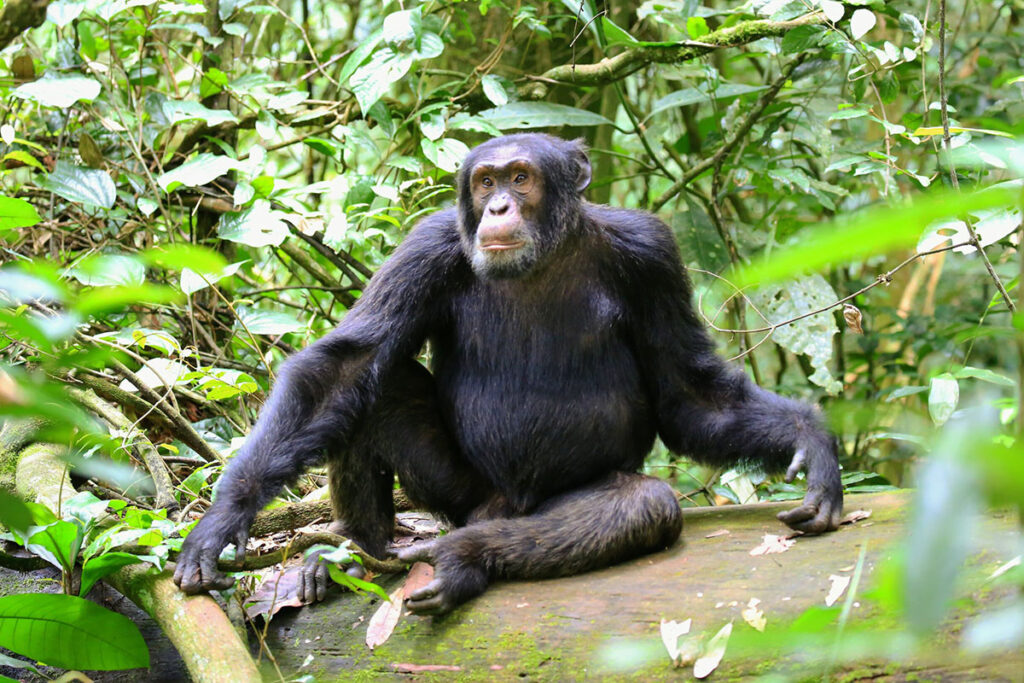
- Western chimpanzees – known for tool use, nut-cracking, cooperative hunting and cultural behaviour.
- Pygmy hippopotamuses – elusive nocturnal animals found in swamp forests and riparian zones.
- Forest elephants – important seed dispersers and ecosystem engineers.
- Zebra duikers – beautifully patterned antelopes with distinctive stripes.
- Diana monkeys – striking primates that require dense canopy cover.
- Bay, black and Jentink’s duikers – rare forest antelopes with specialised habitats.
- Sooty mangabeys – large social groups that move noisily through the forest in search of fruit.
- Leopards – apex predators that hunt monkeys, duikers and small mammals.
- Pangolins, civets, genets and brush-tailed porcupines – important small mammals in the ecosystem.
Taï remains one of the last strongholds for many of these species, which have disappeared across much of West Africa due to habitat loss and hunting.
Primatology Significance
Taï National Park holds global renown as one of the world’s most important sites for primate research. The Taï Chimpanzee Project—established by Swiss primatologist Christophe Boesch in the late 1970s—has produced some of the most influential primate studies in history. Researchers discovered:
- Nut-cracking behaviour using stone and wooden tools.
- Cooperative hunting of red colobus monkeys.
- Complex tool selection, involving weight and texture preferences.
- Cultural traditions that vary between chimpanzee groups.
- Advanced communication using alarm calls, food calls and symbolic gestures.
These findings have reshaped our understanding of chimpanzee intelligence, social systems and the evolutionary roots of human cognition.
Birds
Taï National Park is a top ornithological site in West Africa, featuring more than 300 bird species. Many are restricted to the Upper Guinean Forest, making the park a priority for bird conservation. Notable species include:
- Brown-cheeked hornbill – vulnerable and dependent on old-growth forests.
- Yellow-casqued hornbill – iconic canopy frugivore.
- White-breasted guineafowl – rare and highly range-restricted.
- Great blue turaco – colourful and easily recognisable.
- Nimba flycatcher – a specialist Upper Guinean endemic.
- Cassin’s hawk-eagle – an apex forest raptor.
During fruiting peaks, the forest canopy becomes a spectacular theatre of bird activity, with hornbills, pigeons, turacos and parrots feeding on abundant fruits.
Reptiles, Amphibians and Invertebrates
The warm, humid climate of Taï National Park supports an extraordinary diversity of herpetofauna and invertebrates. Important species include:
- Dwarf crocodiles and monitor lizards in swamp forests.
- Forest cobras, pythons and egg-eating snakes.
- Tree frogs, torrent frogs and caecilians with limited distribution.
- Over 500 butterfly species, contributing to a vibrant and colourful forest experience.
- Termite mounds, leaf beetles, ants and beetles essential for nutrient cycling.
Many insect and amphibian species remain undescribed, highlighting the park’s unexplored scientific potential.
Biodiversity Statistics
- Mammals: 140+ species
- Primates: 11 species
- Birds: 300+ species
- Reptiles: 50+ species
- Amphibians: 40+ species
- Butterflies: 500+ species
- Plant species: 1,300+ documented
- Endemic species: Numerous across primates, duikers, amphibians and insects
Unique Features
- The largest intact primary rainforest in West Africa.
- Home to tool-using chimpanzees with cultural traditions.
- One of the world’s last pygmy hippopotamus strongholds.
- Presence of endemic duikers found nowhere else.
- Ancient trees over 500 years old.
- High biomass, complex canopy structure and exceptional endemism.
Cultural and Indigenous Communities
Surrounding Taï are communities such as the Guéré, Oubi, Bakwé and Krou, each with cultural ties to the forest. Traditional beliefs help protect wildlife through taboos forbidding hunting of certain species and protection of sacred trees or groves. Many communities rely on forest resources and participate in conservation through eco-guards, community monitoring and sustainable land-use initiatives.
Park Management & Governance
Taï National Park is managed by the Office Ivoirien des Parcs et Réserves (OIPR), the national authority for protected areas in Côte d’Ivoire. OIPR works in partnership with:
- The Wild Chimpanzee Foundation (WCF)
- UNESCO
- European Union conservation programs
- Ivorian research institutions
- Local communities in buffer zones
Management priorities focus on anti-poaching patrols, monitoring wildlife populations, supporting community-led conservation, restoring forest corridors and ensuring sustainable tourism development.
Buffer Zones and Wildlife Corridors
Taï National Park is part of the Taï–Grebo–Sapo Transboundary Forest Landscape, one of the most important conservation networks in West Africa. Through ecological corridors, the park connects with:
- Grebo-Krahn National Park (Liberia)
- Sapo National Park (Liberia)
- Community-managed forests and reserves
These corridors enable genetic exchange between wildlife populations—especially chimpanzees, elephants and duikers—and enhance long-term ecosystem resilience. Active corridor restoration programs combat fragmentation caused by cocoa farming and settlement expansion.
Human–Wildlife Conflict
As surrounding communities expand their agricultural activities, conflicts occasionally arise—especially between farmers and forest elephants. Key challenges include:
- Elephants raiding crops (cocoa, plantain, cassava)
- Livestock predation by leopards (rare but possible)
- Wildlife entering villages in search of food
Mitigation strategies implemented by OIPR and partners include:
- Early-warning systems using elephant movement tracking
- Beehive fences and chili-based deterrents
- Compensation support mechanisms
- Community education and rapid response teams
These measures have significantly reduced conflict in key buffer areas.
Conservation Success Stories
- Forest elephant population stability in core areas thanks to anti-poaching patrols.
- Recovery of several chimpanzee groups monitored by the Taï Chimpanzee Project.
- Community-led forest corridors reestablished between Taï and Grebo-Krahn.
- Certification of sustainable cocoa farming reducing pressure on park boundaries.
- Increased local employment through eco-guard positions and community ecotourism.
Threat Trends and Future Outlook
Despite major successes, challenges remain. Agriculture expansion (especially cocoa), hunting, mining exploration and climate change continue to threaten the park’s long-term stability. Future priorities include:
- Restoring degraded corridors
- Scaling up sustainable cocoa certification programs
- Strengthening community co-management
- Improving monitoring technologies (drones, camera traps, GPS collars)
- Enhanced funding for anti-poaching units
Climate models predict rising temperatures and shifting rainfall patterns, making Taï an important site for studying rainforest resilience under global change.
Tourism in Taï National Park
Ecotourism Activities
- Chimpanzee trekking
- Guided rainforest walks
- Birdwatching for Upper Guinean endemics
- Night walks to see nocturnal wildlife
- River and swamp exploration
- Cultural visits to buffer communities
Visitor Practical Information
- Health: Yellow fever vaccination required; malaria prevention essential.
- Packing: Lightweight clothing, rain gear, trekking boots, insect repellent, waterproof bags.
- Photography: Low light conditions require fast lenses or strong ISO capability.
- Fitness: Moderate fitness needed for long walks in humid conditions.
- Safety: Always follow guides; avoid touching vegetation; stay hydrated.
Access and How to Get There
Taï National Park is reached primarily via:
- Road: From Abidjan, San-Pédro, Soubré or Guiglo (6–10 hours)
- Air: Domestic flights to San-Pédro, followed by a road transfer
Inside the park, all exploration is done on foot to minimise disturbance to wildlife.
Permits, Fees and Regulations
Entry permits are required, and additional fees apply for chimpanzee trekking, research, filming and professional photography. Regulations include:
- Stay with authorised guides
- No feeding or touching wildlife
- No removal of plants, animals or natural objects
- Keen silence during chimp tracking
Accommodation Options
- Research camps – simple facilities in forest zones
- Community guesthouses – basic comfort with local cultural immersion
- Eco-lodges – limited but available near park entrances
Best Time to Visit
The dry season from December to March is the best time for wildlife viewing, chimp tracking and extended hikes. The wet season offers rich birdlife and lush scenery but can limit accessibility.
Why Taï National Park Is Unique
Taï National Park is a living relic of West Africa’s ecological past and a beacon of hope for its conservation future. It is one of the world’s last great tropical rainforests—ancient, undisturbed and filled with species found nowhere else. From tool-using chimpanzees to elusive pygmy hippos, from towering centuries-old trees to vibrant birdlife and endemic duikers, Taï is a wilderness of global significance.
This exceptional rainforest represents not just a national treasure of Côte d’Ivoire, but a vital sanctuary for biodiversity, climate regulation and scientific discovery on a planetary scale. Protecting Taï means preserving one of the last truly wild rainforests on Earth for future generations.