Okavango Delta
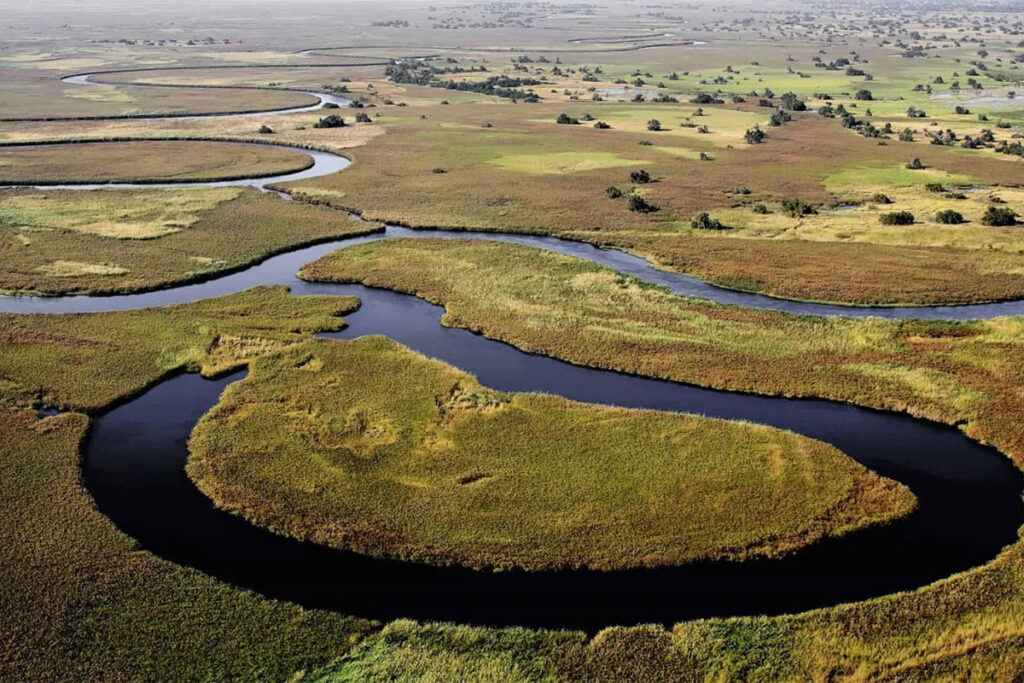
Okavango Delta, Botswana – World’s Greatest Inland Delta, Big Five Wilderness, Flood Pulse Ecology, UNESCO World Heritage Wetland and Africa’s Premier Safari Oasis
The Okavango Delta is one of the most extraordinary natural masterpieces on Earth—an immense inland wetland that transforms the Kalahari Desert into an oasis of floodplains, papyrus-lined channels, sparkling lagoons, palm-covered islands, deep swamps and wildlife-rich savannas. Located in northern Botswana, this vast delta is created not by melting snow or tropical storms but by floodwaters traveling over 1,000 km from the highlands of Angola into the sands of Botswana. Unlike typical river deltas that meet the sea, the Okavango disappears into desert soils, forming a rare and spectacular inland wetland system that sustains over 500 bird species, the Big Five, endangered African wild dogs, countless antelope, enormous elephant herds and thriving aquatic life. Recognized as a UNESCO World Heritage Site, the Okavango Delta is widely regarded as one of the last genuinely wild ecosystems on the planet—untouched, pristine and ecologically priceless.
Overview
The Okavango Delta spans between 15,000 and 22,000 km² depending on seasonal flooding and is often described as Africa’s “Last Eden.” Its annual flood pulse creates an ecological rhythm unmatched anywhere else in the world: floodwaters arrive during Botswana’s dry season, bringing life, food and lush greenery when the surrounding Kalahari is at its driest. This phenomenon supports dense wildlife populations and makes the delta one of Africa’s premier safari destinations. With permanent swamps, seasonal wetlands, savannas, riverine forests and thousands of islands, the Okavango Delta is a complex ecological mosaic that has developed over thousands of years. It is globally cherished for its exceptional biodiversity wealth, predator-prey dynamics, rare wetland habitats and iconic mokoro (dugout canoe) safaris.
Location and Key Facts
The Okavango Delta is situated in northern Botswana within the enormous Okavango Basin. Fed by the Okavango River, which originates in Angola, the delta lies inland far from the sea, forming an extraordinary ecosystem shaped by tectonics, climate and hydrology.
- Country: Botswana
- Region: Northwest District
- Nearest Access Hub: Maun
- Area: 15,000–22,000 km² depending on floods
- UNESCO Status: World Heritage Site (2014)
- Main River: Okavango River (Cubango in Angola)
- Ecosystem Type: Inland delta, wetlands, floodplains, savanna and forest
- Wildlife Highlights: Big Five, endangered African wild dogs, rich aquatic biodiversity
Geological Formation and Holocene History
The Okavango Delta was formed over the past 2–10 million years through tectonic activity and gradual geological shifts. The region sits within the Kalahari tectonic depression—part of the East African Rift system—where gentle uplift and faulting blocked the Okavango River’s traditional route to the ocean. Instead of reaching the sea, the river became trapped in a basin of ancient desert sands. During the Holocene epoch, fluctuating climate patterns, sediment movements and tectonics created a huge inland wetland system that expanded and contracted over time.
Geological evidence suggests that the delta has shifted position multiple times due to faulting along the Gumare, Kunyere and Thamalakane faults. These geological forces helped shape the modern delta’s channels, islands, ridges and floodplains. The foundation of the delta is porous sand that absorbs and filters water, allowing the Okavango to function as a vast groundwater recharge system.
Flood Pulse Dynamics – The Miracle of Water in the Desert
The Okavango Delta is defined by its extraordinary flood pulse system, where water arrives at the “wrong” time of year. Rain falls in Angola between November and February, swelling the Okavango River. These waters slowly travel south—taking four to six months to reach Botswana. By the time the floodwaters arrive (May to July), Botswana is deep into its dry season. The result is miraculous: the Kalahari Desert transforms into a living oasis at the precise moment when wildlife needs water most.
- Peak flood arrival: May–July
- Dry season grazing peak: June–October
- Rainy season: November–April (local rain, not floodwater)
- Evaporation rate: Up to 95% of water evaporates before reaching downstream outlets
This pulse sustains fish migrations, triggers amphibian breeding, revitalizes floodplains, and concentrates wildlife along the waterways. Predators such as lions, leopards and wild dogs time their hunting strategies around these seasonal shifts. The pulse also influences plant germination, island formation, and bird breeding cycles.
Okavango Delta Sub-Regions
The delta is commonly divided into several ecological and geographical zones, each offering distinct wildlife experiences and landscapes:
- The Panhandle: The narrow northern channel where the Okavango River enters Botswana. Deep waters, papyrus beds, fishing villages and excellent birdlife.
- Central Delta: Permanent swamps and large islands including Chief’s Island—home to some of the densest wildlife populations in Botswana.
- Eastern Delta: The Moremi Game Reserve, one of Africa’s top wildlife destinations with diverse habitats and abundant predators.
- Western Delta: Private concessions offering exclusive safari experiences and pristine wetlands.
- Southern Fringe: Transition zones between wetlands and dry Kalahari woodlands with seasonal water availability.
Moremi Game Reserve – Heart of the Okavango Delta
Covering roughly one-third of the delta, Moremi Game Reserve is one of the most iconic wildlife areas in Africa. It combines permanent water channels with open savanna, mopane woodland and floodplains. Moremi is renowned for its predator populations—including lions, leopards, cheetahs, wild dogs and hyenas—as well as its high elephant density, rich birdlife and excellent photographic opportunities.
- Chief’s Island: A predator and big-game hotspot, originally formed by tectonic uplift.
- Khwai: Known for lions, leopards, painted wolves and elephants.
- Xakanaxa: A water-rich area with exceptional birdwatching.
- Third Bridge: Iconic floodplain drives and dramatic landscapes.
Moremi is the perfect blend of water and land habitats, making it one of the most complete safari destinations in the world.
Fire Ecology
Fire plays a critical role in shaping vegetation patterns across the Okavango Delta. Seasonal fires—often started by lightning or controlled burns—rejuvenate grasslands, stimulate fresh growth for grazers, and maintain open floodplains. Fire suppression can lead to bush encroachment, while excessive burning may affect woodland regeneration. Ecologists monitor fire cycles to maintain ecosystem balance, ensuring healthy predator-prey interactions and diverse plant communities.
Termite Island Formation
Many of the Okavango’s islands were built by termites. As water levels rise and fall, termites construct mounds above floodlines. Over time, sediment accumulates on these mounds, creating elevated islands that support trees such as jackalberry, sausage tree and wild fig. These islands become ecological hotspots—sheltering leopards, monkeys, birds and grazing herbivores, and providing nesting sites for storks and herons.
Climate
The delta experiences a semi-arid climate with three main seasons:
- Hot wet season: November–April, with thunderstorms, humidity and lush vegetation.
- Cool dry season: May–August, with chilly nights and warm days.
- Hot dry season: September–October, with high temperatures ahead of rains.
This climate shapes wildlife movement, grass growth, safari accessibility and predator behavior.
Hydrology
The hydrology of the Okavango Delta is driven by:
- Rainfall in Angola (the primary source of floodwater)
- Local rains in Botswana
- Groundwater seepage
- High evaporation rates
- Channel blockages caused by papyrus and reeds
The complex hydrological interplay supports fish migrations, amphibian breeding, aquatic insect life and lush grazing for herbivores. Changing water levels determine where wildlife gathers and how predators hunt.
Ecosystems and Habitats
- Permanent swamps: Hippos, crocodiles, sitatunga and rich birdlife.
- Seasonal floodplains: Lechwe, buffalo, elephants and predators.
- Riverine forests: Leopards, monkeys, owls and woodland birds.
- Woodlands: Lions, hyenas, wild dogs and herbivores.
- Islands: Elephants, big cats, primates and birds.
Vegetation
The delta’s vegetation includes papyrus, reeds, bulrush, sedges, floodplain grasses, mopane forests, acacia trees, palms and hardwoods. Water-dependent species thrive along channels, while drought-tolerant species dominate islands and woodland edges. This botanical diversity supports herbivores, birds and predators throughout the year.
Wildlife of the Okavango Delta
Mammals – Big Five and Beyond
The delta is home to elephants, lions, leopards, buffaloes and—occasionally—rhinos (mainly in protected areas). It is the global stronghold of African wild dogs, with stable packs hunting across floodplains and woodlands. Other mammals include cheetahs, hyenas, hippos, giraffes, zebras, kudu, impala, warthogs, waterbuck, sitatunga and red lechwe.
Predator Dynamics
The Okavango Delta is one of Africa’s greatest predator ecosystems. Lions hunt buffalo in shallow waters, leopards stalk islands, cheetahs chase antelope on open plains and wild dogs execute high-speed cooperative hunts. Hyenas compete fiercely for kills and dominate carcasses in some regions. These predator interactions create one of the most dramatic wildlife theaters on Earth.
Elephant Migration Corridor
The Okavango is part of a vast elephant migration system that extends into Chobe, Linyanti and Namibia’s Zambezi Region. Thousands of elephants move between water sources seasonally, shaping vegetation and creating wildlife corridors. Botswana hosts the world’s largest elephant population, and the Okavango Delta plays a crucial role in sustaining this regional movement.
Birdlife
With over 500 recorded species, the Okavango Delta is a major birding destination. Its wetlands, islands and woodlands host rare, migratory and endemic bird species.
- Wattled crane (Endangered)
- Pel’s fishing owl
- African skimmer
- Slaty egret
- African fish eagle
- Malachite kingfisher
Reptiles, Amphibians and Invertebrates
Nile crocodiles, monitor lizards, snakes, frogs and toads thrive in the delta. Invertebrates include dragonflies, aquatic insects, mollusks and crabs—crucial to food webs.
Fish
Tilapia, catfish, tigerfish and bream dominate the delta’s waters, supporting birds, crocodiles and local communities.
Seasonal Wildlife Movements
Wildlife movements are shaped by floods and rainfall:
- Dry season: Animals concentrate around waterways; predators thrive.
- Wet season: Animals disperse into the Kalahari; newborn antelope appear.
- Green season: Migratory birds arrive; lush vegetation supports grazers.
Okavango River Basin – Angola, Namibia and Botswana
The Okavango River flows through three countries:
- Angola: Source of most floodwater; rainfall here determines delta size.
- Namibia: River flows through the Caprivi Strip.
- Botswana: End-point where water spreads into the Kalahari.
Upstream water use and potential dam projects in Angola or Namibia could affect delta flooding, making transboundary water management crucial.
Carbon Sequestration Role
Wetlands store large amounts of carbon in peat and organic sediments. The Okavango Delta’s papyrus beds, flooded soils and deep organic layers act as significant carbon sinks, helping regulate climate and absorb greenhouse gases.
Human History and Archaeology
Archaeological evidence reveals that humans have lived in and around the delta for tens of thousands of years. Stone tools, pottery fragments, ancient hearths and rock engravings indicate a long history of hunter-gatherer societies. The Indigenous Bayei, Hambukushu and Basubiya communities have deep cultural ties with the delta, using mokoro canoes, fishing techniques and traditional ecological knowledge passed through generations.
Early Explorer History
European exploration of the Okavango Delta began in the 19th century. Explorers such as David Livingstone documented the region’s waterways, wildlife and people. Later scientific expeditions mapped the delta’s channels, islands and hydrology, contributing to global understanding of wetland ecology.
Tourism Activities
- Mokoro safaris: Dugout canoe journeys through tranquil channels.
- Boat safaris: Explore lagoons with hippos, crocodiles and birds.
- Game drives: Predators, elephants and woodland species.
- Walking safaris: Track animals on islands and floodplains.
- Birdwatching: Superb year-round species diversity.
- Helicopter flights: Aerial views of channels and wildlife.
Land vs Water Safari Experiences
- Water safaris: Mokoros, boats, lagoons, birdlife, tranquility.
- Land safaris: Game drives, predators, elephants, big game.
- Mixed areas: Provide the richest safari experiences.
Photography Highlights
- Elephants crossing water channels
- Lions hunting buffalo in shallow floods
- Mokoro silhouettes at sunrise
- Carmine bee-eater colonies
- Aerial shots of winding channels and lagoons
Access and How to Get There
Visitors typically fly into Maun, the gateway to the delta. Light aircraft transfers connect travelers to remote lodges and camps. Some areas, especially Moremi, can be reached by 4×4 vehicles during the dry season. Most central and permanent swamp regions require air transfers due to waterlogged terrain.
Permits and Regulations
Park fees apply within Moremi Game Reserve and private concessions. Off-road driving, boat speeds and wildlife viewing practices follow strict environmental guidelines. Research, filming and drone use require special permits.
Accommodation
The delta offers luxurious lodges, tented camps, eco-lodges and community campsites. Many are located on islands or private concessions, providing exclusive safari experiences with top-tier guiding, gourmet dining, and breathtaking views of floodplains and channels.
Best Time to Visit
- Dry season (May–October): Best for wildlife viewing, high floodwaters, cool temperatures.
- Green season (Nov–April): Birdwatching, newborn animals, dramatic storms, fewer tourists.
Why the Okavango Delta Is Unique
The Okavango Delta is a natural masterpiece—a vast inland wetland that floods during the dry season, creating one of the world’s most productive ecosystems. Its unmatched biodiversity, dramatic predator dynamics, extraordinary landscapes and unique hydrology make it one of Earth’s greatest wildernesses. Combined with its cultural heritage, pristine conditions and world-class safari experiences, the Okavango Delta stands as a living testament to the power of nature, deserving its place as one of Africa’s most extraordinary destinations.