
Ruaha National Park
Ruaha National Park, Tanzania – Big Cats, Elephants, Baobab Wilderness and the Ultimate Southern Tanzania Safari Destination
Ruaha National Park is one of Africa’s most spectacular and untouched wilderness areas—an immense, predator-rich, baobab-studded landscape where the wild spirit of East Africa thrives in complete authenticity. As Tanzania’s largest national park, covering more than 20,000 km², Ruaha forms the heart of the vast Ruaha–Rungwa ecosystem, a stronghold for lions, African wild dogs, elephants and a remarkable diversity of birds. Remote, rugged and incredibly scenic, the park offers a raw and exclusive safari experience, free from crowds and defined by dramatic river valleys, red-earth plains, ancient granite kopjes and sweeping savanna woodlands that stretch as far as the eye can see.
Overview
Established in 1964 and significantly expanded in 2008, Ruaha National Park stands today as one of Africa’s most ecologically important protected areas. Its vast scale and low human footprint allow natural predator–prey relationships, seasonal movements and ecological processes to unfold with minimal disturbance. The park represents a rare biogeographical transition zone where East African acacia savanna meets Southern African miombo woodland, supporting species typical of both regions—an ecological blend unmatched elsewhere in Tanzania. The Great Ruaha River, a lifeline for wildlife during the dry season, defines the park’s identity, drawing massive herds of elephants, buffalo and antelope, as well as intense concentrations of predators that make Ruaha one of Africa’s great big-cat destinations.
Location, Size and Key Facts
Ruaha lies in southern central Tanzania within Iringa Region, anchoring a massive conservation landscape that extends into Rungwa, Usangu and Mbeya regions. Its remote location contributes to its exclusivity, ensuring a wild and unspoiled safari experience.
- Country: Tanzania
- Region: Iringa
- Coordinates: ~7°S, 35°E
- Park Size: ~20,226 km²
- Ecosystem Size: ~45,000 km²
- Established: 1964; expanded 2008
- Main River: Great Ruaha River
- Notable Wildlife: Lions, wild dogs, elephants, cheetahs, roan and sable antelope
Geology and Landscapes
The dramatic scenery of Ruaha National Park is shaped by ancient geological forces dating back millions of years. The park sits atop the Precambrian basement complex of the East African Rift System, characterized by granite outcrops, metamorphic rock formations and rugged hills that create pockets of microhabitats. Over time, erosion sculpted these rocks into kopjes—iconic granite inselbergs that tower above the plains and offer shelter for leopards, hyraxes and raptors.
Ruaha’s landscape is a mosaic of rocky ridges, red soil plains, open savannas, deep river valleys and vast woodland tracts. The west transitions into the Southern Highlands, while the east descends into the Great Ruaha basin. This varied topography supports an equally diverse range of vegetation and wildlife, making Ruaha one of Tanzania’s most visually compelling national parks.
Climate
Ruaha’s semi-arid climate shapes both its ecology and safari experience. The dry season runs from June to October, when vegetation thins and wildlife congregates near permanent water. This period offers the most dramatic predator action, best game viewing and clearest photography conditions. Short rains appear in November and December, followed by heavier rainfall from January to April. During the green season, the park becomes a lush, emerald landscape dotted with wildflowers, newborn animals and migratory birds, transforming Ruaha into a paradise for photography and birdwatching.
Hydrology and the Great Ruaha River
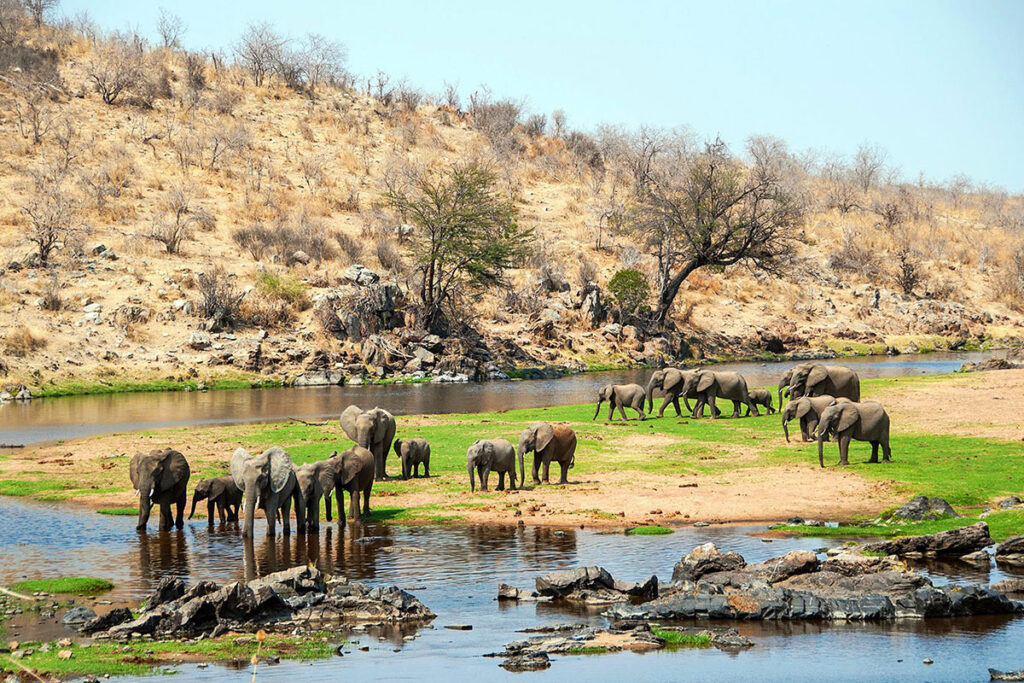
The Great Ruaha River is the beating heart of the park, shaping wildlife patterns and vegetation dynamics year-round. From June to October, as smaller water sources dry up, animals cluster along the riverbanks where pools persist even in the harshest months. Large herds of elephants, giraffes, buffalo and antelope come to drink, attracting lions, crocodiles, leopards and hyenas.
- Great Ruaha River: Permanent river supporting hippos, crocodiles and dry-season wildlife concentrations.
- Sand Rivers: Mwagusi, Jongomero and Mdonya rivers that flow strongly during rains and provide underground water in the dry season.
- Seasonal Wetlands: Critical wet-season feeding areas, especially after the inclusion of the Usangu wetlands.
Elephants frequently dig into dry riverbeds to expose hidden water, creating mini-ecosystems used by antelope, birds and predators. These hydrological interactions help sustain Ruaha’s remarkable biodiversity.
Fire Ecology
Natural and controlled fires are a powerful ecological force in Ruaha. At the end of the dry season, lightning-induced and management-guided fires clear old grasses, stimulate fresh growth and maintain a balance between woodlands and grasslands. Fire plays an essential role in supporting grazer populations and preventing bush encroachment, allowing the park’s savannas and plains to remain productive for herbivores and predators.
Ecosystems and Habitats
Ruaha’s biodiversity is driven by its location at the ecological intersection of East African and Southern African habitats. This rare overlap results in highly varied ecosystems within one contiguous wilderness, supporting an exceptional range of species.
- Miombo Woodlands: Dominant in the west and north, home to roan antelope, sable antelope and Lichtenstein’s hartebeest.
- Acacia–Combretum Savannas: Open plains and mixed woodlands ideal for giraffes, plains game and cheetahs.
- Riverine Forests: Lush fig, palm and sycamore corridors alive with elephants, monkeys and birds.
- Baobab Valleys: Iconic landscapes filled with ancient baobabs, offering nesting cavities, food and shade.
- Rocky Kopjes: Critical habitat for leopards, klipspringer, hyraxes and raptors.
Vegetation
Ruaha supports an impressive variety of vegetation thanks to its complex geology and biogeographical position. Towering baobabs dominate many sections of the park, providing shelter and moisture storage for numerous species. Acacia woodlands offer browsing for giraffes and shade for predators, while tall grasses and floodplains supply grazing for buffalo, zebra and wildebeest.
- Baobabs: Thousands of ancient trees shape the park’s identity and attract elephants, birds and insects.
- Miombo Trees: Brachystegia and Julbernardia species defining Southern African ecological zones.
- Acacia Species: Abundant near rivers and plains, supporting herbivores and birds.
- Riverine Vegetation: Ficus, tamarind, sausage trees and palms lining major waterways.
Wildlife of Ruaha National Park
Mammals
Ruaha is one of the continent’s premier destinations for big mammals, with exceptional predator densities and large, healthy populations of elephant, buffalo and antelope. Wildlife sightings feel wild and unpredictable, thanks to the park’s enormous size and low human presence.
- Lions: One of the largest lion populations in East Africa; prides often exceed 20 members.
- Leopards: Common in riverine forests and kopje-dotted valleys.
- Cheetahs: Prefer open plains, seen frequently in the Msembe and Mwagusi areas.
- African Wild Dogs: Ruaha is one of Tanzania’s best strongholds for large, stable packs.
- Elephants: Huge herds gather at the Great Ruaha River during the dry season.
- Buffalo: Large herds roam the park’s woodlands and floodplain areas.
- Roan and Sable Antelope: Rare highlights typical of Southern Africa, found in miombo zones.
Seasonal Wildlife Movements
During the dry season, wildlife concentrates dramatically along permanent rivers and shrinking sand river pools, resulting in intense predator–prey interactions. When rains return, animals disperse into remote miombo woodlands where fresh grazing and water become abundant, though elephants and buffalo still frequently return to the river corridors.
Birdlife
Ruaha is a premier birding destination, with over 570 species recorded, including numerous raptors, waterbirds, miombo specialists and migratory birds. The green season is especially rewarding, with breeding activity, vibrant plumage and migrant species from Europe and Asia.
- Raptors: Martial eagle, Verreaux’s eagle, bat hawk, tawny eagle and bateleur.
- Waterbirds: African fish eagle, Goliath heron, storks and kingfishers.
- Miombo Birds: Yellow-collared lovebird, crested barbet and several woodpeckers.
- Ground Birds: Ground hornbills, francolins and guinea fowl.
Birding Hotspots
- Mwagusi and Jongomero Valleys: Excellent for raptors, kingfishers and storks.
- Escarpment Cliffs: Nesting areas for eagles and vultures.
- Seasonal Pans: Filled with herons, ibises and waders after rainfall.
Reptiles, Amphibians and Invertebrates
Reptiles are common along riverbanks and rocky outcrops, while amphibians flourish in the wet season. Termites, butterflies and beetles play vital ecological roles, especially in nutrient cycling and pollination.
- Nile crocodiles
- Monitor lizards and agamas
- Seasonal frogs and toads
- Termite mounds supporting birds and small predators
Unique Features
- One of Africa’s strongest lion populations and a critical wild dog stronghold.
- Scenic baobab valleys and dramatic Rift Valley landscapes.
- Unique blend of East and Southern African ecosystems.
- Low tourist density, creating a private, uninterrupted safari experience.
- Extensive sand rivers providing dynamic wildlife interactions.
Cultural and Historical Significance
The greater Ruaha region has long been inhabited by the Hehe, Gogo and Maasai communities, who rely on pastoralism, agriculture and traditional knowledge of the land. Ancient trade routes passed through adjacent areas, and rock art sites outside the park reflect a deep human history. Today, partnerships with surrounding villages focus on reducing livestock conflict, promoting conservation education and sharing tourism benefits to strengthen community engagement.
Conservation Importance
Ruaha’s ecological value is immense. It protects some of the continent’s most threatened species, including African wild dogs, cheetahs, vultures and elephants. The park’s size and intact landscapes preserve natural predator interactions, prey migrations and vegetation cycles that have been lost in many other regions. The addition of the Usangu wetlands has improved hydrological security for the Great Ruaha River, benefiting both wildlife and downstream communities.
Threats and Challenges
- Human–Wildlife Conflict: Predation on livestock and crop damage in surrounding areas.
- Poaching: A long-term threat to elephants and other wildlife.
- Water Use: Upstream irrigation and climate change affecting river flow.
- Habitat Pressure: Expanding settlements around ecosystem corridors.
Research and Monitoring Programs
Ruaha hosts some of Africa’s most influential conservation research initiatives. The Ruaha Carnivore Project monitors lion, cheetah, leopard, hyena and wild dog populations while collaborating with villagers to reduce conflict. Elephant movement studies, vegetation mapping, bird monitoring and hydrological research contribute crucial data to long-term conservation strategies. Anti-poaching patrols, ranger training and satellite tracking enhance wildlife protection.
Tourism Activities
- Game Drives: Sunrise, afternoon and full-day drives offering exceptional predator and elephant sightings.
- Walking Safaris: Guided explorations focusing on tracks, plants, birds and smaller animals.
- Birdwatching: Incredible year-round, especially during the wet season.
- Night Drives (in lodge buffer zones): Fantastic for nocturnal animals like genets and civets.
Photography Highlights
- Baobab silhouettes at sunrise and sunset.
- Predators hunting along sand rivers.
- Elephants crossing rivers in golden, dusty light.
- Raptors perched on kopjes and cliffs.
- Green-season thunderstorms and dramatic cloudscapes.
Access and How to Get There
- By Air: Daily scheduled flights to Msembe and Jongomero airstrips from Dar es Salaam, Arusha and Zanzibar.
- By Road: A full-day drive from Dar es Salaam or 2–3 hours from Iringa; 4×4 recommended.
- Safari Circuit: Often combined with Nyerere National Park, Mikumi and Udzungwa Mountains.
Permits and Park Rules
Daily conservation fees apply. Off-road driving is prohibited inside the park. Walking safaris require armed ranger escorts. Drones are not permitted, and visitors must respect wildlife viewing distances for safety.
Accommodation
- Luxury Lodges: Riverside tented camps with exceptional guiding and views.
- Mid-Range Safari Camps: Comfortable accommodations in key wildlife regions.
- Seasonal Bush Camps: Operate in peak wildlife zones during dry months.
- Public Campsites: Ideal for self-drive adventurers.
Best Time to Visit
- June–October: Best for classic big-game viewing; dense wildlife around rivers.
- November–April: Green season with lush scenery, newborn animals and superb birding.
Why Ruaha National Park Is Unique
Ruaha National Park stands as one of Africa’s great wilderness treasures—a place where lions roar through baobab valleys, elephants gather in immense herds and predators track prey along vast sand rivers. Its remarkable ecosystems, low visitor numbers, exceptional predator populations and raw, untamed landscapes create an unmatched safari experience. For travelers seeking a deep, immersive and truly wild African adventure, Ruaha remains one of the continent’s most captivating and unforgettable destinations.