
Sioma Ngwezi National Park
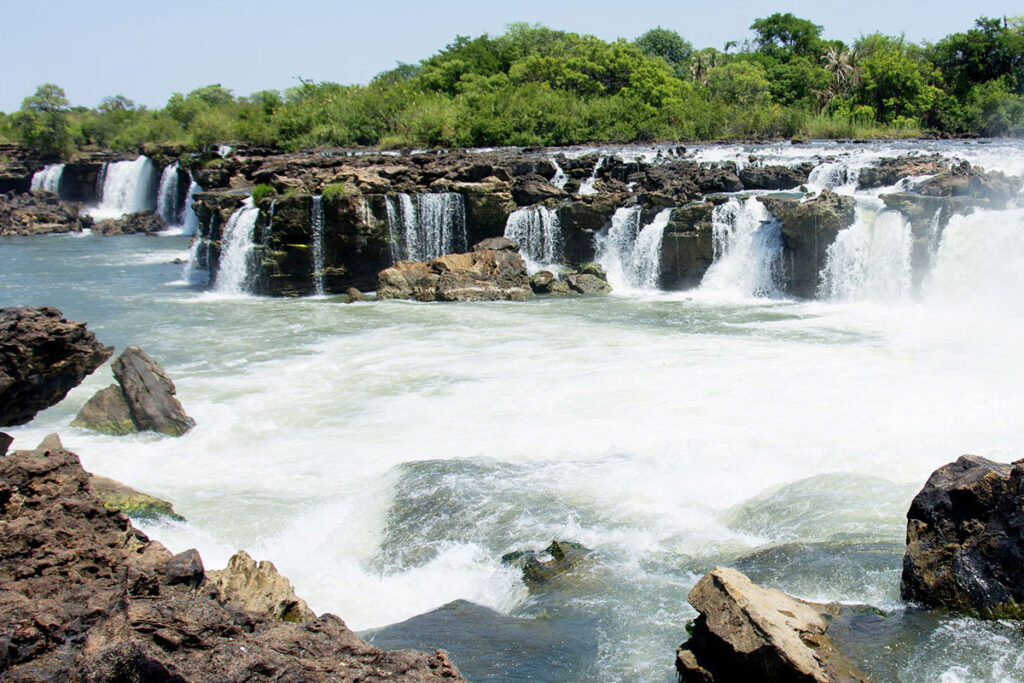
Sioma Ngwezi National Park, Zambia – Vast Kalahari Woodlands, Elephant Corridors and One of Southern Africa’s Last Great Wilderness Frontiers
Overview
Sioma Ngwezi National Park is one of Zambia’s most remarkable yet least-known wilderness destinations—a vast, raw, and unfenced landscape where wildlife still follows ancient migratory routes and the rhythms of nature remain largely undisturbed. Covering 5,276 km² of pristine Kalahari woodlands and open savannas, the park offers an extraordinary sense of space and remoteness. Unlike the heavily developed safari belts of southern Africa, Sioma Ngwezi provides an experience closer to the continent’s early frontier days, where expansive horizons, solitude and ecological purity define the character of the landscape.
Strategically located at the intersection of Zambia, Angola and Namibia, the park plays a vital role in the Kavango–Zambezi Transfrontier Conservation Area (KAZA TFCA), the world’s largest multinational conservation system. Within this mosaic of protected areas, Sioma Ngwezi acts as a crucial connective corridor for elephants, antelope and carnivores, enabling wildlife to move between Angola’s Mavinga and Luiana reserves, Namibia’s Bwabwata and Mudumu National Parks, and Botswana’s Chobe system. This geopolitical position gives Sioma Ngwezi ecological influence far beyond its borders.
Key Facts and Figures
- Location: Western Province, Zambia, near Angola and Namibia
- Established: 1950s (formal national park declaration)
- Size: 5,276 km² – Zambia’s 3rd largest national park
- Ecoregion: Kalahari sandveld and Zambezi teak forest
- Biodiversity: 300+ bird species, large antelope herds, migrating elephants
- Transfrontier Link: Part of the KAZA TFCA, the world’s largest conservation landscape
- Nearest Major Attraction: Sioma (Ngonye) Falls on the Zambezi River
- Best Time to Visit: May–October (dry season)
Location
The park lies in the southwestern corner of Zambia’s Western Province, within the historic region of Barotseland. Its boundary lies only kilometers from Namibia’s Zambezi Region and Angola’s Cuando Cubango Province, making it one of the most transboundary-connected parks in southern Africa. The nearest towns—Sioma, Sesheke and Senanga—serve as access points, while the city of Livingstone provides the closest major tourism hub with road links to the region. Despite its accessibility, Sioma Ngwezi retains a deep sense of wilderness thanks to limited infrastructure and a low human footprint inside the park.
Historical Background
Originally a hunting reserve, Sioma Ngwezi was formally upgraded to national park status in the 1950s to protect its unique Kalahari woodland ecosystems. The civil war in neighboring Angola drove thousands of elephants into Zambia, turning Sioma Ngwezi into a refuge for wildlife escaping conflict zones. Sadly, this influx also attracted heavy poaching, which significantly reduced wildlife populations during the 1970s-1990s.
Since the establishment of the KAZA TFCA, Sioma Ngwezi has undergone substantial recovery. Anti-poaching patrols, cross-border cooperation, aerial surveillance and community-based conservation initiatives have all contributed to stabilizing wildlife numbers. Today, the park is a cornerstone in the long-term restoration of elephant herds and dryland ecosystems across the KAZA landscape.
Geography
Geographically, Sioma Ngwezi is part of the vast Kalahari Basin, a massive sedimentary system that defines much of southern Africa’s ecology. The park’s landscapes consist of deep sandy soils, fossil river channels, scattered pans and gently rolling plains. Towering termite mounds dominate the savanna, enriching the soil and shaping plant distribution. The western perimeter gradually ascends toward the highlands of Angola, creating natural migratory pathways and contributing to regional hydrological connectivity.
This unique mixture of sandveld, open woodland and transitional miombo zones creates a habitat mosaic that supports a wide range of species, from elephants and zebras to smaller carnivores, ground-dwelling birds and rare woodland flora.
Climate
Sioma Ngwezi experiences a classic semi-arid Kalahari climate. The hot dry season (August–November) is characterized by soaring daytime temperatures, dry winds and hazy horizons, while the rainy season (December–April) transforms the park into a lush green expanse dotted with fresh grasses and seasonal pools. The cool dry season (May–July) offers the best safari comfort, with clear skies, pleasant temperatures and excellent wildlife visibility.
The park’s climate strongly influences wildlife behavior: during the rainy season, animals disperse widely across the landscape, while the dry season forces them toward pans, depressions and seasonal water points. These ecological rhythms underpin the region’s migratory systems.
Hydrology
Although Sioma Ngwezi lacks large perennial rivers within its interior, it is flanked by two of Africa’s most important waterways: the Zambezi River to the east and the Kwando–Linyanti–Chobe system to the west. Inside the park, seasonal pans and shallow floodplains fill during the rains, becoming crucial watering points for wildlife throughout the dry months.
These intermittent wetlands form a hydrological bridge between the Zambezi catchment and the Cuando River basin, contributing to the park’s role as a connective corridor within the broader KAZA ecosystem. Their presence also supports migrant bird species and amphibious life during peak rains.
Ecosystems
Sioma Ngwezi protects one of the largest and most intact expanses of Kalahari dry forest and savanna in Zambia. Its ecosystems reflect the interplay of sandy soils, fire cycles, rainfall variability and wildlife movements. The park is dominated by:
- Kalahari Woodlands: Teak, burkea, combretum and terminalia woodlands adapted to deep sands.
- Savanna Grasslands: Open plains where seasonal grasses support large herbivore herds.
- Miombo Transition Zones: Areas with mixed Brachystegia and Julbernardia species.
- Fire-Influenced Habitats: Drylands rejuvenated by periodic burning.
- Seasonal Wetlands: Rain-fed pans supporting amphibians, aquatic insects and waterbirds.
Vegetation
Vegetation across the park is shaped by sandy soils and periodic fire. Baikiaea plurijuga (Zambezi teak) forms extensive forest stands, prized historically for their hardwood timber and ecological importance. Mopane trees, combretum shrubs, acacias and marula are widespread, contributing to a plant community resilient to drought and nutrient-poor soils.
During the rains, grasses flourish across the plains, attracting grazers and creating a green tapestry that sharply contrasts the dusty dry-season environment. Fire-adapted species regenerate quickly, creating sustainable cycles of canopy clearance, fresh grazing and habitat renewal.
Wildlife
Although historically impacted by poaching, Sioma Ngwezi is once again becoming a refuge for some of southern Africa’s most iconic large mammals. Its position within the KAZA TFCA gives it enormous potential as a migration corridor and ecological hub.
Mammals
The park is central to the Angola–Namibia–Botswana–Zambia elephant migration system, one of the longest and most ecologically significant wildlife movements in Africa. Elephants traverse Sioma Ngwezi to reach the Zambezi floodplains, Angola’s woodlands and Botswana’s Chobe ecosystem. Other mammals include:
- Roan antelope
- Sable antelope
- Kudu
- Zebra
- Buffalo (recovering populations)
- Leopard (rare and elusive)
- Spotted hyena
- Side-striped jackal
Birds
Birdlife in Sioma Ngwezi is rich and varied, with more than 300 recorded species. The combination of open savannas, woodland canopies and seasonal wetlands produces excellent ornithological diversity.
- Wattled crane
- Southern ground hornbill
- Bateleur eagle
- African openbill
- Swallow-tailed bee-eater
- Black-winged stilt
- Brown snake eagle
Reptiles and Amphibians
- African rock python
- Nile monitor lizard
- Serrated hinged terrapin
- Tree frogs and rain frogs during wet months
Insects
The park’s insect life becomes especially active during the rainy season. Termite mounds dominate many landscapes and play a key ecological role, while butterfly blooms and beetle emergences sustain a chain of predators including birds, reptiles and small mammals.
Unique Features
- One of Africa’s most important elephant migration corridors.
- Massive, intact Zambezi teak forests.
- Almost entirely undeveloped wilderness with extremely low tourist density.
- Part of the world’s largest multinational conservation system (KAZA TFCA).
- Close to Sioma (Ngonye) Falls, the Zambezi River’s third-largest waterfall.
Cultural and Indigenous Communities
Sioma Ngwezi lies within the homeland of the Lozi people, whose cultural identity is deeply connected to the Zambezi floodplains. Traditional livelihoods—fishing, cattle herding, honey gathering and small-scale agriculture—have shaped local communities for centuries. The iconic Kuomboka Ceremony, marking the Litunga’s seasonal movement between lowlands and highlands, symbolizes the region’s enduring relationship with water cycles, ecology and seasonal patterns.
Modern conservation in the park increasingly includes community partnerships, ensuring that local residents benefit from tourism, wildlife recovery and sustainable natural resource use.
Conservation Importance
Sioma Ngwezi is a pillar of ecological connectivity in the KAZA landscape. It protects:
- A major transboundary elephant migration route.
- Large expanses of intact Kalahari woodland.
- Critical wildlife linkages between Angola, Namibia, Botswana and Zambia.
- Genetic flow and population resilience for large mammals.
Because much of the region experienced depopulation during Angola’s civil war, Sioma Ngwezi now plays a leading role in recolonization and long-term restoration. Its protected landscapes act as a source point for wildlife expansion into previously war-affected regions.
Threats
- Illegal bushmeat hunting and poaching
- Human-wildlife conflict
- Frequent, uncontrolled fires
- Livestock incursions along park boundaries
- Limited infrastructure for anti-poaching patrols
- Climate variability affecting seasonal water availability
Research and Monitoring
Ongoing research initiatives led by government agencies, NGOs and KAZA partners include:
- GPS elephant collaring to track movement patterns
- Camera trap surveys monitoring carnivores and antelope
- Fire ecology studies measuring vegetation response to burning
- Cross-border wildlife counts with Namibia and Angola
- Community-based conservation research focusing on sustainable livelihoods
Tourism Activities
Sioma Ngwezi is ideal for adventure travelers seeking untouched wilderness. Activities include:
- Off-road game drives through remote woodlands
- Walking safaris with trained guides
- Birdwatching across savanna, woodland and wetland zones
- Exploring seasonal pans and wildlife hotspots
- Learning from Lozi communities
- Combining visits with Sioma (Ngonye) Falls
Access and Road Conditions
A 4×4 vehicle is essential for reaching Sioma Ngwezi, particularly in the rainy season when sandy soils and mud make travel challenging. Main access routes come through Sioma, Sesheke and Senanga. Visitors often travel from Livingstone, which offers the most reliable tourism infrastructure, fuel and supplies before heading into Western Province.
Permits
Entry permits are issued by Zambia’s Department of National Parks and Wildlife (DNPW). Filming, research and overnight stays in bush camps require additional permits.
Accommodation
Accommodation within the park is intentionally limited, ensuring minimal environmental disturbance. Visitors can camp at designated sites or stay in rustic bush camps. More comfortable lodges and riverfront camps are available near the Zambezi River, especially around Sioma and Sesheke. These properties offer easy access to both the park and Ngonye Falls.
Best Time to Visit
The dry season (May–October) provides the best wildlife viewing and road access. The rainy season (December–April) transforms the landscape into a lush, green paradise ideal for birdwatching and photography, though road conditions may become difficult.
Why Sioma Ngwezi National Park Is Unique
Sioma Ngwezi stands as one of southern Africa’s last great wilderness frontiers—a place where elephants still follow ancient migration routes, where teak forests stretch for miles across untouched Kalahari sands, and where the call of the wild remains unbroken by mass tourism. Its significance within the KAZA TFCA, coupled with its cultural depth and wildlife restoration potential, makes it a sanctuary of immense ecological and cultural value. For travelers seeking raw, authentic Africa, Sioma Ngwezi offers an experience that is vast, remote, powerful and profoundly memorable.