
Southern National Park
Southern National Park – Immense Savannah Wilderness, Rare Wildlife Strongholds, River Ecosystems and South Sudan’s Timeless Conservation Heartland
Southern National Park is one of Africa’s greatest surviving wilderness landscapes—a colossal, largely undisturbed ecosystem of sweeping savannah grasslands, sprawling woodlands, broad floodplains, dense riverine forests and massive wetland networks. Established in 1939 and covering approximately 23,000 km², it is not only South Sudan’s largest and oldest national park but also one of the most expansive protected areas on the African continent. Its sheer size, natural isolation and ecological diversity make it a treasure of global conservation significance. Southern National Park’s environment remains remarkably intact, offering a rare window into the ancient rhythms of wild Africa—an ecosystem where wildlife still follows ancestral migratory routes, rivers still flow freely across open landscapes and ecological processes continue largely without human interruption.
Few places in Africa possess the raw, unfiltered natural character of Southern National Park. The park is situated at the intersection of multiple biomes—the Sudano–Guinean woodland belt, the East African savannah corridor and the forest margins of Central Africa. This extraordinary geographic positioning creates a uniquely rich ecological mosaic filled with rare species, diverse habitats and dynamic seasonal transitions. Wildlife such as elephants, lions, leopard, kob, tiang, buffalo, hippos, crocodiles and countless birds inhabit these wild terrains in large but often unrecorded numbers. The park’s midsection is carved by the Ibba River, while the Sue River flows along its western edge and the Gel River nourishes its eastern floodplains. Together, these rivers shape one of the most important wetland and freshwater systems in South Sudan. For researchers, conservationists and adventure travelers, Southern National Park represents one of the last frontiers of African wilderness—untouched, unstudied and bursting with potential.
Location, Size and Geographic Setting
Situated in the Western Bahr el Ghazal and Western Equatoria regions of South Sudan, Southern National Park sprawls across an enormous geographical expanse that dwarfs many well-known African reserves. Its vastness means that large sections of the park remain uncharted or rarely visited, offering pristine habitats where wildlife finds sanctuary far from the pressures of human settlement. Stretching roughly 23,000 km², the park forms an ecological buffer zone that stabilizes regional hydrology, supports biodiversity and provides a critical refuge for migratory species moving between landscapes.
- Area: Approximately 23,000 square kilometers.
- Established: 1939, under the Anglo–Egyptian administration.
- Elevation: 400–900 meters above sea level.
- Hydrology: Influenced by the Sue, Ibba and Gel rivers.
- Nearest town: Wau.
The park’s remote location ensures minimal human disturbance and creates an uninterrupted ecological corridor linking savannah, woodland and wetland ecosystems. This geographic continuity allows wildlife to disperse, breed and migrate naturally, preserving vital life cycles that have existed for centuries.
Geology, Landscape Formation and Terrain
Southern National Park rests upon ancient geological foundations shaped by millions of years of climatic shifts, erosion and seasonal flooding. Unlike the volcanic highlands of East Africa, its terrain is defined by softly rolling plains, wide open grasslands and patches of dense woodland interspersed with scattered granite outcrops. These features create a topography that is both visually striking and ecologically supportive of wide-ranging herbivores and predators.
The floodplains that dominate much of the park were formed by the annual overflow of the Sue, Ibba and Gel Rivers, which deposit nutrient-rich silt across vast stretches of land. During the wet season, these plains transform into green carpets filled with tall grasses, wildflowers, amphibians and millions of insects—providing an extraordinary surge in food availability for herbivores. During the dry season, the same plains become golden, open and expansive, offering perfect hunting grounds for predators like lions and leopards. The presence of granite inselbergs provides shade, vantage points and rocky habitats for reptiles, rodents and birds of prey.
- Alluvial basins: Crucial feeding zones for antelope during lush months.
- Wooded ridgelines: Offering cover for predators and forest-adapted species.
- Rocky outcrops: Supporting unique microhabitats and vantage points.
Climate and Seasonal Dynamics
The climate of Southern National Park is quintessentially tropical savannah—marked by a dramatic alternation between a rainy season that rejuvenates the landscape and a long dry season that concentrates wildlife around water sources. These seasonal cycles dictate everything from wildlife migration patterns to plant growth, hydrological flow, breeding seasons and ecosystem productivity.
- Rainy season (May–October): Rivers swell, pans fill, vegetation flourishes and herbivore populations expand across the plains.
- Dry season (November–April): Water sources contract, wildlife gathers along rivers, and predators become more visible as prey congregates.
- Temperature range: 20°C during cooler nights to over 35°C at the end of the dry season.
This climate-driven transformation reshapes the park every year—one season bringing abundance and lush vegetation, the next returning the landscape to a drier, more open state where wildlife interactions intensify and predator-prey dynamics peak.
Hydrology – Rivers, Wetlands and Floodplains
Hydrology is the defining element of Southern National Park’s ecological character. Its three major rivers—Sue, Ibba and Gel—form a lifeline that sustains wildlife during the dry season and replenishes vegetation during the rains. These waterways carve through woodlands, nourish floodplains and maintain permanent wetlands, making the park one of South Sudan’s most important freshwater ecosystems.
- Sue River: The park’s western hydrological backbone, lined with dense gallery forests teeming with primates, antelope and birdlife.
- Ibba River: Flowing centrally, creating some of the park’s most productive wetland and swamp habitats.
- Gel River: The eastern lifeline influencing broad floodplains popular with grazing species.
- Permanent marshes and swamps: Home to hippos, crocodiles, amphibians and waterbirds.
- Seasonal pans: Essential water sources attracting migratory herds.
These river systems form a complex ecological network that supports fish spawning cycles, wetland vegetation growth, amphibian breeding and large bird congregations. Protection of these aquatic ecosystems is essential for sustaining the biodiversity of the entire park.
Ecosystems and Habitat Diversity
Southern National Park contains one of the most diverse habitat systems in the Sudano–Sahelian region. Its ecosystems, shaped by variations in soil type, elevation and hydrology, support flora and fauna typical of both forest and savannah landscapes. The park is officially recognized as a Key Biodiversity Area (KBA) and Important Bird and Biodiversity Area (IBA) due to the richness and ecological significance of these habitats.
- Guinean–Sudanian woodlands: Dense with acacia, mahogany and terminalia, ideal for browsing species.
- Open grassland savannah: Grazed by kob, waterbuck, reedbuck and buffalo.
- Riverine forests: Cool, shaded corridors rich in biodiversity.
- Wetland complexes: Supporting hippos, crocodiles, amphibians and wetland birds.
- Seasonal floodplains: Transforming into grazing paradises during the rains.
This habitat diversity creates ecological niches for countless species, reinforcing the park’s importance as a multi-biome sanctuary in South Sudan.
Flora – Woodlands, Grasslands and Wetland Vegetation
The vegetation of Southern National Park is shaped by seasonal rainfall and river systems, producing a lush and varied plant community. During the rainy season, tall grasses dominate the plains, often exceeding two meters in height and providing excellent cover for herbivores and juvenile wildlife. Woodlands contain aromatic shrubs, flowering plants and towering trees such as acacia, tamarind and mahogany. Riverine forests host evergreen vegetation that forms cool, moist corridors along the watercourses, sheltering primates, birds and forest mammals.
- Woodland trees: Acacia, terminalia, tamarind and ficus species.
- Grasslands: Dominated by elephant grass and savannah grasses used heavily by grazers.
- Riverine vegetation: Evergreen shrubs, palms, ferns and lianas.
- Wetland plants: Papyrus, aquatic reeds and floating vegetation.
This botanical richness forms the ecological foundation of the park, supporting herbivores, stabilizing soils, cooling microclimates and sustaining wetland life throughout the year.
Wildlife of Southern National Park
Southern National Park is home to a remarkable array of wildlife, including species typical of savannah ecosystems and others more commonly associated with forests. Due to the park’s remoteness and its enormous area, many wildlife populations remain under-studied but are believed to be significant and ecologically viable. Animals move seasonally through different habitats depending on rainfall, vegetation growth and river levels, creating dynamic wildlife-viewing opportunities throughout the year.
Mammals
- African elephants: Migrating between forest edges and riverine corridors.
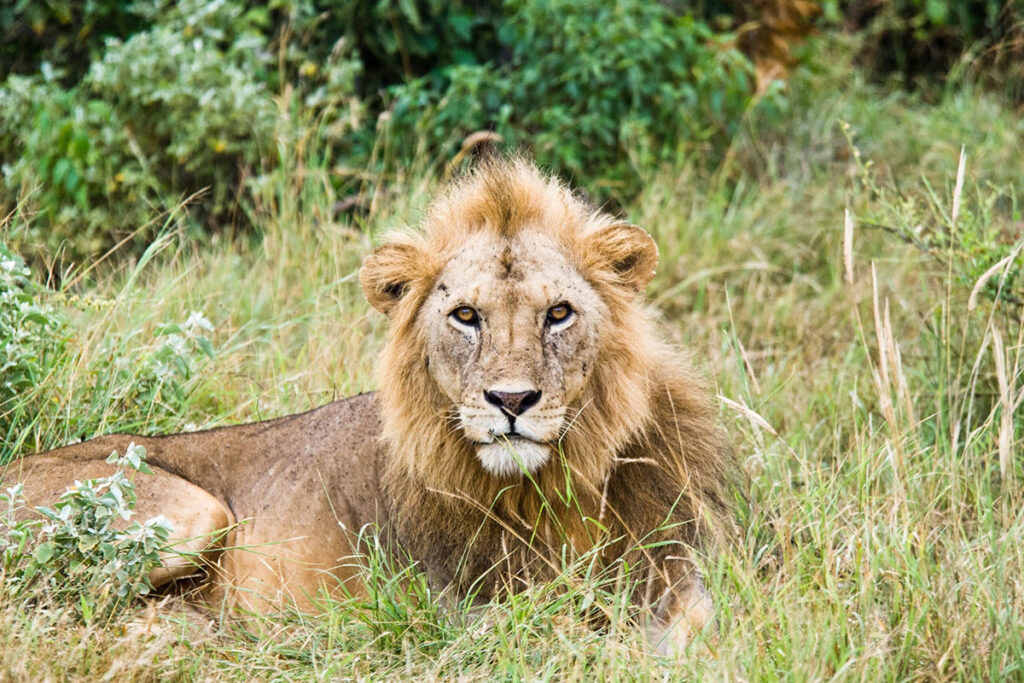
- Lions: Thriving in open savannah where prey concentrates.
- Leopards: Well adapted to woodlands and rocky areas.
- African buffalo: Widespread and often seen in large herds.
- Kob and reedbuck: Dominant grazers across floodplains.
- Forest species: Giant forest hogs, small antelope and primates.
Birdlife
Southern National Park is an exceptional birding destination and a recognized Important Bird and Biodiversity Area (IBA). Its wetlands, rivers, marshes, woodlands and open plains support both resident and migratory species, making it a critical avian refuge in the region. Birdlife flourishes especially during and after the rainy season, when insect populations increase and water levels rise.
- Saddle-billed stork
- African fish eagle
- Goliath heron
- Secretarybird
- White-headed vulture
- Great egret
Reptiles, Amphibians and Aquatic Life
The rivers and wetlands teem with aquatic life, including Nile crocodiles, monitor lizards, softshell turtles, frogs, toads and diverse fish species. These aquatic habitats are essential for ecosystem resilience and serve as critical feeding grounds for birds and mammals.
Cultural Heritage – Local Communities and Traditional Practices
Around the borders of Southern National Park live Indigenous communities such as the Balanda, Ndogo and Azande peoples, whose cultural practices, livelihoods and knowledge systems are deeply connected to the land. Generations have relied on seasonal harvesting, fishing, wild fruit gathering, pastoralism and the use of medicinal plants found in the park’s woodlands and wetlands. Their understanding of weather patterns, river behavior and wildlife movement makes them key partners in sustainable conservation.
- Traditional fishing: Eco-friendly methods passed down for centuries.
- Beekeeping: Producing honey using natural, sustainable techniques.
- Ceremonial traditions: Celebrations tied to planting seasons and harvest cycles.
Working closely with these communities is vital for balancing conservation needs with cultural preservation and local livelihoods.
Conservation Importance
Southern National Park is one of South Sudan’s most important conservation areas and a global biodiversity stronghold. Its combination of savannah, woodland and wetland ecosystems creates an ecological refuge for mammals, birds, amphibians and plants. The park stores vast amounts of carbon in its woodland vegetation and wetlands, helps regulate regional climate and maintains crucial hydrological systems. Its recognition as a Key Biodiversity Area highlights its global significance for species conservation.
- Stronghold for elephants, lions, buffalo and antelope.
- Critical wetland system supporting migratory birds.
- Large-scale ecological corridor connecting multiple habitats.
- Natural carbon sink through expansive forests and wetlands.
Threats and Environmental Challenges
- Poaching: Historically targeted elephants and antelope species.
- Land encroachment: Agricultural expansion near park boundaries.
- Wildfires: Frequent in the dry season and often human-caused.
- Unregulated grazing: Livestock pressures around sensitive ecological zones.
- Climate change: Affecting rainfall patterns, flood dynamics and species distribution.
Mitigating these threats requires strong collaborative management, long-term ecological research, law enforcement and community engagement.
Research and Monitoring Programs
Southern National Park remains one of the least-studied ecosystems in East and Central Africa, offering immense potential for scientific research. Emerging programs focus on tracking large mammals through GPS collars, using camera traps to record elusive predators, mapping vegetation zones and studying hydrological patterns across the Sue, Ibba and Gel river systems. These research efforts will help guide future conservation planning and habitat restoration.
- Elephant and lion GPS collaring programs.
- Camera trap surveys for nocturnal wildlife.
- Hydrology and water quality monitoring.
- Vegetation and habitat condition assessments.
Tourism Activities in Southern National Park
- Game viewing: Explore open plains and river zones with high wildlife density.
- Birdwatching: Exceptional for waterbirds and raptors.
- River excursions: Observe hippos, crocodiles and aquatic birds.
- Walking safaris: Guided treks for immersive experiences.
- Community visits: Cultural interactions with local tribes.
Tourism is still in its early stages, offering adventurous travelers the opportunity to explore one of Africa’s most untouched and authentic wilderness destinations.
Access – How to Reach Southern National Park
- By Road: Access mainly from Wau; seasonal conditions affect road quality.
- By Air: Domestic flights to Wau and small bush airstrips.
- Best access period: Dry season (November–April), when roads are most passable.
The journey requires logistical planning and local expertise, but the reward is an immersion into one of Africa’s most pristine and truly wild landscapes.
Permits and Park Regulations
- Entry permits: Required and issued by the South Sudan Wildlife Service.
- Strict no-hunting regulations enforced.
- Low-impact, responsible travel is mandatory.
- Visitors must stick to authorized routes and follow wildlife safety guidelines.
Accommodation Options
- Tented camping: Used by researchers and safari expeditions.
- Community stays: Cultural accommodation near park edges.
- Future safari camps: Potential opportunities as tourism develops.
Accommodation is currently limited, ensuring an authentic expedition-style experience suited for explorers and conservation-focused travelers seeking complete immersion in nature.
Best Time to Visit Southern National Park
- December–March: Optimal wildlife sightings and dry weather.
- April–June: Green landscapes and active wildlife.
- July–October: Wet season, excellent for birdlife but challenging access.
The dry season offers the most reliable conditions for travel and wildlife viewing, while the wet season reveals the park’s lush, vibrant beauty.
Why Southern National Park Is Unique
Southern National Park is a rare and extraordinary wilderness—vast, untamed and ecologically priceless. Its enormous grasslands, ancient woodlands, winding rivers and thriving wetlands create a rich, interconnected ecosystem that supports countless species of global conservation concern. Wildlife still moves freely along traditional paths, predators still roam open plains, and the landscape changes dramatically with the seasons, offering a glimpse of Africa in its truest, purest form. For scientists, adventurers, conservationists and nature enthusiasts, Southern National Park is not merely a destination—it is a timeless sanctuary where the spirit of wild Africa continues to thrive.