
Tarangire National Park
Tarangire National Park, Tanzania – Elephant Kingdom, Baobab Valleys and a Classic Northern Circuit Safari Gem
Tarangire National Park is one of northern Tanzania’s most atmospheric safari destinations, celebrated for its massive elephant herds, sculptural baobab trees, golden savanna plains and the life-giving Tarangire River that cuts through the landscape. Covering approximately 2,850 square kilometres, Tarangire forms the dry season heart of the wider Tarangire–Manyara–Masai Steppe ecosystem, drawing in tens of thousands of migratory wildebeest, zebras and other ungulates when surrounding rangelands dry out.
The area was first gazetted as a game reserve in the 1950s and upgraded to full national park status in 1970. Today Tarangire is recognised as one of East Africa’s key strongholds for elephants, large carnivores and migratory ungulates, and as a birding hotspot with more than 500 recorded species. For travellers, it offers an immersive, less crowded wilderness that perfectly complements better-known icons like the Serengeti and Ngorongoro Crater.
Location and Geography
Tarangire National Park lies in northern Tanzania within the Manyara and Dodoma regions, roughly 118 to 120 kilometres southwest of Arusha, the main gateway town for the northern safari circuit. The park belongs to the same circuit as Lake Manyara, Ngorongoro Conservation Area and Serengeti National Park, making it easy to combine Tarangire with other world-class destinations on a single itinerary.
Geographically, Tarangire is part of the eastern branch of the Great Rift Valley system. The park stretches for nearly 100 kilometres from north to south and about 30 kilometres across at its widest point. Its central coordinates are close to 3°45′ south, 36°00′ east, with an altitude that generally ranges from about 900 to 1,500 metres above sea level. Gently undulating granitic ridges, low hills and ancient lakebeds create a varied topography, while wide alluvial valleys and black cotton soils form the basis of fertile grasslands and seasonal floodplains.
Tarangire anchors the larger Tarangire Ecosystem, a roughly 20,500 square kilometre landscape that includes the dry-season concentration area along the Tarangire River inside the park and far-flung wet-season grazing and calving grounds such as the Simanjiro Plains and Northern Plains beyond the boundaries. Maintaining ecological connections between the park and these surrounding rangelands is essential for the survival of migratory wildlife.
Climate
Tarangire experiences a semi-arid to sub-humid savanna climate with a classic East African bimodal rainfall pattern. Average annual rainfall is around 650 millimetres, but it is highly variable from year to year. Temperatures are warm throughout the year thanks to the park’s equatorial location, moderated slightly by its elevation.
Rainfall is concentrated in two main wet seasons:
- Short rains, typically from November to early January
- Long rains, from roughly March to May
Between June and October, Tarangire enters a long, pronounced dry season. Seasonal pans and waterholes outside the park dry up, grasses turn straw-coloured and wildlife from the entire ecosystem gravitates toward the permanent and semi-permanent water of the Tarangire River and associated swamps. This intense seasonality shapes everything in the park, from vegetation patterns and wildlife movements to tourism activities and photographic opportunities.
Hydrology
The Tarangire River is the defining hydrological feature of the park and the source of its name. Flowing from highland catchments and forested reserves to the south before winding through the park, the river remains the only reliable surface water source in the core of the ecosystem during the dry season. Even when surface flow becomes intermittent, elephants and other animals dig in the sandy riverbed to access subsurface water.
In addition to the main river, Tarangire’s hydrology includes an intricate network of seasonal streams, pans and expansive swamps. Among the most notable is Silale Swamp in the southeast, a broad wetland that retains moisture long into the dry months. Grassy floodplains around Silale and other swamps provide critical grazing for elephants, buffalo and antelopes and attract a wealth of waterbirds and raptors.
Beyond the park, the Tarangire–Manyara basin has a rich geological history linked to ancient lakes. Old lakebeds and black cotton soils hold water in the wet season and crack deeply as they dry out, creating a mosaic of microhabitats. The integrity of upstream forests and catchments is crucial, because deforestation and land conversion in headwater areas can reduce dry-season flows, concentrate sediments and jeopardise the long-term reliability of the Tarangire River.
Ecosystems and Habitats
Tarangire protects a classic but unusually diverse East African savanna mosaic. The interplay of topography, soils and water creates distinct habitat types, each supporting its own suite of plants and animals.
- Acacia and Combretum woodlands that host giraffes, impalas, kudus and a wide range of bird species
- Baobab-dotted savanna hillsides where mighty baobabs tower over open grasslands and provide food, shade and nesting cavities
- Seasonal floodplains and swamps with lush grasses, sedges and reeds that attract elephants, buffalo and waterbirds
- Riverine forests along the Tarangire River and its tributaries, where dense vegetation offers cover for bushbuck, leopards, primates and many smaller species
- Termite-mound landscapes in which prominent mounds become elevated islands for trees, dwarf mongooses and a host of reptiles and birds
Outside the park, the wider ecosystem stretches over the Masai Steppe, including community lands, wildlife management areas and conservancies such as Makame and Burunge. These areas act as vital dispersal zones and wet-season grazing grounds for migratory wildlife moving in and out of Tarangire.
Vegetation
The vegetation of Tarangire is richer and generally denser than many visitors expect in a semi-arid setting. Differences in soil type, drainage and elevation create distinct plant communities that change subtly from one valley or ridge to the next.
- Extensive woodland of acacia and related thorn trees, providing browse for giraffes, elephants and kudu and nesting sites for hornbills, barbets and weavers
- Woodlands and thickets of Combretum and Terminalia on higher, well-drained ground
- Scattered groves and avenues of baobabs, some hundreds of years old, with massive water-storing trunks and hollows used by owls, bats and bees
- Perennial and annual grasslands in valleys and plains, with highly nutritious grasses emerging after the rains, particularly in areas linked to ancient lake sediments
- Wetland vegetation in Silale and other swamps, dominated by sedges, reeds and moisture-loving grasses that sustain large herbivores during dry months
Fire, elephant browsing, livestock grazing in surrounding rangelands and variable rainfall all shape the structure and composition of these vegetation communities. Long-term monitoring projects use permanent plots and remote sensing to track changes in woodland cover and grassland condition across the ecosystem.
Wildlife of Tarangire National Park
Mammals
Tarangire is internationally renowned for its outstanding mammal populations, especially during the dry season when wildlife concentrations rival those of some better-known parks. The wider ecosystem hosts more than 60 large mammal species, and at least 55 of these occur regularly within the national park.
- Elephants are Tarangire’s signature animals. The park holds the largest elephant population in northern Tanzania, with several thousand elephants using the ecosystem and dry-season herds of up to 300 individuals commonly seen along the river.
- Migratory ungulates such as wildebeest, plains zebras and various gazelles undertake a seasonal “mini-migration”, moving out to nutrient-rich plains in the rains and then returning to Tarangire as water elsewhere disappears. The combined herds can number in the hundreds of thousands at peak times.
- Resident herbivores include buffalo, giraffe, waterbuck, impala, kongoni, eland and smaller antelopes such as dik-dik and steenbok.
- Special antelope species, including fringe-eared oryx, greater kudu and occasionally gerenuk, offer exciting sightings that are difficult to find elsewhere on the northern circuit.
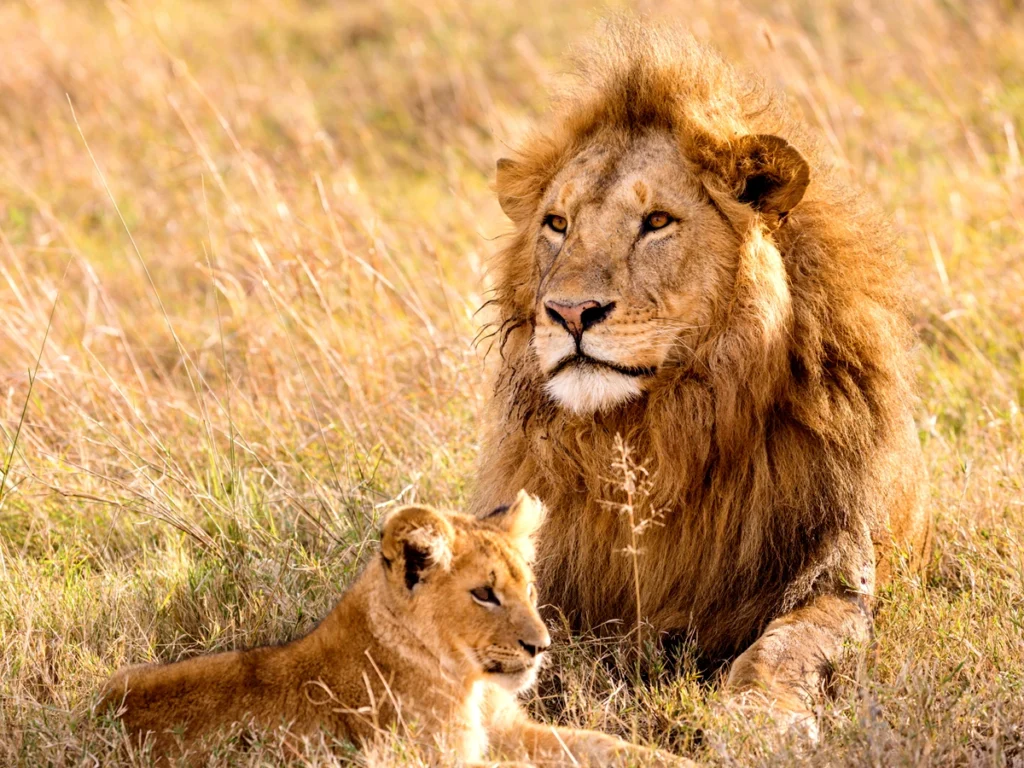
- Large predators are well represented, with lions, leopards and cheetahs as well as spotted hyenas and occasionally African wild dogs. Tarangire forms part of a recognised Lion Conservation Unit and has been the focus of long-term lion research.
Tarangire has also gained global attention for unusual records such as the birth and successful rearing of elephant twins and sightings of leucistic, unusually pale giraffes, emphasising both genetic diversity and successful conservation.
Birds
For birdwatchers, Tarangire National Park is one of East Africa’s finest destinations. Checklists record more than 500, and in some estimates close to 600, bird species within the park, making it both an Important Bird Area and a Key Biodiversity Area.
- Local and near-endemic species such as ashy starling, yellow-collared lovebird and rufous-tailed weaver are easier to see here than in many other parks.
- Savanna and woodland birds include hornbills, barbets, bee-eaters, rollers, starlings, shrikes, sunbirds and numerous weavers and waxbills.
- Wetland and riverine habitats host herons, egrets, storks, pelicans, kingfishers, waders and African jacanas, particularly around Silale Swamp and along the Tarangire River.
- Raptors such as martial eagles, bateleurs, tawny eagles, fish eagles, vultures and owls are frequently encountered, benefiting from open views and abundant prey.
- During the northern winter, Palearctic migrants add to the diversity, with species like European rollers and various warblers and waders using Tarangire as a non-breeding refuge.
Reptiles, Amphibians and Insects
Although less celebrated than the mammals and birds, Tarangire’s reptiles, amphibians and invertebrates play vital ecological roles and offer rewarding observations for keen naturalists.
- Nile crocodiles bask along the river and in permanent pools, while monitor lizards patrol riverbanks and termite mounds.
- Snakes range from harmless sand boas to pythons and venomous species such as puff adders and cobras, usually encountered only with a trained guide.
- Frogs and toads emerge in explosive breeding events after heavy rains, using temporary pools and pans and attracting storks, herons and other predators.
- Butterflies, dragonflies, dung beetles and many other insects thrive in the diverse habitats, recycling nutrients and forming a crucial part of the food web.
- Termites are ecosystem engineers, constructing mounds that influence soil structure, water infiltration and plant distribution and that provide nesting sites for birds and dens for dwarf mongooses and other small mammals.
Unique Features
Several features set Tarangire apart from other parks on Tanzania’s northern circuit and contribute to its strong identity as a safari destination.
- It has one of the highest densities of elephants in Tanzania and the largest elephant population in the northern part of the country.
- Its baobab-studded ridges and valleys offer some of the most photogenic savanna scenery in East Africa.
- A dramatic seasonal “mini-migration” of wildebeest, zebras and other ungulates provides a migration spectacle on a more intimate scale than the Serengeti.
- Termite mounds dot the landscape and host thriving colonies of dwarf mongooses, creating classic scenes of small mammals using mounds as lookout posts.
- Tarangire is a stronghold for a cluster of rare or range-restricted bird species that birders travel specifically to see.
Cultural and Indigenous Communities
No permanent settlements exist inside Tarangire National Park, but the surrounding landscapes are home to Maasai, Barabaig and other pastoral and agro-pastoral communities. These groups have used the Masai Steppe as grazing land for generations and maintain deep cultural ties to cattle, open rangelands and seasonal movement.
Many safari itineraries incorporate community-based cultural experiences just outside the park. These may include visits to Maasai homesteads to learn about traditional houses, beadwork and age-set ceremonies, or guided walks led by local community scouts who interpret tracks, plants and cultural sites. Thoughtfully designed visits create opportunities for cultural exchange while providing income and incentives for communities to support wildlife conservation.
Conservation Importance
Tarangire’s conservation value extends far beyond its boundaries. Ecologically, it serves as the dry-season core of the broader Tarangire Ecosystem, which contains the second-largest population of migratory ungulates in East Africa and the largest elephant population in northern Tanzania. The park also protects critical breeding, feeding and refuge habitats for lions, giraffes and many threatened birds.
The landscape around Tarangire includes wildlife management areas and community conservation initiatives such as the Simanjiro Conservation Easement and Makame Wildlife Management Area. These projects compensate communities for maintaining wildlife-friendly land uses and protecting key dispersal and calving grounds, helping keep migratory routes open and linking the national park to surrounding rangelands.
Because wildlife depends on both the protected core and the surrounding community lands, Tarangire has become a flagship example of landscape-level conservation that blends formal protection with community-based natural resource management.
Threats and Challenges
Despite encouraging conservation successes, Tarangire and its wider ecosystem face several significant threats that require ongoing attention.
- Expansion of agriculture, settlements and infrastructure fragments historic wildlife corridors, especially in the Simanjiro Plains and other key wet-season areas.
- Deforestation and unsustainable resource use in upstream catchments can degrade water quality and reduce dry-season river flows, undermining Tarangire’s role as a refuge.
- Human–wildlife conflict occurs when elephants and other animals raid crops or threaten livestock and people, sometimes leading to retaliatory killing or negative attitudes toward conservation.
- Illegal hunting and bushmeat offtake, although reduced compared to past decades, can still impact ungulate and carnivore populations if not effectively controlled.
- Climate variability and potential long-term climate change may intensify droughts, stress vegetation and concentrate both wildlife and people around shrinking water sources.
Conservation organisations, government agencies and community partners are working together to address these challenges through improved land-use planning, anti-poaching patrols, community benefits from tourism and payment-for-ecosystem-services schemes.
Research and Monitoring Programs
Tarangire is a living laboratory for conservation science, and numerous long-term research programs provide insights that guide management both inside and outside the park.
- Elephant research projects monitor population growth, movement patterns, social structures and responses to past poaching and current land-use change.
- Lion and carnivore studies examine pride dynamics, territorial behaviour, conflict with people, prey availability and the importance of connectivity across the wider ecosystem.
- Masai giraffe demography research involves identifying individual giraffes from their unique coat patterns to track survival, reproduction and habitat use.
- Corridor and land-use studies use satellite tracking, aerial surveys and participatory mapping to identify migration routes and priority areas for conservation easements and wildlife management areas.
- Vegetation and rangeland monitoring programs assess fire regimes, woody encroachment, grass condition and the effects of grazing and browsing pressures over time.
Many of these efforts are collaborative, involving Tanzanian authorities, universities, international research institutions and local communities. Their findings feed back into practical management decisions and help shape policy for the entire Tarangire–Manyara–Kilimanjaro landscape.
Tourism and Safari Activities
Tarangire National Park offers a full suite of safari experiences that cater to both first-time visitors and seasoned Africa travellers. Activities are typically arranged through tour operators or lodges and are conducted in accordance with Tanzania National Parks Authority regulations.
- Guided game drives, usually in open or pop-up roof 4×4 vehicles, are the primary way to explore the park and view elephants, large herbivores, predators and birds.
- Specialist birding excursions target endemics and seasonal migrants, often focusing on areas such as Silale Swamp and the riverine forests.
- Walking safaris, offered in designated zones and often operated by lodges and trained ranger guides, provide an intimate way to experience tracks, plants and smaller creatures on foot.
- Night drives may be possible through certain concessions or adjacent areas, revealing nocturnal species that are rarely seen by day.
- Hot-air balloon safaris, available seasonally from selected operators, offer sweeping sunrise views over the baobab-dotted plains and wildlife below.
- Cultural visits to nearby Maasai and Barabaig communities add a human dimension to a Tarangire safari and help support local livelihoods.
Access and How to Get There
Tarangire is easily accessible by both road and air, making it straightforward to integrate into northern Tanzania safari itineraries.
- By road, the park lies about two hours southwest of Arusha on mainly paved and graded roads. The main entrance gate is reached by turning off the Arusha–Dodoma road and following clearly signposted access routes.
- By air, scheduled and charter flights connect airstrips such as Kuro with Arusha, Kilimanjaro International Airport, Lake Manyara, Serengeti and other destinations. Flight times are typically 20 to 60 minutes depending on the route.
Most visitors join guided safaris arranged by tour operators, but experienced self-drive travellers can also visit Tarangire in a suitable 4×4 vehicle, observing park rules and seasonal road conditions.
Permits, Park Fees and Regulations
Tarangire National Park is managed by the Tanzania National Parks Authority, which sets park entry fees, camping charges, concession fees and special-activity permits. Fee structures are revised periodically and differ for Tanzanian citizens, residents and international visitors.
- Daily park entry fees are charged per person and per vehicle, with separate rates for day visitors and overnight guests.
- Public and special campsites attract camping or concession fees, and lodges within the park operate under concession agreements.
- Additional permits or supplements may apply for walking safaris, night drives and balloon flights, usually arranged by lodges or tour operators.
- Key park regulations include staying on designated roads and tracks, respecting speed limits, remaining inside the vehicle except at designated points, not disturbing or feeding wildlife and minimising noise and litter.
Because fees and rules can change, travellers should confirm the latest information with their safari operator or directly from Tanzania National Parks Authority before travelling.
Accommodation Options
Tarangire offers a wide range of accommodation options both inside the park and in the immediate surrounding area, catering to different budgets and travel styles.
- Public campsites provide basic facilities for adventurous self-drive visitors who bring their own camping equipment and supplies.
- Special campsites offer exclusive wilderness locations for private mobile camps and tailor-made safaris.
- Mid-range tented camps and lodges, some inside the park and others in adjacent wildlife-rich areas, provide comfortable en suite rooms or tents, shared dining and lounge areas and guided activities.
- Upscale tented camps and boutique lodges offer spacious suites, high service levels, fine dining, often with views over river valleys, waterholes or swamps. Many include private guides, walking safaris or balloon flights as part of their experience.
Several properties operate in partnership with nearby communities, employing local staff, purchasing local produce and contributing to community projects and conservation funds. Choosing such lodges allows visitors to contribute directly to the wellbeing of people and wildlife in the Tarangire ecosystem.
Best Time to Visit Tarangire
Tarangire is a rewarding destination throughout the year, but seasonality strongly influences what visitors see and experience.
- The dry season from June to October is the prime wildlife viewing period. As seasonal water sources disappear outside the park, elephants, buffalo, zebras, wildebeest and many antelopes concentrate around the Tarangire River and Silale Swamp. Vegetation is thinner and visibility excellent, making it easier to spot predators and large herds.
- The green season from November to April transforms the landscape as fresh grass and wildflowers emerge after the rains. Birdlife is exceptional, with breeding activity and the arrival of Palearctic migrants. Some migratory wildlife moves into surrounding plains, but resident species remain and photographic opportunities are outstanding, with dramatic skies and rich colours.
For many visitors, a combination of dry-season big-game viewing and shoulder-season birding or photography provides the most balanced experience. When planning, it is also worth considering road conditions, lodge availability and how Tarangire fits into a broader northern circuit itinerary.
Why Tarangire National Park Is Unique
Tarangire National Park is unique because it blends spectacular wildlife concentrations, iconic scenery and pioneering landscape-level conservation in a relatively compact and accessible setting. The park’s immense elephant herds, seasonal “mini-migration” of ungulates, near-endemic birds and towering baobabs create an unmistakable sense of place that sets it apart from neighbouring reserves.
At the same time, Tarangire lies at the core of a much larger mosaic of community lands, wildlife management areas and forest reserves. Innovative initiatives such as conservation easements and community carbon projects in areas like Simanjiro and Makame demonstrate how tourism revenue, ecosystem services payments and local stewardship can help keep migratory routes open and sustain both wildlife and pastoral livelihoods.
For travellers seeking an authentic, wildlife-rich, yet less crowded safari destination, Tarangire National Park offers an unforgettable combination of classic game viewing, birding, cultural encounters and conservation stories that continue to evolve. It is a park where elephants and baobabs frame every horizon, where the river never fully runs dry and where the future of a great African ecosystem is being shaped in partnership between protected areas and the people who share the land with wildlife.