
Yankari National Park
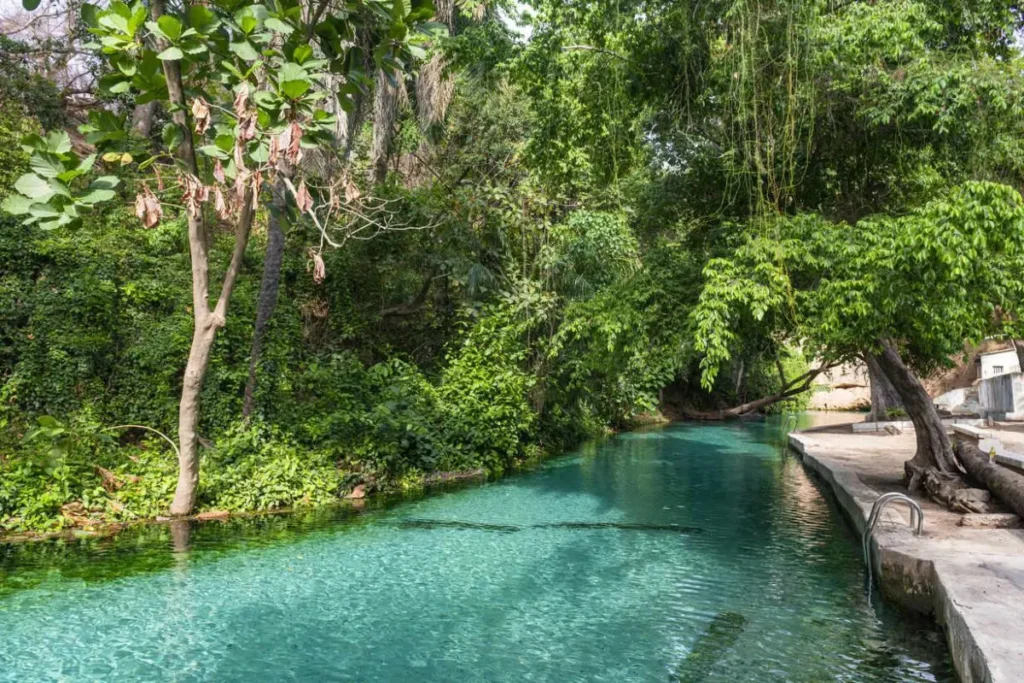
Yankari National Park – Nigeria’s Premier Wildlife Sanctuary, Wikki Warm Springs, West African Savannas and the Last Stronghold of Elephants in the Region
Yankari National Park is Nigeria’s most iconic wildlife reserve—a vast wilderness of woodland savannas, crystal-clear warm springs, winding river valleys and biologically rich forests located in the heart of Bauchi State. Covering approximately 2,244 km², Yankari is the country’s largest and most important national park, recognized as a Key Biodiversity Area (KBA) and the single most critical refuge for West African savanna elephants in Nigeria. Established originally as a game reserve in 1956 and upgraded to national park status in 1991, Yankari protects some of the last intact populations of antelope, baboons, lions, buffaloes and migratory birds within the region. Its combination of natural beauty, ecological importance, hydrological wonders and cultural heritage makes Yankari a national treasure and one of West Africa’s most meaningful conservation landscapes.
Beyond its wildlife richness, Yankari is renowned for the Wikki Warm Springs—one of Africa’s most remarkable natural thermal pools—whose turquoise waters maintain a constant temperature of about 31°C year-round. Together with extensive savanna plains, gallery forests and the floodplains of the Gaji River, these habitats sustain a diverse array of mammals, birds, reptiles, amphibians and plants. Today, Yankari stands as the most visited wildlife destination in Nigeria, offering visitors an authentic safari experience and contributing significantly to environmental education, scientific research and local ecotourism development.
Location, Size and Geographic Setting
Yankari National Park lies in the south-central region of Bauchi State, northeastern Nigeria, forming part of the Sudan–Guinea Savanna zone of West Africa. Its central position provides a mix of ecological influences: the dryness of the Sahel to the north, the moisture of the Guinea savannas to the south and the cultural landscapes of the Hausa, Fulani and Kanuri communities that surround the reserve. The park stretches across 2,244 km² of undulating plains, low hills, floodplains, river basins and forested valleys shaped by the Gaji River system.
- Established: 1956 as a game reserve; upgraded to national park in 1991
- Area: 2,244 km²
- Coordinates: Approx. 9.85°N, 10.20°E
- Ecoregion: Sudan–Guinea Savanna
- Nearest city: Bauchi (110 km)
The park’s undulating topography features elevations ranging from 300 to 600 meters above sea level, with grasslands, woodland savannas and riparian forests forming a striking mosaic of habitats. This geographic complexity supports a wide diversity of wildlife and ensures that Yankari serves as a vital ecological haven within West Africa.
Geology, Landscape Formation and Physical Features
Yankari’s landscapes are underlain by Precambrian basement complex rocks, including granites, gneisses and metamorphic formations that date back over a billion years. Weathering of these rocks over millennia created gently rolling plains with sandy loam soils, ideal for savanna vegetation. Along river channels, alluvial deposits have formed fertile soils that support taller grasses and riparian forests, providing essential dry-season refuges for wildlife.
The park’s most distinctive geographical features include the Wikki, Dimmil and Mawulgo warm springs; the Duguri, Gaji and Yuli river valleys; tall sandstone outcrops; and isolated clusters of woodland vegetation surrounded by open grass plains. These features not only enhance the scenic value of the park but also form critical habitat mosaics that sustain elephants, buffaloes, lions and numerous savanna species.
Climate and Seasonal Dynamics
Yankari National Park has a tropical savanna climate characterized by a long dry season and a shorter rainy season, both of which shape the ecological rhythms of wildlife. Annual rainfall averages between 700 and 1,000 mm, falling mostly between May and September. Temperatures range widely, with midday heat often exceeding 38°C during the dry season, while cool nights and early mornings moderate the climate.
- Rainy season: May–September
- Dry season: October–April
- Annual rainfall: ~700–1,000 mm
- Temperature range: 18°C–40°C
Seasonal variation drives wildlife behavior. During the dry season, animals concentrate along the Gaji River and around warm springs. In the rainy season, lush vegetation spreads across the park, supporting breeding, calving and dispersal cycles for herbivores and providing optimal hunting conditions for predators.
Hydrology – Rivers, Warm Springs and Wetland Systems
Water is one of Yankari’s defining features. The Gaji River and its tributaries are the principal watercourses, flowing across the park from north to south and feeding extensive floodplains that become critical wildlife refuges during the dry season. These riparian zones contain tall grasses, lush undergrowth and canopy trees that provide shade and forage.
- Wikki Warm Springs: A 13.5-meter wide, 1.9-meter deep natural pool with crystal-clear, 31°C water.
- Dimmil Warm Springs: Smaller pools with mineral-rich waters surrounded by savanna forest.
- Mawulgo Springs: Remote thermal pools used seasonally by elephants and antelopes.
- Gaji River: Main perennial water source sustaining elephants, buffaloes and carnivores.
These hydrological systems create reliable water access for wildlife, especially during peak dry months (January–April), when warm springs and river pools become lifelines for elephants and large mammals. Wikki Warm Spring, in particular, is one of the most important natural features for both tourism and wildlife survival.
Ecosystems and Habitat Diversity
Yankari is dominated by Sudan–Guinea savanna, with habitats ranging from grass-dominated plains to woodland mosaics, riparian forests and rocky outcrops. This habitat diversity supports species that require open landscapes for grazing and others that depend on forest cover for shade and security.
- Woodland savannas: Dominated by Isoberlinia, Terminalia and Combretum trees.
- Riparian forests: Dense vegetation along the Gaji River, providing shade and forage.
- Open grasslands: Essential for antelopes, buffaloes and carnivores.
- Rocky outcrops: Habitat for hyraxes, reptiles and roosting birds.
Lowland floodplains and seasonal wetlands attract migratory birds and support amphibians, fish and aquatic insects. The ecological richness of these habitats underpins the park’s exceptional wildlife diversity.
Vegetation – Savanna Woodlands, Riparian Forests and Grasslands
Vegetation in Yankari is heavily influenced by fire regimes, rainfall cycles and grazing pressure. Woodland savannas dominate much of the park, particularly in areas with deeper soils. These woodlands support iconic tree species such as Daniellia oliveri, Isoberlinia doka, Anogeissus leiocarpa, Combretum species and baobab trees that provide important fruits and shelter.
- Savanna grasses: Andropogon, Hyparrhenia, Sporobolus and Cymbopogon species.
- Woodland trees: Isoberlinia, Afzelia, Terminalia and Acacia species.
- Riparian vegetation: Ficus, Mitragyna, Khaya and Afzelia.
- Dry-season shrubs: Provide browse for antelope and elephants.
This diverse plant life forms the foundation of the park’s food web, supporting browsers, grazers, frugivores and nectar-feeding species across multiple seasons.
Wildlife of Yankari National Park
Yankari is Nigeria’s most important wildlife refuge, home to the country’s largest surviving populations of elephants, buffaloes and baboons. Although wildlife numbers have fluctuated due to historical poaching and human pressures, conservation efforts have helped stabilize key species and restore ecological functions.
Mammals
The park protects over 50 mammal species, many of which are among the last viable populations in Nigeria. Elephants are the flagship species and represent the largest surviving savanna elephant population in West Africa. The park also hosts a diversity of carnivores and herbivores.
- African savanna elephants: Most important herd in Nigeria; frequent the Wikki area.
- Lions: Small but recovering population concentrated in remote woodland zones.
- African buffaloes: Large herds occupy floodplains and riparian forests.
- Olive baboons: Abundant and highly adaptable.
- Roan antelope, waterbuck, kob, bushbuck and hartebeest: Common across grasslands.
- Hippos: Found along deeper stretches of the Gaji River.
Birdlife
Yankari is one of Nigeria’s premier birding destinations, with more than 350 recorded species. Migratory birds visit seasonally, while resident species inhabit the park’s savanna, forest and wetland habitats. Raptors soar above open plains, hornbills call from treetops and bee-eaters flock along riverbanks.
- White-throated bee-eaters, red-billed hornbills and Abyssinian rollers.
- Martial eagles, bateleurs and vultures patrolling the skies.
- Herons, storks and kingfishers near riverine habitats.
- Various weavers, finches and forest songbirds in woodland areas.
Reptiles, Amphibians and Insects
Reptiles include Nile monitors, pythons, cobras, skinks and tortoises. Amphibians thrive along the Gaji River and wetland pools during the rainy season. Insects are ecologically essential, particularly termites, butterflies and grasshoppers that contribute to nutrient cycling and food webs.
Unique Features of Yankari National Park
Several natural attractions distinguish Yankari from all other conservation areas in Nigeria and West Africa:
- Wikki Warm Spring: One of Africa’s clearest and most beautiful natural thermal pools.
- Elephant sanctuary: Last stronghold for Nigeria’s savanna elephants.
- Gaji River valley: A vital dry-season refuge.
- Kotong Hill and sandstone outcrops: Scenic landscapes ideal for hiking.
Wikki Spring is especially iconic: its constant warm temperature, crystalline water and lush surroundings make it a central attraction for both visitors and wildlife.
Cultural and Historical Heritage
Yankari is surrounded by communities with ancient cultural traditions, including the Duguri, Fulani, Hausa and Gerawa peoples. Traditional hunting landscapes, sacred sites, folklore and indigenous knowledge systems have shaped human–nature relationships for centuries. Many local communities maintain historical ties to the landscapes around Yankari and continue to participate in conservation initiatives through community outreach and employment.
Conservation Importance
As Nigeria’s most important protected area, Yankari plays a critical role in safeguarding biodiversity. It conserves:
- West Africa’s most significant savanna elephant population
- Globally threatened species such as lions and roan antelope
- Vast tracts of savanna, woodland and riparian forest
- Essential dry-season water sources, particularly the Gaji River and warm springs
The park’s protection also contributes to regional climate stability, ecological research, environmental education and sustainable tourism growth, making it indispensable to Nigeria’s conservation future.
Threats and Environmental Challenges
- Poaching: Historical elephant poaching severely reduced populations.
- Human encroachment: Expansion of agriculture and settlements near boundaries.
- Livestock grazing: Seasonal pressure around park edges.
- Bushfires: Uncontrolled fires affecting habitats.
- Water scarcity: Increasing demands in surrounding communities.
Addressing these challenges requires strong enforcement, community engagement, livelihood support and continuous partnership between government and conservation organizations.
Research and Monitoring Programs
Yankari is a hub for wildlife research in Nigeria. Studies focus on elephant movement patterns, predator populations, habitat health, climate impacts, hydrology and community conservation. Long-term monitoring provides essential data for effective park management and wildlife protection.
Tourism Activities
Yankari offers one of Nigeria’s most memorable wildlife and nature experiences. Visitors can enjoy:
- Guided wildlife drives
- Swimming at Wikki Warm Springs
- Birdwatching excursions
- Nature walks in designated areas
- Cultural interactions with local communities
The park’s scenic landscapes, wildlife viewing opportunities and warm springs make it an all-year-round destination for nature lovers.
Access – How to Reach Yankari National Park
- By road: Accessible from Bauchi (110 km), Jos (200 km) or Abuja (~460 km).
- By air: Flights to Bauchi or Gombe airports, followed by road transfers.
Permits and Park Regulations
- Park entry fees are required for all visitors.
- Strictly no feeding or disturbing wildlife.
- Vehicles must follow designated routes.
- No swimming outside the warm spring areas.
Accommodation Options
Yankari provides a range of accommodation facilities, primarily centered around the Wikki Camp area. Options include chalets, lodges, basic rooms and campsites. The camp provides easy access to the warm spring, making it the most convenient base for park exploration.
Best Time to Visit Yankari National Park
- November–April (Dry Season): Best wildlife viewing; animals gather at rivers and springs.
- May–September (Wet Season): Lush landscapes, excellent birdwatching and fewer visitors.
Dry season is ideal for elephant and large mammal sightings, while the rainy season brings vibrant vegetation and breeding birdlife.
Why Yankari National Park Is Unique
Yankari National Park is a sanctuary where West African savannas thrive, where elephants roam free, where natural warm springs shimmer beneath tropical trees and where wildlife, culture and landscapes blend into a uniquely Nigerian wilderness experience. Its status as the country’s most important national park, its iconic Wikki Warm Spring and its critical role in elephant conservation make Yankari irreplaceable within Nigeria and the entire West African region. As both a national heritage site and a living ecosystem, Yankari stands as a beacon of hope for conservation and a testament to the enduring beauty of Africa’s savanna wilderness.